

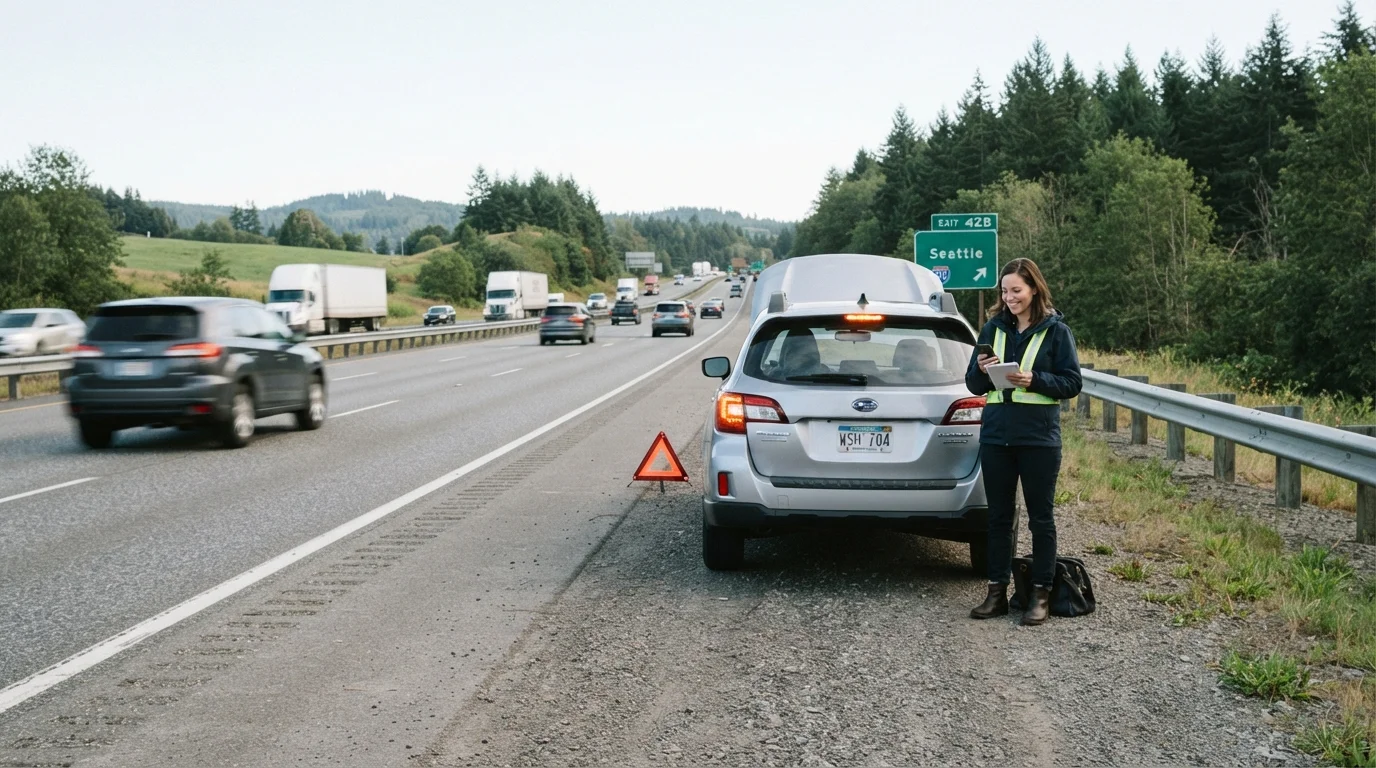
Key Takeaways
- A well-stocked emergency kit can make a roadside breakdown far less dangerous and stressful.
- Knowing what to do before a flat tire, dead battery, or overheating occurs is essential preparation.
- Roadside assistance coverage through your insurer or auto club is worth understanding before you need it.
- Most roadside emergencies involve predictable failure points that regular maintenance helps prevent.
- Your safety on the shoulder of a road always takes priority over saving the vehicle.
Summary
22 items · 20-35 minutes
Why Preparation Is the Real Safety Net
Roadside emergencies don't wait for a convenient moment. A tire blows on the highway at dusk. The engine temperature gauge spikes in summer traffic. The battery dies in a dark parking lot. What separates a manageable situation from a dangerous one is almost always whether the driver was ready before things went wrong.
This checklist covers the most common roadside emergencies US drivers encounter - flat tires, dead batteries, overheating, lockouts, and fuel emergencies - and what to do (and have on hand) for each. It's also worth reviewing your auto insurance policy and understanding whether roadside assistance is included, since that coverage can directly reduce out-of-pocket costs and response times. For a broader grounding in car ownership responsibilities, see our New Driver's Roadmap to Car Ownership.
Portable Jump Starter
Allows you to jump-start a dead battery independently, without needing another vehicle.
Tire Pressure Gauge
Used to check tire inflation monthly and verify pressure after temperature changes.
Reflective Warning Triangles or LED Flares
Alert approaching drivers that your vehicle is stopped on the shoulder, reducing collision risk.
Portable Phone Charger / Power Bank
Ensures your phone stays charged so you can call for assistance from any location.
Hi-Visibility Safety Vest
Makes you visible to drivers if you must stand outside your vehicle near traffic.
Basic First Aid Kit
Provides supplies to address minor injuries at the scene while waiting for professional help.
Roadside Emergency Preparedness Checklist
Work through each group to audit your current readiness. Items marked must are non-negotiable for basic safety. Should items are strongly recommended, and nice-to-have items improve your response in more specific situations.
Emergency Kit Essentials
Vehicle Maintenance Prevention
Information and Coverage Readiness
Situational Safety Protocol
Never Attempt Repairs in a Dangerous Location
If you've stopped on a narrow shoulder, a bridge, or a curve where visibility is limited, do not attempt to change a tire or perform any repair. Activate hazard lights, stay inside with your seatbelt fastened if exiting is unsafe, and call for professional roadside assistance. The risk of being struck by a passing vehicle while working roadside is significant - your physical safety outweighs any concern about the vehicle.
What to Do in the Moment
Having the right gear matters, but knowing how to respond is equally critical. Here's a quick reference for the four most common scenarios:
- Flat tire: Signal, reduce speed gradually, and steer to the shoulder. Never brake sharply. Turn on hazard lights immediately and position yourself away from traffic before attempting a tire change. If conditions are unsafe - heavy traffic, poor lighting, rain - wait for roadside assistance rather than attempting a repair yourself.
- Dead battery: If jump-starting, connect cables in the correct order: positive to positive, then negative to a ground (not the dead battery's negative terminal). If you're unsure, wait for professional help. Incorrect connections can damage electrical systems.
- Engine overheating: Turn off the air conditioner and turn on the heater to draw heat away from the engine. Pull over as soon as it's safe, turn off the engine, and do not open the radiator cap while the engine is hot - serious burns can result. Allow at least 30 minutes to cool.
- Fuel emergency: Running out of fuel is preventable, but if it happens, pull completely off the road, activate hazard lights, and call for assistance. Do not walk along a highway to a gas station if safer options exist.
Staying calm under pressure is a skill in itself. For broader safety habits that apply both on the road and when traveling, the Safe Driving hub covers strategies worth reviewing regularly.
Hot Radiator Caps Can Cause Severe Burns
If your engine overheats, never open the radiator cap or coolant reservoir cap while the engine is still hot or warm. Pressurized steam and boiling coolant can eject violently, causing serious burns. Allow the engine to cool completely - at least 30 minutes after shutting it off - before inspecting any part of the cooling system. When in doubt, call a qualified mechanic rather than attempting to address the issue yourself.
Insurance and Financial Readiness
A roadside breakdown can carry real costs - tow trucks, locksmith services, and overnight lodging if you're stranded far from home. Reviewing your auto insurance policy for roadside assistance riders, and separately understanding what your vehicle's manufacturer warranty may cover, can prevent surprise expenses.
If your policy doesn't include roadside coverage, motor clubs and some credit card benefits offer comparable services. Whatever your situation, knowing in advance what's covered - and what isn't - matters. General guidance on financial buffers is covered in our guide to emergency funds, which applies equally well to unexpected car expenses.
Ultimately, preparedness is about reducing the decisions you have to make under stress. Review this checklist, restock your kit, and verify your coverage so that the next roadside emergency - if it comes - is an inconvenience rather than a crisis.