

Key Takeaways
- Always request a written estimate before authorizing any repair work.
- Understanding why a repair is necessary helps you make an informed decision.
- Getting a second opinion is reasonable and often worthwhile for major repairs.
- Knowing whether a repair is urgent or deferrable gives you more leverage and time.
- OEM versus aftermarket parts affect cost, warranty coverage, and long-term reliability.
Summary
18 items · 10-20 minutes to review before authorizing any repair
Why These Questions Matter
An unexpected repair estimate can feel disorienting, especially when you're standing at a service counter with a car you need to get home in. The instinct to simply say yes - or to walk away - misses a better option: asking the right questions first.
Mechanics are professionals, and most are working in your interest. But the repair relationship works better when you're an informed participant. Understanding what's being recommended, why, and what happens if you wait puts you in a position to make a sound decision rather than a reactive one.
This checklist is designed to be used in the moment - before you sign anything. Whether you're at a dealership service center or an independent shop, these questions apply. If you haven't already thought about which type of shop to use, our guide on dealership versus independent mechanic tradeoffs covers the key differences.
Never Authorize Work Without a Written Estimate
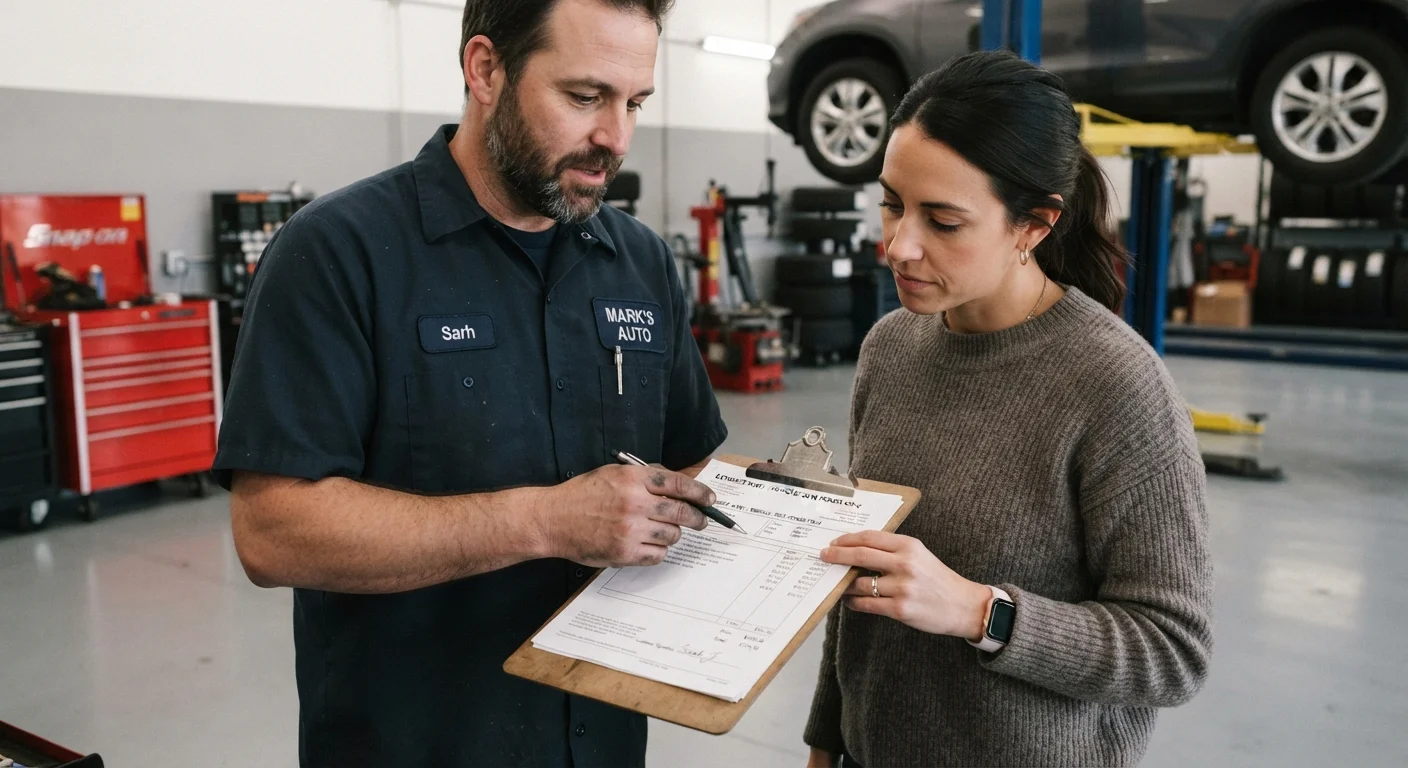
Verbal quotes are difficult to dispute after the fact. In most US states, auto repair shops are legally required to provide a written estimate before starting work if the cost exceeds a threshold - but requirements vary. Always ask for written documentation regardless of local rules, and keep a copy. This protects both you and the shop in the event of a disagreement.
What You'll Need Before You Start
You don't need to arrive with specialized knowledge - just a few practical items that help you track, compare, and follow up effectively.
Pen and notepad (or notes app)
Record what the mechanic tells you, including part names, costs, and any verbal commitments - details that are easy to forget under pressure.
Your vehicle's owner manual
Confirms manufacturer-recommended service intervals and helps you verify whether the suggested repair aligns with factory guidance.
Your existing warranty documents or service contract
Identifies what repairs may already be covered and what conditions could affect your coverage if the wrong parts are used.
A reliable repair cost reference
General labor time guides and parts pricing databases (available through many public and consumer resources) help you gauge whether an estimate is in a reasonable range for your area.
The Questions to Ask - Your Complete Checklist
Work through these questions in the order they appear. The earlier groups address the diagnosis itself; the later ones focus on cost, parts, and your options. Not every question will apply to every situation, but reviewing all of them takes only a few minutes and can prevent costly misunderstandings.
Understanding the Diagnosis
Evaluating Urgency
Reviewing the Estimate
Parts and Warranty
Exploring Your Options
Pressure to Decide Immediately Is a Red Flag
A reputable mechanic will give you time to review an estimate and ask questions. If you feel rushed to authorize an expensive repair on the spot, slow down. With the exception of a genuine safety emergency, almost no repair decision needs to be made within minutes. Taking a few hours - or a day - to think, research, or consult a second shop is entirely reasonable.
Many of the expensive surprises drivers face stem not from dishonest shops, but from misunderstandings that could have been resolved upfront. Our article on ownership mistakes that turn small problems into expensive ones illustrates how deferred decisions often cost more than addressing issues early.