

Key Takeaways
- Envelope budgeting works by assigning every dollar to a named spending category before the month begins.
- The core principle - spend only what is in the envelope - applies equally to cash and digital tools.
- Digital versions remove the need to carry cash while keeping the same visual spending limits.
- Overspending in one category requires consciously moving money from another, building financial awareness.
- The system is especially effective for variable, discretionary spending like food, entertainment, and clothing.
Envelope Budgeting
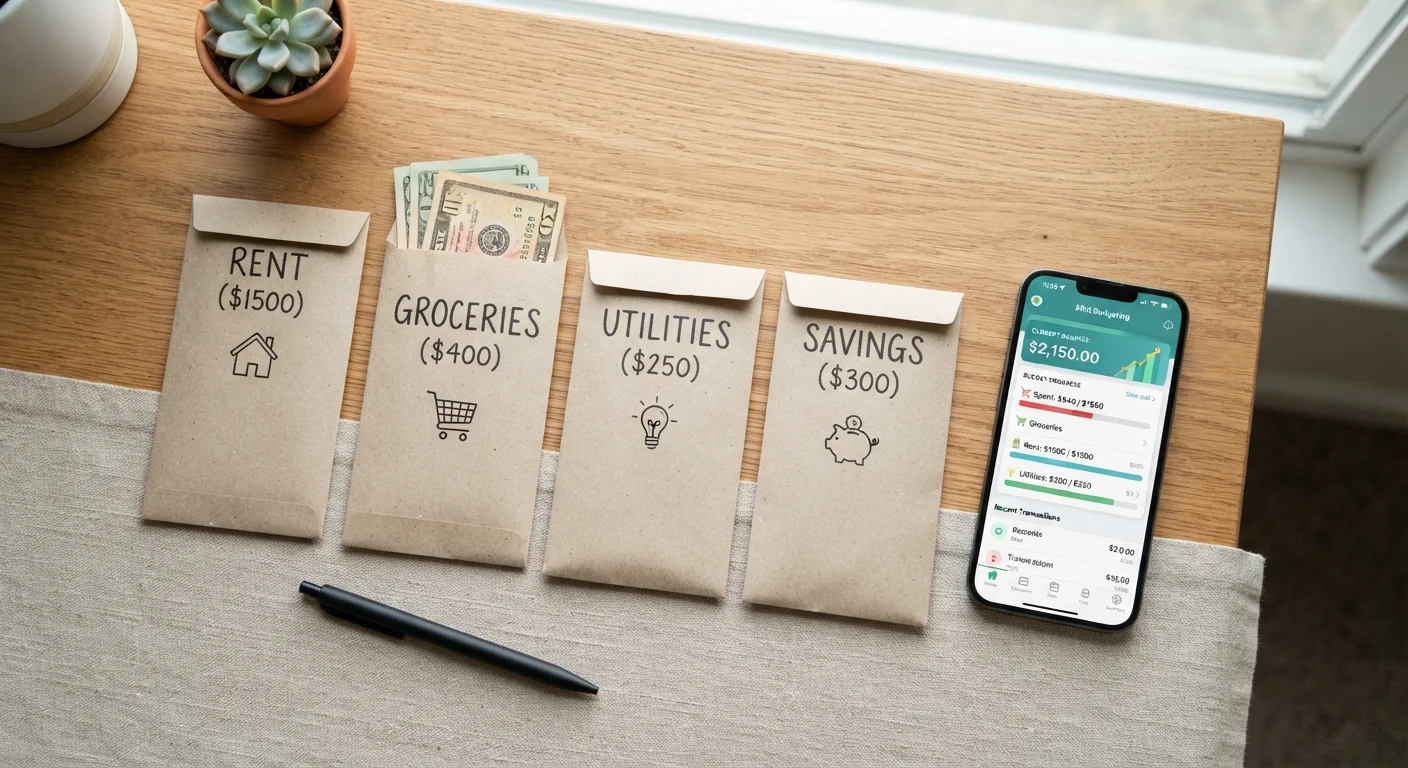
Envelope budgeting is a cash-based spending system where you divide your monthly income into physical envelopes, each labeled for a specific spending category - groceries, gas, dining out, and so on. When an envelope is empty, spending in that category stops for the month. The method enforces hard limits by making your remaining budget visible and tangible at all times.
In its digital form, envelope budgeting uses virtual 'envelopes' or spending buckets - allocated balances tied to categories - rather than physical cash, preserving the same constraint logic without requiring paper currency.
Where the Envelope Method Comes From
Long before budgeting apps, people managed household finances with a simple system: divide your paycheck into labeled envelopes and spend only what each one holds. The grocery envelope paid for groceries. The utilities envelope covered the electric bill. When the money ran out, the spending stopped.
This approach gained wide popularity in the mid-twentieth century when most transactions were cash-based and overspending was immediately obvious. It required no spreadsheets, no apps, and no financial background - just physical cash and a few labeled envelopes.
If you are new to budgeting broadly, our introduction to personal budgeting covers the foundational concepts you will want to understand first.
The Core Logic That Makes It Work
The power of the envelope method has nothing to do with paper or cash. It comes from three structural features that most casual budgeters skip entirely.
- Pre-commitment: You allocate money to categories before you spend, not after. This shifts decision-making to the start of the month, when emotions are calm and goals are clear.
- Hard limits: A finite envelope balance makes overspending a visible, deliberate act rather than an invisible drift. You cannot accidentally overspend - you have to choose to.
- Trade-off awareness: Moving money between envelopes is allowed, but it requires a conscious decision. Spending more on dining out means less money for something else. That friction is the point.
These mechanics are the reason the method still works today - the tool carrying those rules has simply changed.
1 in 3
Americans who have no monthly budget
According to Gallup survey data, roughly one-third of U.S. adults report not following any formal household budget.
~$300
Average monthly discretionary overspend reported
Consumer financial surveys consistently find that unplanned discretionary spending - dining, shopping, entertainment - is the most common source of budget overruns for U.S. households.
Taking Envelope Budgeting Digital
Most Americans now pay with cards and bank transfers, which makes stuffing physical envelopes impractical. The good news is that the same logic maps cleanly to digital tools.
Bank sub-accounts: Many online banks allow you to open multiple savings or checking sub-accounts, each named for a category. You transfer your monthly allocation into each account at the start of the month and spend only from the relevant one.
Budgeting apps: Several widely used personal finance apps are built directly on the virtual envelope model. They track spending against category limits in real time, alert you when a category is running low, and allow you to move funds between buckets intentionally.
Spreadsheet tracking: A simple spreadsheet with columns for each category, monthly allocations, and running totals replicates the core mechanics without any app subscription.
For guidance on which categories to build your envelopes around, see our rundown of spending categories every household should consider.
Start With Just Three or Four Envelopes
New to the system? Resist the urge to create a category for every possible expense. Begin with the areas where you most commonly overspend - typically groceries, dining out, and personal shopping. A simpler system is far easier to maintain, and you can always add categories once the habit is established.
When Envelope Budgeting Fits - and When It Doesn't
The envelope method tends to work best for people who struggle with discretionary overspending - particularly in categories like food, entertainment, shopping, and personal care. If you frequently reach the end of the month wondering where your money went, the visibility this system provides can be transformative.
It is less suited to managing fixed expenses like rent, car payments, or insurance premiums, which are better handled through automatic payments. The real value is in taming the variable spending that feels small in the moment but compounds over a month.
Envelope budgeting is one of several frameworks worth understanding. See how it compares to zero-based budgeting, the 50/30/20 rule, and pay-yourself-first to find which structure fits your situation.
Once you have a working system, the harder challenge is keeping it going. These long-term budgeting habits can help you stay on track beyond the first few months.
This article is for general informational and educational purposes only and does not constitute personalized financial advice. Consult a qualified financial professional for guidance specific to your circumstances.