

Key Takeaways
- Most people underestimate their monthly spending by 20-40% before they start tracking.
- Spending falls into three tiers: fixed essentials, variable necessities, and discretionary choices.
- A single 30-day tracking exercise reveals patterns that estimates alone never can.
- Digital bank statements are the fastest starting point - no new tools required.
- Awareness without judgment is the goal; shame rarely produces lasting financial change.
Spending Awareness
Spending awareness means knowing, in concrete dollar terms, exactly where your income goes each month - from rent and groceries to streaming subscriptions and impulse buys. It is not a budget itself, but the essential first step before any budget can work. Without it, most people underestimate their spending in several categories and overestimate how much they are saving.
Behavioral economists refer to this blind spot as 'expenditure neglect' - a documented tendency for people to systematically undercount small, frequent purchases when estimating monthly costs.
Why Most People Don't Know Their Real Numbers
Ask most people what they spend each month, and they'll give you a number. Ask them to break it down, and the confidence usually fades. Housing and car payments are easy - they're automatic. But groceries, eating out, subscriptions, personal care, and the dozens of small purchases made throughout the month? Those numbers are almost always a guess.
Research in behavioral economics consistently shows that people underestimate discretionary spending in particular. The problem isn't carelessness - it's that small, frequent transactions don't feel significant in the moment. A $6 delivery fee here, a $14 subscription there, and a few impulse purchases at checkout add up to a very different monthly total than most people expect.
For a solid grounding in how budgeting works from the start, see Personal Budgeting from the Ground Up - it walks through every core concept in plain language.
~40%
Discretionary spending underestimated by households
Behavioral finance research broadly finds that people undercount irregular and small purchases by a significant margin when estimating monthly expenses without reviewing records.
$219/mo
Average US household subscription spending
Consumer research has found that the average American household pays for more recurring subscriptions than it realizes, often spending considerably more than self-reported estimates.
The Three Tiers of Monthly Spending
Every dollar you spend fits into one of three broad tiers, and understanding this structure makes tracking far less overwhelming.
- Fixed essentials: Costs that stay the same each month and are difficult to reduce quickly - rent or mortgage, loan payments, insurance premiums, and utility minimums. These are your baseline obligations.
- Variable necessities: Spending that's required but flexible in amount - groceries, gas, electricity beyond the base rate, and medical co-pays. You can influence these costs but can't eliminate them.
- Discretionary spending: Everything else - dining out, entertainment, clothing beyond basics, hobbies, subscriptions, and personal care upgrades. This tier has the most room for adjustment.
Most budget problems are concentrated in the variable and discretionary tiers, not the fixed one. That's where spending awareness delivers the greatest insight. For a detailed breakdown of which categories households most commonly overlook, explore our spending categories guide.
Start With One Month, Not a Year
It can be tempting to pull six or twelve months of data when you first start tracking. Resist this - it leads to overwhelm and inaction. One clean month of categorized spending is enough to identify your biggest patterns. You can always expand the review once the habit is established.
A Simple 30-Day Tracking Exercise
You don't need a complex app or a detailed spreadsheet to start. Here's a straightforward process:
- Pull your statements. Download one month of transactions from every bank account and credit card you use. Most institutions let you export a CSV file or view a spending summary directly.
- Assign a category to each transaction. Use the three-tier structure above, or create subcategories that reflect your life - 'groceries,' 'restaurants,' 'streaming,' 'gas,' and so on.
- Total each category. Add up what you actually spent, not what you planned to spend.
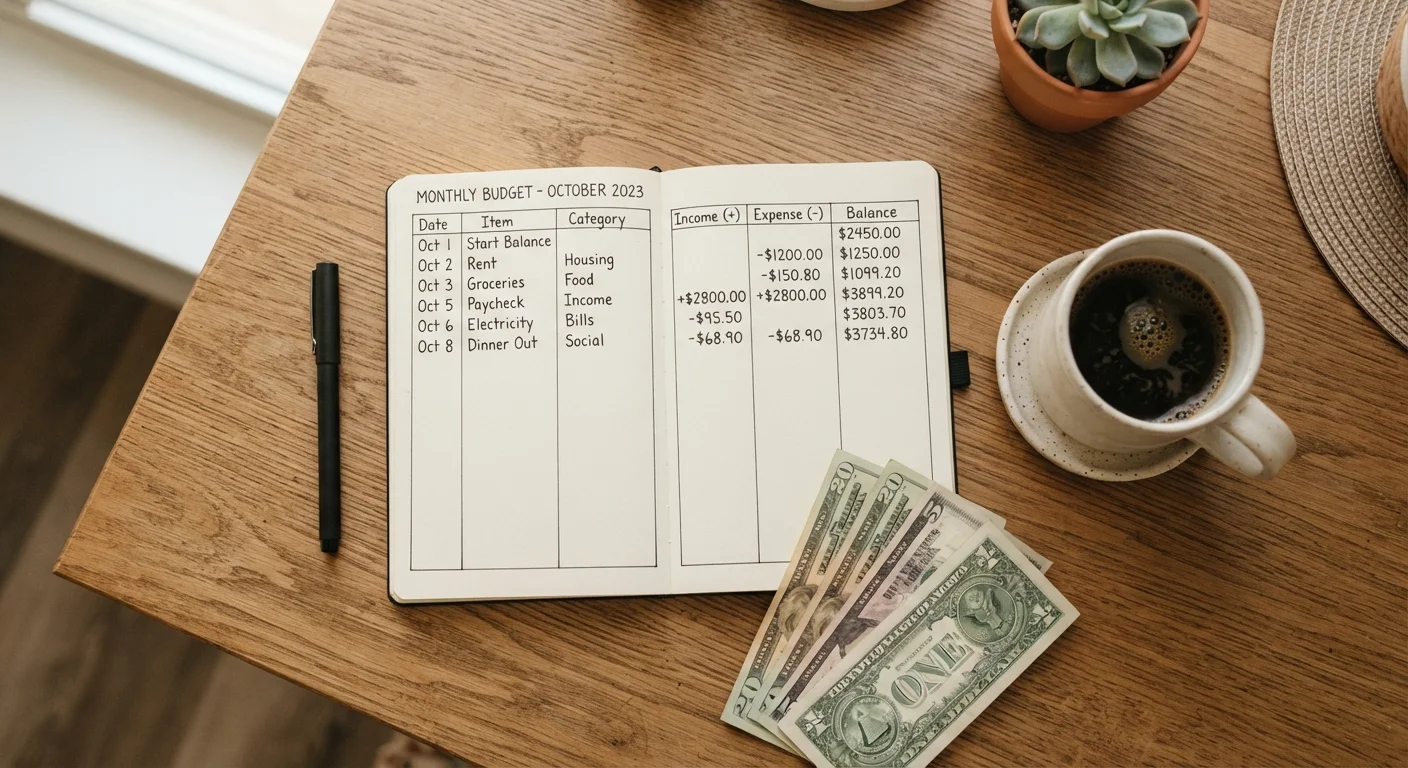
- Compare to your income. Subtract total spending from your take-home pay. The difference - positive or negative - tells you whether your money is accumulating or disappearing each month.
This single exercise often produces a number that surprises people. That reaction is the point. Surprise is not failure - it's data. From here, you're positioned to make deliberate choices rather than reactive ones.
Cash Spending Is Easy to Miss
If you regularly use cash, ATM withdrawals may appear as a single lump sum in your statement without any category detail. Keep a brief note on your phone or a small pocket notebook to log cash purchases during your tracking month. Even an approximate record is far more useful than leaving those dollars unaccounted for.
Once you have a clear picture of spending, the natural next step is putting a structure around it. Building Your First Monthly Budget in Seven Steps walks through exactly how to do that. And once your budget is running, Your Monthly Budget Health Check can help you stay on track.
This article is for general informational and educational purposes only and does not constitute personalized financial advice. Consult a qualified financial professional for guidance specific to your situation.