

Key Takeaways
- Automating transfers removes willpower from the equation and makes saving feel effortless.
- Breaking one large goal into smaller milestones creates frequent wins that sustain motivation.
- Keeping savings in a separate account reduces the temptation to spend what you've set aside.
- Naming savings accounts for specific goals strengthens your emotional connection to the money.
- Reviewing and adjusting your savings plan regularly prevents stagnation and keeps goals realistic.
Why Savings Goals Often Stall
Most people start a savings goal with genuine intention. They set a target, move some money aside, and then - gradually - the momentum fades. Life gets expensive, motivation dips, and the goal moves further into the background.
The issue is rarely willpower. More often, it's structure. Without a system that works alongside your habits rather than against them, even the most motivated saver can drift. The strategies below are grounded in widely recognized personal finance principles and address the specific friction points that cause savings goals to stall. If you're starting from scratch, our guide to building a savings habit from zero covers the foundational steps before these strategies apply.
Automate your transfers
Setting up an automatic transfer from your checking account to your savings account - timed to coincide with your paycheck - is one of the most reliable tools in personal finance. When saving happens automatically, you never have to decide whether to do it. The money moves before discretionary spending begins.
This connects directly to the pay yourself first principle, which prioritizes saving before any other spending. Our pay yourself first vs. spend-then-save comparison explains how both approaches work in practice. Even a small automated amount builds a consistent habit over time.
Automation removes the decision entirely - saving happens before you can second-guess it.
Break large goals into milestones
Saving $10,000 for an emergency fund can feel abstract and distant. Saving the first $1,000 feels achievable. Breaking a large goal into smaller, clearly defined milestones creates regular checkpoints that register as genuine progress.
Each milestone reached reinforces the behavior and releases a small but meaningful sense of accomplishment - which matters psychologically for sustaining effort over months or years. Consider marking milestones with a low-cost or free reward as a deliberate positive reinforcement.
Smaller milestones turn a distant goal into a series of wins you can actually feel.
Use a separate, named savings account
Keeping savings in your main checking account makes it easy to spend - the line between saved money and available money disappears. Opening a dedicated savings account, physically separated from everyday funds, adds a layer of friction that reduces impulsive withdrawals.
Naming the account for its purpose - "Emergency Fund," "House Down Payment," "Travel Fund" - strengthens your psychological attachment to it. Research in behavioral economics suggests that labeled accounts increase follow-through because the money feels earmarked rather than available. For context on account types that may offer growth on your savings, see our overview of high-yield vs. traditional savings accounts.
A named, separate account makes your savings feel purposeful rather than spendable.
Tie savings to a specific, meaningful purpose
Vague goals - "save more money" - are hard to sustain because they have no emotional anchor. Concrete, personally meaningful goals - a family trip, a home purchase, a six-month financial cushion - create a clearer reason to stay consistent when spending temptations arise.
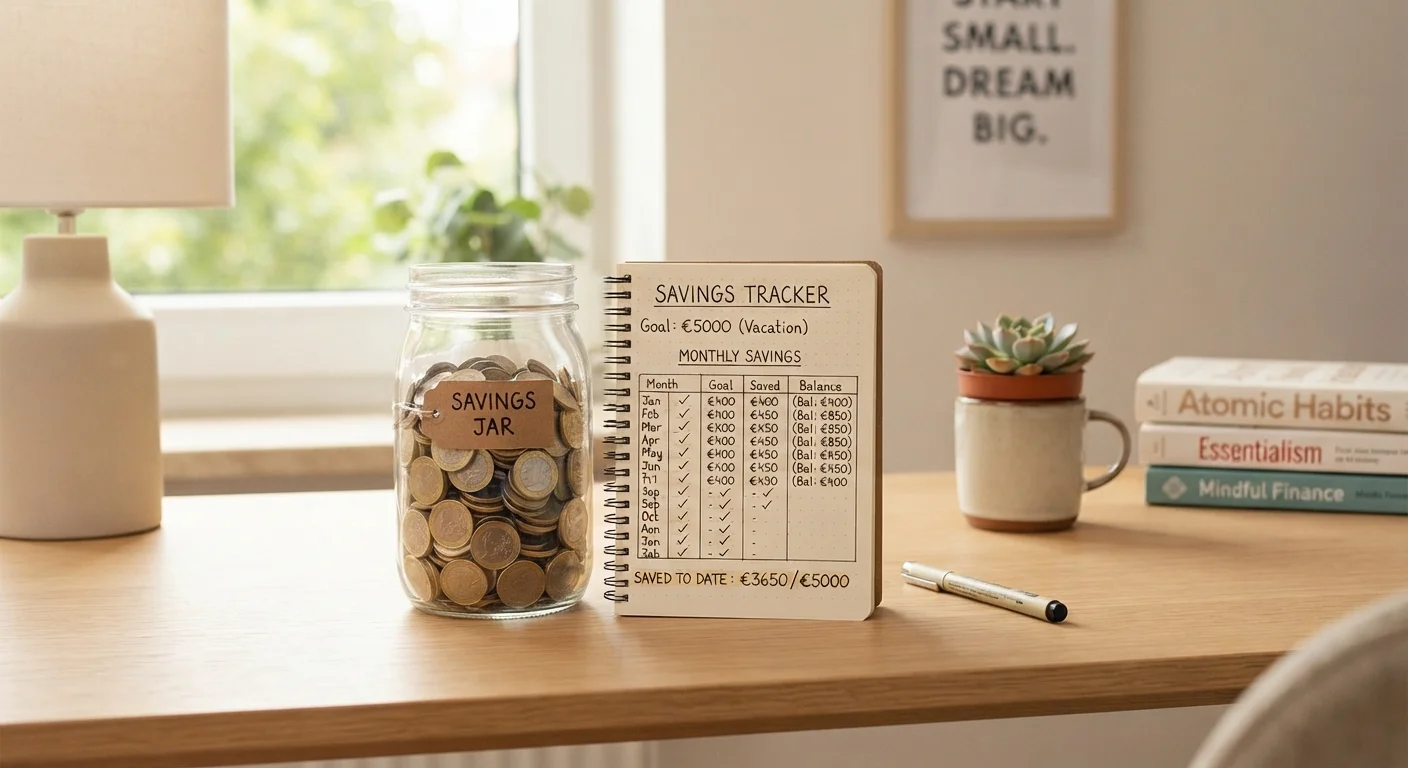
Keeping a visual reminder of your goal (a photo, a simple chart on your phone) reinforces the connection between your daily saving behavior and the outcome you actually want. The more vivid and specific the goal, the easier it is to defer spending in favor of progress.
Specific, meaningful goals give your savings a reason to exist beyond the number itself.
Schedule regular savings check-ins
A savings plan set once and never revisited tends to drift. Monthly or quarterly check-ins allow you to adjust your contribution amount as your income or expenses shift, celebrate progress, and troubleshoot any months where saving fell short.
These reviews don't need to be elaborate - fifteen minutes with your account balance and a simple tracking note is enough. Consistent review turns savings from a passive background activity into an active, evolving priority. This habit also prepares you to adapt your approach as your financial situation changes over time, which is especially relevant if you're balancing saving alongside debt repayment.
Regular check-ins keep your savings plan alive and responsive to real life.
Match your savings strategy to your budget approach
Different budgeting styles support savings in different ways. Someone using a zero-based budget - where every dollar is assigned a job - benefits from treating savings as a non-negotiable expense category. Someone using a percentage-based budget might earmark a fixed share of each paycheck automatically.
The key is alignment: your savings method should fit naturally inside your broader budgeting framework rather than compete with it. When the two are in sync, saving feels like part of a coherent plan rather than a sacrifice layered on top of one.
Savings that fit inside your existing budget system face far less resistance.
Putting It All Together
No single strategy works for everyone, and you don't need to implement all of them at once. The most effective approach is usually to layer two or three that address your specific friction points - whether that's forgetting to save, losing motivation mid-goal, or overspending what you've set aside.
Start With One Strategy, Not All Six
Trying to implement every savings strategy at once can feel overwhelming and may lead to abandoning all of them. Choose the single approach that addresses your biggest friction point - most likely automation if you tend to forget, or goal segmentation if you lose motivation - and add others once the first feels natural.
For a broader view of how savings strategies evolve across different life stages, managing savings and debt across every stage of adult life offers a useful long-term perspective. And if you're navigating debt at the same time, saving while in debt can help you think through how to sequence your priorities.
This article is for general informational and educational purposes only and does not constitute personalized financial advice. Consult a qualified financial professional for guidance tailored to your individual situation.