

Key Takeaways
- Plant-based proteins like beans and lentils deliver strong nutrition at a fraction of meat costs.
- Frozen and canned produce can match fresh vegetables nutritionally while reducing food waste.
- Cooking in bulk and planning meals weekly dramatically reduces per-serving food costs.
- Whole grains and legumes are among the most cost-efficient nutrient-dense foods available.
- Understanding food labels helps you avoid low-nutrient items that appear healthy but offer little value.
Why Budget and Nutrition Aren't at Odds
A widespread assumption holds that eating healthfully is expensive - that it requires specialty stores, organic labels, and premium ingredients. The evidence doesn't support that. Research consistently shows that whole, minimally processed foods like legumes, oats, eggs, frozen vegetables, and seasonal produce offer exceptional nutritional value at low cost. The challenge isn't price - it's strategy.
If you're still building your foundation in this area, our guide to balanced plate basics covers the core concepts without complicated tracking. And if you've noticed your grocery habits quietly working against your dietary goals, this piece on common shopping pitfalls is worth a read before you head to the store.
The practices below are grounded in nutrition science and real-world shopping realities - not aspirational meal plans that assume unlimited time and money.
Core Practices for Nutritious, Affordable Eating
These aren't abstract ideals. Each practice has a clear rationale and a direct impact on both your grocery bill and your nutritional intake.
Build meals around legumes and whole grains as your primary protein and energy sources.
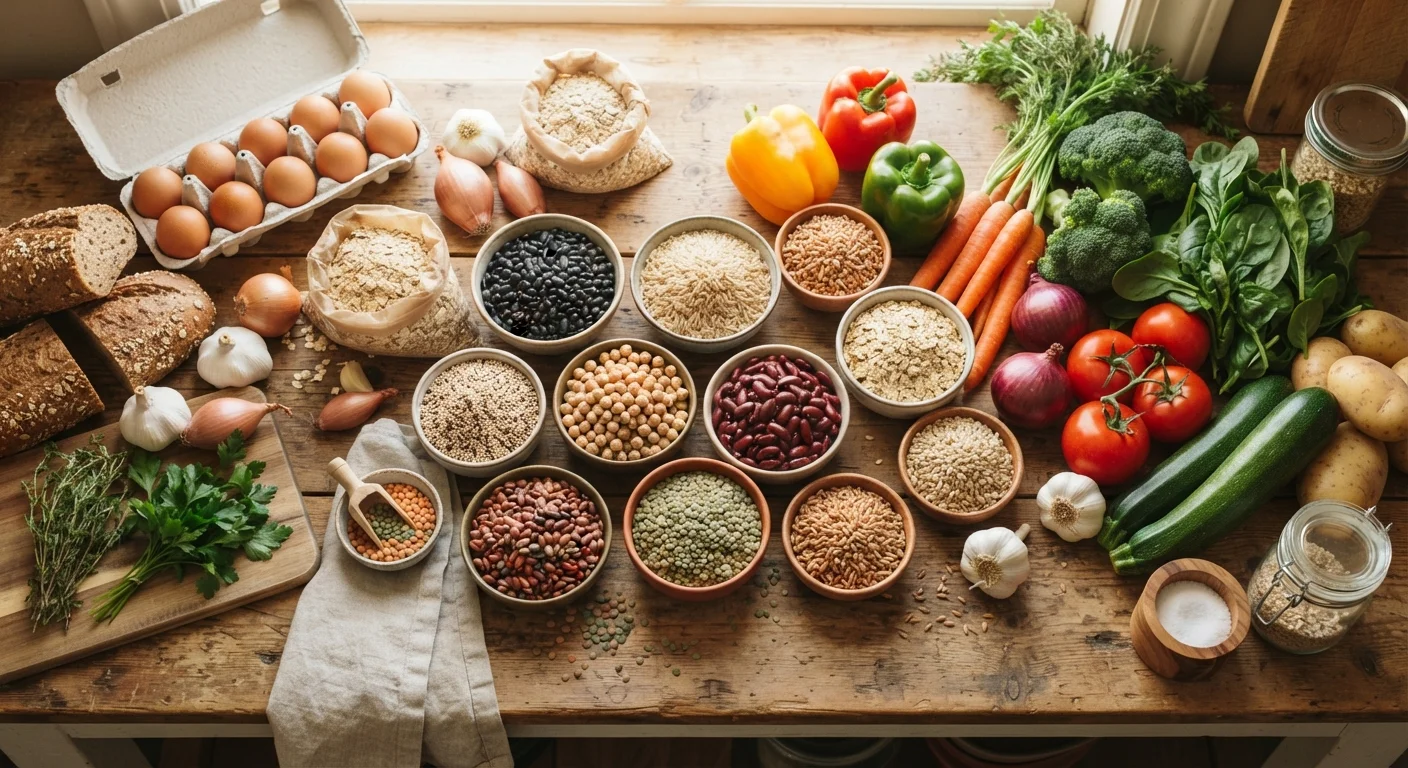
Dried beans, lentils, chickpeas, and whole grains like oats and brown rice deliver protein, fiber, and key micronutrients at a cost that's significantly lower than most animal proteins. These foods also have long shelf lives, reducing waste and enabling bulk purchasing.
Use frozen and canned vegetables without hesitation.
Freezing vegetables at peak ripeness locks in nutrients effectively. Studies comparing frozen and fresh produce find that frozen options often retain comparable - and sometimes higher - levels of certain vitamins. Canned vegetables are similarly nutritious, though choosing low-sodium versions where available is a reasonable preference.
Plan meals weekly and shop with a specific list.
Unplanned grocery trips are one of the primary drivers of both food waste and impulse spending on lower-nutrient items. A weekly plan anchors purchases to actual use, prevents over-buying perishables, and makes it easier to cook rather than rely on convenience food.
Cook in larger batches and repurpose leftovers intentionally.
Per-serving food costs drop when you cook in volume. Batch cooking also reduces the temptation to buy takeout on nights when time is short, which is one of the more consistent budget leaks in household food spending.
Read food labels to identify nutrient density, not just calorie count.
Price per calorie is a poor proxy for nutritional value. Some inexpensive packaged foods deliver calories primarily through added sugars or refined starches with limited micronutrient contribution. Scanning labels for fiber content, added sugars, and sodium helps distinguish genuinely affordable nutrition from cheap calories. Our guide to food label ingredients explains what to look for in plain terms.
Prioritize eggs as a versatile, affordable complete protein.
Eggs contain all essential amino acids and are among the most nutrient-dense foods per dollar available in most US grocery stores. They cook quickly, work across meal types, and store reliably. For households managing tight food budgets, eggs are a nutritional anchor worth centering.
Putting It Into Practice: Where to Start
Knowing what to do and actually doing it are different problems. The gap usually comes down to habit friction - making the right choices slightly harder than the default ones. The quick actions below are designed to close that gap without requiring a complete overhaul of how you shop or cook.
~$0.15
Cost per serving of dried lentils
USDA food cost data consistently places dried legumes among the lowest cost-per-gram-of-protein foods available in the US market.
30-40%
Average US household food waste by weight
According to USDA estimates, the average American household discards roughly 30-40% of the food supply, much of it from perishables bought without a plan.
If budget discipline more broadly is something you're working on, the principles in long-term budgeting habits apply directly to food spending. And for a wider lens on how different dietary traditions achieve nutritional quality affordably, this look at global eating patterns offers useful perspective.
This article is for general informational and educational purposes only and does not constitute medical or dietary advice. Consult a qualified healthcare professional or registered dietitian for guidance tailored to your individual health needs.