

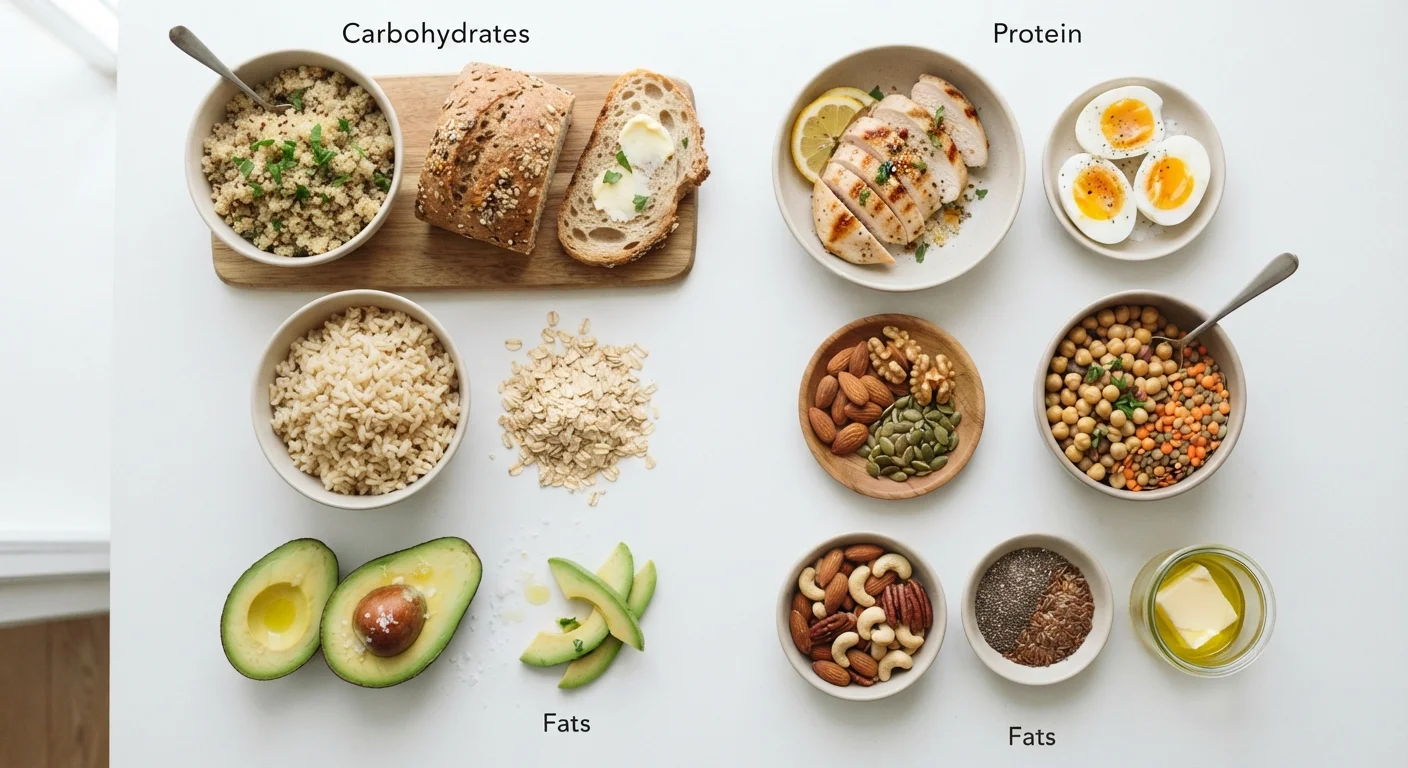
Key Takeaways
- All three macronutrients are essential - the body cannot function optimally without any one of them.
- Carbohydrates are the body's preferred and most efficient energy source, especially for the brain.
- Protein supplies amino acids needed to build and repair tissues, enzymes, and hormones.
- Dietary fat supports cell membrane integrity, fat-soluble vitamin absorption, and hormone synthesis.
- Food quality within each macronutrient category matters as much as quantity.
- Consult a registered dietitian for personalized guidance on macronutrient balance.
Macronutrients
Macronutrients are the three main categories of nutrients - carbohydrates, protein, and fat - that your body needs in relatively large amounts to function. Each one provides energy (measured in calories) and serves distinct biological roles beyond simply fueling activity. They work together to support everything from brain function and muscle repair to hormone production and immune health.
Carbohydrates and protein each provide 4 calories per gram; fat provides 9 calories per gram. These values are used in nutrition labeling and dietary planning.
Why Macronutrients Matter
Nutrition conversations often focus on individual foods or nutrients, but macronutrients are the foundational framework. They explain why food does what it does - why a bowl of oatmeal feels different than a handful of almonds, or why a protein-rich breakfast tends to support sustained energy differently than a sugar-heavy one.
Each macronutrient has a primary job, but none operates in isolation. The body runs best when all three are present in proportions that suit an individual's age, activity level, and health status. Rather than viewing any macronutrient as inherently good or bad, science supports understanding what each one contributes - and choosing quality sources within each category. This perspective also helps debunk common misconceptions; nutrition myths that science has largely moved past often center on demonizing one macronutrient while ignoring context.
Carbohydrates: The Body's Preferred Fuel
Carbohydrates are the body's primary and most readily used energy source. When you eat carbs, they are broken down into glucose, which circulates in the bloodstream and powers cells - particularly in the brain, which depends almost exclusively on glucose under normal conditions. Excess glucose is stored in the liver and muscles as glycogen, ready to be released when energy demand rises.
Not all carbohydrates behave the same way. Refined sugars and white flour digest rapidly, causing quicker spikes in blood glucose. Whole grains, legumes, vegetables, and fruit contain fiber and complex starches that digest more gradually, supporting steadier energy levels. For a closer look at how these different forms compare, our guide on fiber, sugar, and starch breaks down each type clearly.
45-65%
Recommended share of daily calories from carbohydrates
According to the Dietary Guidelines for Americans, this range reflects the variation appropriate across different activity levels and health needs.
10-35%
Recommended share of daily calories from protein
The Acceptable Macronutrient Distribution Range (AMDR) for protein is set by the National Academies of Sciences, Engineering, and Medicine.
20-35%
Recommended share of daily calories from fat
The AMDR for total fat, per the National Academies; emphasis is placed on unsaturated fat sources within this range.
The U.S. Dietary Guidelines suggest that carbohydrates make up roughly 45-65% of daily calories for most adults - a wide range that reflects individual variation. Quality matters: choosing fiber-rich, minimally processed carb sources consistently is associated with better metabolic and cardiovascular health outcomes in large population studies.
Protein: Building Blocks for Growth and Repair
Protein's defining role is structural. It supplies the amino acids your body uses to build and repair muscle tissue, produce enzymes and hormones, support immune function, and maintain the structural proteins found in skin, hair, and connective tissue. Of the 20 amino acids involved in human metabolism, nine are considered essential - meaning the body cannot synthesize them and must obtain them from food.
Animal proteins (meat, poultry, fish, eggs, dairy) are "complete" proteins, meaning they contain all nine essential amino acids. Most plant proteins are "incomplete" individually, but a varied plant-based diet easily covers all essential amino acids across the day. Protein also tends to be the most satiating macronutrient per calorie, a property often linked to its effect on appetite-regulating hormones.
“Protein has a higher satiety value than carbohydrates or fats, largely because of its effect on gut hormones and the energy cost of its own digestion and metabolism.”
— Walter Willett, Professor of Epidemiology and Nutrition, Harvard T.H. Chan School of Public Health
Protein needs rise meaningfully with physical activity, during recovery from illness, in older adults working to preserve muscle mass, and during pregnancy. These are situations where consulting a registered dietitian for personalized guidance is particularly worthwhile.
Fat: More Than an Energy Reserve
Dietary fat has a complicated public reputation, but its biological importance is clear. Fat is essential for absorbing fat-soluble vitamins (A, D, E, and K), maintaining cell membrane integrity, producing steroid hormones including estrogen and testosterone, and insulating and protecting vital organs. It also provides the most concentrated calorie source of any macronutrient - 9 calories per gram versus 4 for carbs and protein - making it an efficient long-term energy store.
The type of fat matters significantly. Unsaturated fats - found in olive oil, avocados, nuts, seeds, and fatty fish - are broadly linked to cardiovascular benefit in research. Saturated fats, found primarily in animal products, are associated with less favorable lipid profiles when consumed in excess, though this relationship is more nuanced than once thought. Artificially produced trans fats, largely removed from the US food supply after regulatory action, were the most clearly harmful category. Current dietary guidance encourages prioritizing unsaturated fat sources without eliminating fat altogether.
Choosing Fat Sources Wisely
Rather than tracking grams of fat precisely, focus on the source. Replacing saturated fats with unsaturated alternatives - swapping butter for olive oil, or adding fatty fish like salmon to your weekly meals - is one of the most consistently supported dietary shifts in nutrition research. Small, sustainable substitutions add up over time.
Understanding how fat interacts with the gut microbiome and overall metabolic health is an active area of research. For a grounded look at what's well-established versus still emerging, our article on gut health and nutrition offers useful context.
This article is for general informational and educational purposes only and is not a substitute for professional medical or dietary advice. Always consult a qualified healthcare provider or registered dietitian before making significant changes to your diet.