

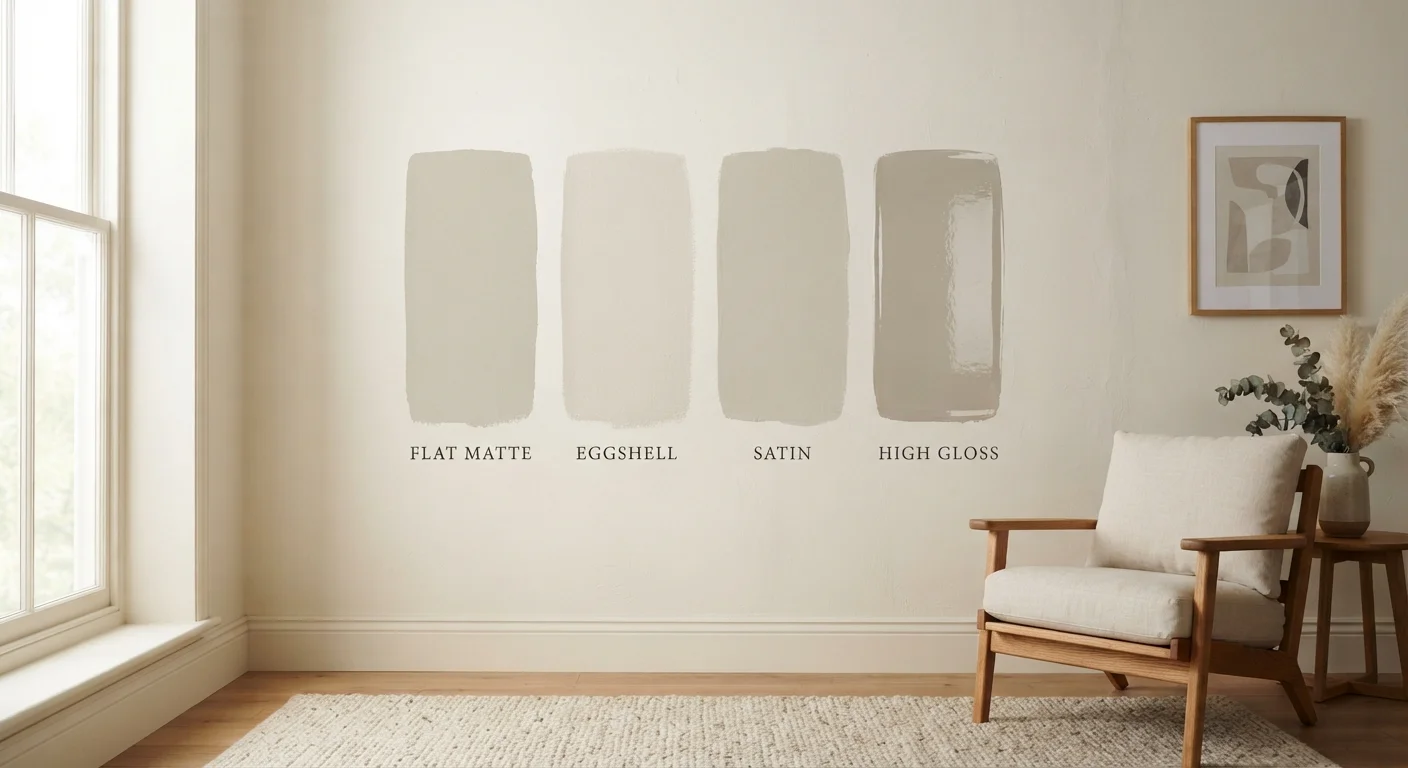
Key Takeaways
- Matte hides wall imperfections well but is harder to clean without scuffing.
- Eggshell offers a subtle sheen and is a versatile choice for most living areas.
- Satin resists moisture and scrubbing, making it ideal for kitchens, bathrooms, and hallways.
- Gloss finishes are the most durable and washable but highlight surface flaws clearly.
- Matching sheen to room function - not just appearance - leads to longer-lasting results.
Our Verdict
No single paint finish works perfectly in every room. Eggshell is the most forgiving all-around choice for main living spaces, while satin earns its place in high-traffic and high-moisture areas. Reserve matte for low-touch rooms and ceilings, and use gloss strategically on trim and cabinetry where durability matters most.
| Best for | Recommended |
|---|---|
| Bedrooms and formal living rooms with minimal traffic | Matte |
| Everyday living areas, dining rooms, and open-plan spaces | Eggshell |
| Kitchens, bathrooms, hallways, and kids' rooms | Satin |
| Trim, doors, cabinets, and built-ins needing maximum durability | Gloss |
What Paint Sheen Actually Means
Paint sheen - also called finish - refers to how much light a dried paint surface reflects. The higher the sheen, the more light bounces back at you, creating a shinier appearance. Sheen level is directly tied to the ratio of pigment to binder resins in the paint formula: more resin equals more gloss and, generally, more durability.
The four finishes most commonly used for interior walls are matte (also called flat), eggshell, satin, and gloss (sometimes labeled semi-gloss or high-gloss depending on the product). Each sits at a different point on the sheen spectrum and brings trade-offs in washability, light reflection, and surface tolerance.
| Matte | Eggshell | Satin | Gloss | |
|---|---|---|---|---|
| Sheen level | None / flat | Very low | Medium | High |
| Washability | Low - scuffs easily | Moderate | Good - scrub-resistant | Excellent |
| Hides wall imperfections | Excellent | Good | Fair | Poor - highlights flaws |
| Moisture resistance | Poor | Low to moderate | Good | Excellent |
| Best surface use | Ceilings, low-traffic walls | Living areas, bedrooms | Kitchens, baths, hallways | Trim, doors, cabinets |
| Surface prep required | Forgiving | Moderate | More critical | Very critical |
Matte and Eggshell: The Low-Sheen Options
Matte finish absorbs light rather than reflecting it, which is excellent at camouflaging surface imperfections like small dents, uneven textures, or patched repairs. This makes it a practical choice for older homes with less-than-perfect drywall. The downside: matte paint is the least washable of the four finishes. Rubbing a scuff mark too aggressively can remove or dull the paint film, leaving a shiny spot. Use it in bedrooms, home offices, and ceilings - spaces that don't see grease, steam, or sticky hands.
Eggshell finish has a very subtle, low luster - roughly the sheen of, as the name implies, an egg's shell. It's marginally more washable than matte and stands up to the occasional wipe-down without losing its appearance. Eggshell has become the default choice for most main living areas because it's forgiving on imperfect walls while still holding up to normal day-to-day use.
Test Before You Commit
Paint a small sample patch - at least 12 inches square - on the actual wall before purchasing full quantities. View the dried sample at different times of day, both in natural and artificial light. Sheen levels can look dramatically different depending on light source and wall orientation.
Satin and Gloss: The Higher-Sheen Workhorses
Satin finish reflects noticeably more light than eggshell, giving walls a soft, velvety glow. More importantly, it forms a harder paint film that resists moisture and repeated cleaning - qualities that matter in kitchens, bathrooms, laundry rooms, and hallways. Satin can handle scrubbing with mild household cleaners without breaking down. The trade-off is that surface prep becomes more important: satin will visually telegraph wall imperfections more than lower-sheen options.
Gloss finishes - both semi-gloss and high-gloss - are rarely applied to large wall surfaces in most homes because they amplify every bump, seam, and roller mark. Where they shine is on trim work: baseboards, door casings, window frames, and kitchen cabinets. Gloss dries to a very hard, non-porous surface that resists grime, humidity, and knocks. Semi-gloss is the most common choice for trim; high-gloss is typically reserved for furniture, built-ins, and cabinetry where a lacquer-like appearance is desired.
Don't Skip Surface Preparation
Higher-sheen finishes like satin and gloss are unforgiving of poorly prepped surfaces. Skim-coat or fill any cracks, sand repairs flush, and prime bare patches before applying. Rushing this step with a gloss finish will make imperfections more visible after painting, not less - the opposite of the intended result.
Choosing by Room: A Practical Guide
When deciding which finish to use, start with the room's function rather than its aesthetics. Ask two questions: How much physical contact does this surface get? and Is moisture a factor?
- Ceilings: Matte or flat - light reflectivity on ceilings causes glare and highlights imperfections dramatically.
- Bedrooms and home offices: Matte or eggshell - low traffic, so washability is less critical.
- Living rooms and dining rooms: Eggshell - balances a clean appearance with enough durability for moderate use.
- Hallways and stairwells: Satin - high contact with walls and hands warrants a more scrubbable surface.
- Kitchens and bathrooms: Satin - resists grease, steam, and repeated wiping without deteriorating.
- Kids' rooms: Satin - walls in these rooms see significant wear and benefit from easy cleaning.
- Trim, doors, and cabinets: Semi-gloss or gloss - maximum durability where surfaces are touched constantly.
One practical note: using the same finish on both walls and trim in a room tends to flatten the visual contrast. Painting trim in a higher sheen than walls - for example, eggshell walls with semi-gloss trim - creates a subtle but effective visual separation that makes architectural details stand out.