

Key Takeaways
- Your electrical panel controls and protects every circuit in your home.
- Panel capacity is measured in amps - most modern homes need at least 200 amps.
- Running out of circuit slots or amperage can create a safety hazard, not just an inconvenience.
- Any panel upgrade or new circuit addition requires a licensed electrician and a permit in most jurisdictions.
- Knowing your panel's age, brand, and condition helps you have informed conversations with professionals.
Electrical Panel
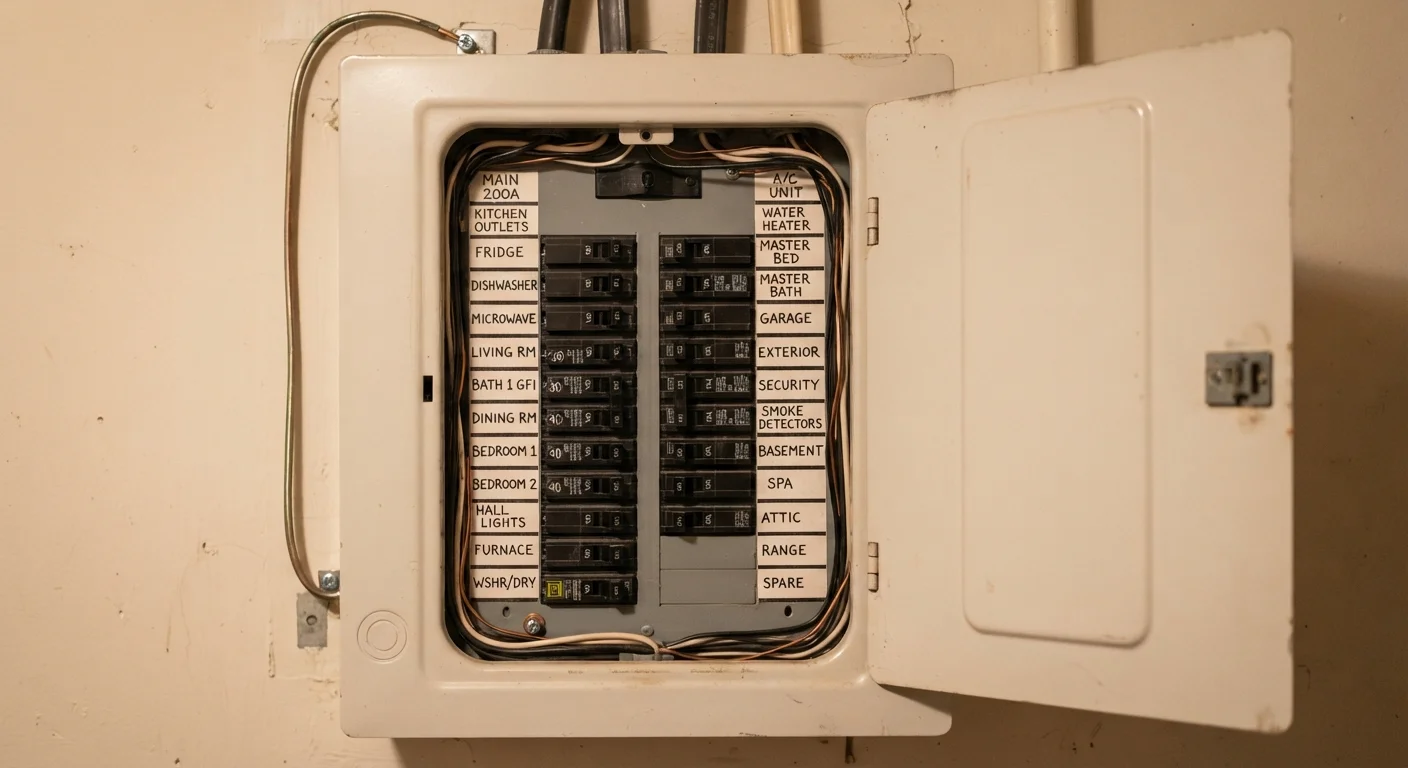
An electrical panel - also called a breaker box or load center - is the metal cabinet that receives electricity from the utility company and distributes it throughout your home via individual circuits. Each circuit is protected by a breaker that automatically shuts off power if a wire carries more current than it can safely handle. It is the nerve center of your home's entire electrical system.
Panels are rated by their total amperage capacity (commonly 100A, 150A, or 200A) and by the number of available circuit slots, which determines how many separate circuits the home can support.
What Your Electrical Panel Actually Does
Your electrical panel sits at the boundary between the outside world's power supply and your home's internal wiring. Electricity enters through a service entrance, passes through a main breaker - which controls all power to the home - and then splits into individual branch circuits. Each circuit feeds a specific area or appliance and is protected by its own breaker.
When a circuit draws more current than its breaker is rated for, the breaker trips, cutting power automatically. This isn't a flaw; it's the safety system working as intended, protecting your wiring from overheating and potential fires. A breaker that trips repeatedly is signaling a real problem - either the circuit is overloaded or there's a wiring issue - not simply a nuisance to reset and ignore.
Older Panel Brands Worth Flagging
Certain older panel brands - most commonly identified by home inspectors - have been associated with breaker reliability concerns over decades of use. If your home was built between the 1950s and 1980s and still has its original panel, ask a licensed electrician to identify the make and model during any inspection. This is general due diligence, not cause for immediate alarm.
Reading Your Panel's Capacity
Two numbers define what your panel can handle: its amperage rating and its number of circuit slots. The amperage rating - printed on the main breaker, usually 100, 150, or 200 amps - tells you the maximum load the panel can safely carry at once. The slot count tells you how many circuits can be connected.
Homes built before the 1970s sometimes have 60-amp panels, which are generally insufficient for modern loads. If you're planning to add an EV charger, upgrade to a larger HVAC system, or bring in major kitchen appliances, an electrician should evaluate whether your current amperage is adequate before any work begins.
200A
Standard panel capacity for new single-family homes
The National Electrical Code and most local jurisdictions now treat 200-amp service as the baseline for new residential construction.
~40%
US homes estimated to have outdated electrical panels
Industry electricians and home inspectors frequently cite a large share of existing housing stock as having panels that predate modern electrical demand.
51,000+
Home electrical fires per year in the US
According to the US Fire Administration, electrical fires in residential buildings cause thousands of injuries and billions in property damage annually.
Recognizing Warning Signs Before You Plan Any Upgrade
Before adding a circuit or a high-draw appliance, walk through this mental checklist:
- Breaker trips regularly: Suggests a circuit is consistently overloaded.
- Lights dim when appliances kick on: A sign of voltage drop, often from an undersized panel or aging wiring.
- Burned smell or scorch marks near the panel: This is an immediate situation for a licensed electrician - do not wait.
- No open slots: You cannot add new circuits without a panel upgrade or subpanel.
- Panel is older than 25-30 years: Components wear over time, and some older panel brands have documented reliability concerns that an electrician can identify.
See our guide on when to call a professional to understand which electrical tasks should never be attempted without a licensed contractor.
Label Your Breakers Before Calling an Electrician
Take 20 minutes to test and label every breaker in your panel before scheduling an electrician visit. Plug a lamp into each outlet, flip breakers one at a time, and mark which breaker controls which area. This simple step saves time during the electrician's assessment and helps you spot any mystery circuits that aren't labeled.
Why Permits and Professionals Are Non-Negotiable
Electrical panel work is among the most regulated categories in home improvement - and for good reason. Improper wiring is a leading cause of residential fires. In the US, virtually all panel upgrades, new circuit additions, and service changes require a building permit and inspection by a local authority. The permit process exists to protect you, not inconvenience you.
Unpermitted electrical work can create serious problems: it may void your homeowner's insurance coverage for related claims, complicate a future home sale, and leave hazards hidden inside your walls. When you hire a licensed electrician, they handle the permit filing and coordinate with the inspector - that process is part of the job.
Knowing your panel's current amperage, slot availability, age, and any recurring issues gives you the foundation to have a productive conversation with an electrician rather than starting from zero. You don't need to diagnose the problem yourself; you need enough understanding to ask the right questions and evaluate the answers.
This article provides general educational information about residential electrical systems. It is not a substitute for advice from a licensed electrician. Always consult a qualified professional and verify local permit requirements before beginning any electrical work.