

Key Takeaways
- Oahu suits travelers who want city conveniences alongside world-famous beaches and rich cultural history.
- Maui balances resort polish with natural drama, making it a strong fit for honeymooners and outdoor adventurers alike.
- Kauai is the most remote and rugged of the major islands, best suited for nature-focused, unhurried travelers.
- The Big Island is the largest by far, offering volcanic landscapes, diverse climates, and fewer crowds than Maui or Oahu.
- No single island is universally 'best' - matching your travel style to the island's character makes all the difference.
Our Verdict
Each Hawaiian island has a genuine personality of its own, and the right choice depends entirely on what kind of trip you want. Oahu delivers the most urban energy and cultural depth; Maui offers resort luxury wrapped in natural beauty; Kauai rewards slow, immersive exploration; and the Big Island is for travelers who want scale, volcanic wonder, and elbow room. Mixing up your expectations and your island is the most common Hawaii planning mistake - and easily avoided.
| Best for | Recommended |
|---|---|
| First-time visitors or those who want city life plus iconic beaches | Oahu |
| Honeymooners, resort-seekers, and Road to Hana road-trippers | Maui |
| Nature lovers, hikers, and travelers who prize solitude | Kauai |
| Volcanic landscape enthusiasts and off-the-beaten-path explorers | The Big Island |
Why the Island You Choose Matters More Than You Think
Most travelers think of Hawaii as a single destination with a warm, uniform experience. The reality is that Oahu, Maui, Kauai, and the Big Island are as different from one another as cities in different countries. Choosing based on a postcard image - or simply booking whichever flight is cheapest - can lead to a trip that feels slightly off, even if the beaches are stunning.
The gap between expecting Maui's polished resort corridor and landing in Kauai's rural north shore, for example, can be jarring in both directions. Taking an hour to match your priorities to an island's actual character is the single most valuable thing you can do before booking. Here's an honest breakdown.
Oahu: Energy, History, and Honolulu's Pull
Oahu is home to roughly three-quarters of Hawaii's total population, and it shows - in a good way. Honolulu offers legitimate urban energy: diverse dining, vibrant nightlife, walkable neighborhoods, and excellent public transit by island standards. Waikiki Beach is iconic for a reason, even if it's busy. But Oahu also holds the Pearl Harbor National Memorial, the Bishop Museum (the largest natural and cultural history museum in Hawaii), and the lush windward coast, which feels worlds away from downtown.
Oahu works best for travelers who want a blend of history, culture, convenience, and beach - and who don't mind sharing that beach with others. It's also the best-connected island for inter-island flights if you plan to hop around.
Use Oahu as a Hub, Not Just a Destination
Oahu's Daniel K. Inouye International Airport is Hawaii's main inter-island hub, with frequent short flights to Maui, Kauai, and the Big Island. If you're planning a multi-island trip, routing through Honolulu - and spending a night or two - lets you explore the island without burning an extra travel day.
Maui: The Resort Island That Still Earns Its Reputation
Maui is frequently described as Hawaii's most beautiful island, and while beauty is subjective, its variety is not. In a single day, you can drive the switchback curves of the Road to Hana through rainforest and sea cliffs, watch sunrise above the clouds at Haleakalā National Park's 10,000-foot summit, and snorkel off Molokini Crater. The west side - Kaanapali, Wailea - offers well-developed resort infrastructure without feeling as congested as Waikiki.
Maui is a strong fit for couples, honeymooners, and anyone who wants polished amenities alongside genuine outdoor adventure. Note that whale watching (humpbacks congregate in Maui's waters seasonally, typically winter through spring) is genuinely world-class here. Travelers who find resorts sterile may feel Maui leans commercial in spots, but the natural experiences more than compensate.
| Oahu | Maui | Kauai | Big Island | |
|---|---|---|---|---|
| Overall vibe | Urban, vibrant, historic | Polished resort meets adventure | Wild, rural, unhurried | Vast, volcanic, diverse |
| Best for | First-timers, culture seekers | Honeymooners, outdoor couples | Nature lovers, hikers | Volcano enthusiasts, explorers |
| Crowd level | Highest | High in resort areas | Low to moderate | Low outside Kona |
| Resort infrastructure | Extensive (Waikiki) | Excellent (Wailea, Kaanapali) | Limited | Moderate (Kohala Coast) |
| Signature experience | Pearl Harbor, Diamond Head | Road to Hana, Haleakalā | Nā Pali Coast, Hanalei Bay | Volcanoes National Park |
| Driving required | Moderate | Moderate to high | Moderate | Very high |
| Rainy season impact | Mild | Varies by side | Significant (north shore) | High on east side |
Kauai: The Garden Isle Rewards Patience
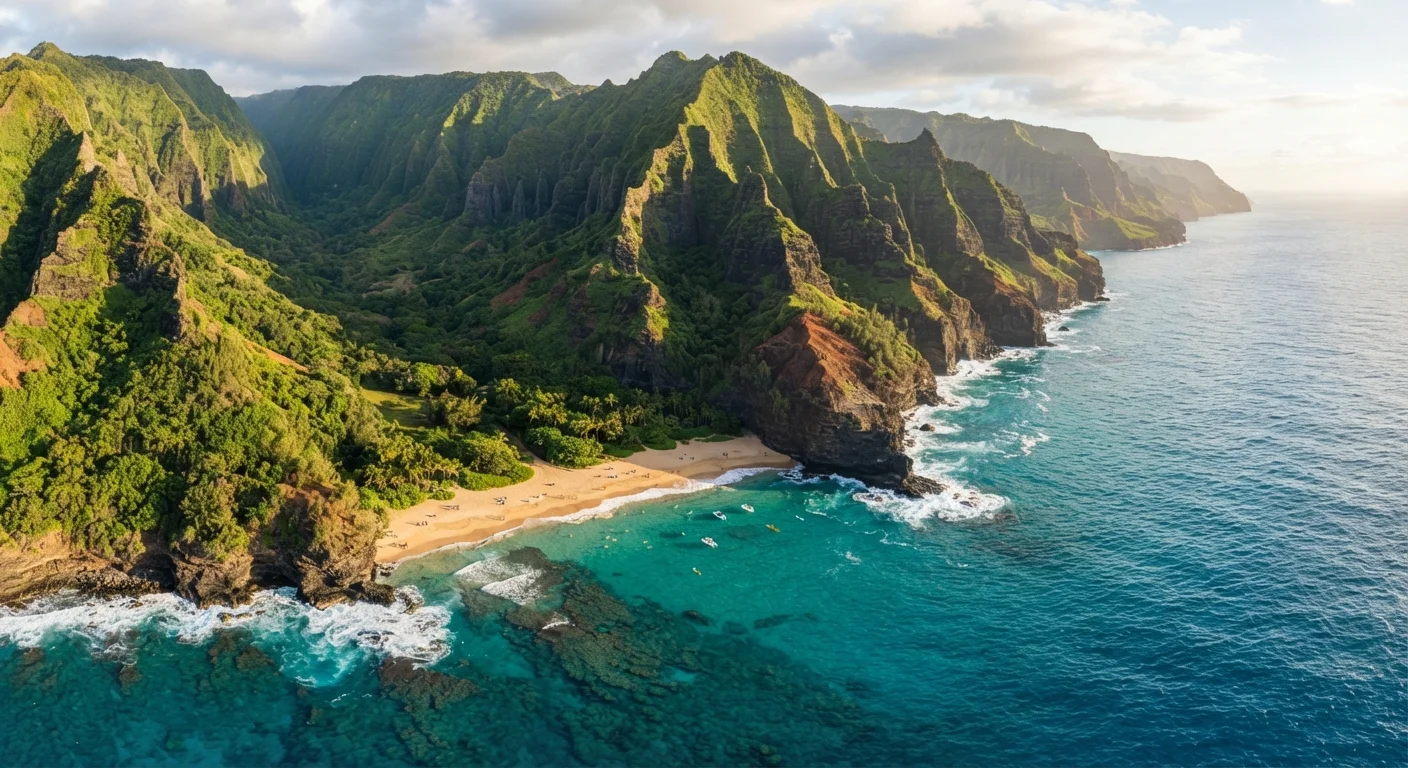
Kauai is the oldest of the main Hawaiian islands geologically, and it looks the part: dramatic fluted cliffs, waterfalls dropping into jungle, and the legendary Nā Pali Coast - accessible only by boat, helicopter, or a strenuous multi-day trail. There is no major city, no Costco buzz, and genuinely limited nightlife. The largest town, Lihue, is modest. That's the whole point.
Travelers who prize hiking, kayaking, and long stretches of uncrowded beach find Kauai transformative. The north shore around Hanalei Bay is one of the most visually striking places in the United States. The tradeoff is that rain - particularly on the north shore - is frequent and unpredictable. Flexibility and an unhurried mindset are essential. Kauai does not reward rushing.
72 miles
Length of the Nā Pali Coast trail system
The Kalalau Trail along Kauai's Nā Pali Coast spans roughly 11 miles one way to Kalalau Beach, through one of the most remote coastal wilderness areas in the US.
4,028 sq mi
Size of Hawaii Island (the Big Island)
The Big Island covers more than 4,000 square miles, making it larger than the combined area of all other Hawaiian islands - a scale many first-time visitors underestimate.
The Big Island: Scale, Volcanoes, and Breathing Room
Hawaii Island - called the Big Island to avoid confusion with the state - is larger than all other Hawaiian islands combined, and it contains 11 of the world's 13 climate zones. You can snorkel in warm black-lava bays in the morning and stand in a cool, misty cloud forest by afternoon. Hawaiʻi Volcanoes National Park offers something genuinely rare: ongoing volcanic activity you can observe safely from designated viewing areas (conditions vary; always check park alerts before visiting).
The island's size means driving times between attractions are significant - plan accordingly. The Kohala Coast on the west side has luxury resorts and calm, sunny beaches; the Hilo side on the east is wetter, more agricultural, and far less touristed. The Big Island is ideal for travelers who want volcanic drama, space, and the freedom to disappear from the tourist trail. It can feel sparse if you crave the buzz of a resort corridor.
Travel conditions, entry requirements, and park access can change; always verify current information with official state and national park sources before your trip.