

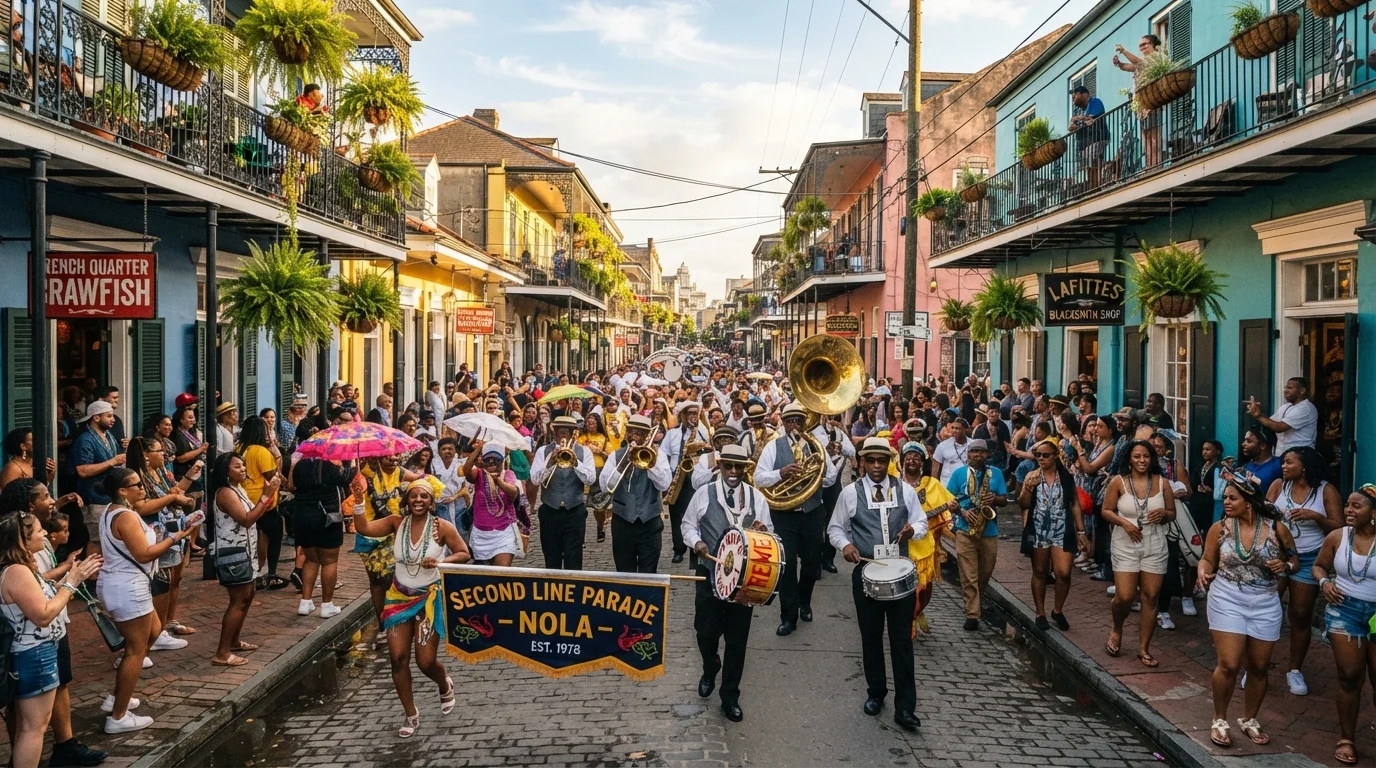
Key Takeaways
- New Orleans' most authentic cultural life unfolds in neighborhoods well beyond the French Quarter.
- Tremé is widely regarded as the oldest African American neighborhood in the United States.
- Dishes like gumbo, red beans and rice, and po'boys are rooted in specific community histories worth understanding.
- Second line parades happen most Sundays and are free, public, and community-led events.
- The streetcar system connects major neighborhoods and is a practical, affordable transit option.
- Visiting during Jazz Fest or Mardi Gras requires planning well in advance - crowds and prices spike significantly.
Why Look Beyond the French Quarter
Bourbon Street delivers what it promises - loud, unfiltered revelry - but it represents only a thin slice of what New Orleans actually is. The city's real character lives in its neighborhoods: their architecture, their food traditions, their music, and the communities that built them over centuries. Travelers who venture past the French Quarter almost universally say it transforms their understanding of the city. This guide is built for that kind of exploration.
The French Quarter itself is worth a walk - the Creole architecture is genuinely stunning and the historic market district has real depth - but think of it as an entry point, not a destination. The neighborhoods radiating outward are where the story gets richer.
The French Quarter Has Genuine Depth Too
While this guide focuses on neighborhoods beyond the Quarter, its historic core deserves more than a quick pass. The Old Ursuline Convent, the New Orleans Historic Voodoo Museum, and the French Market all repay a slower, more curious visit. The architecture alone - a blend of Spanish colonial and French Creole styles - is a living history lesson on who shaped this city and when.
Tremé: The Soul of New Orleans Music
Just northwest of the French Quarter sits Tremé, widely recognized as the oldest African American neighborhood in the United States. Its streets gave rise to jazz, produced legendary musicians across generations, and continue to be the heartbeat of New Orleans' brass band tradition. Congo Square - within Louis Armstrong Park - is a genuinely significant historical site: it was one of the few places in antebellum America where enslaved people were permitted to gather, drum, and maintain African cultural practices.
The neighborhood's street life rewards slow walking. Listen for brass bands rehearsing. Stop at the Backstreet Cultural Museum, a community-run institution documenting Mardi Gras Indian suits, second line culture, and jazz funerals with remarkable intimacy and depth. Keep an eye on local listings for second line parades, which move through Tremé and surrounding wards most Sundays between fall and spring - they're free, open to anyone who joins the crowd, and genuinely unlike anything else in American civic life.
If you want to find a second line parade, check the Social Aid and Pleasure Club Task Force's published schedule - many parades aren't widely advertised through tourist channels but are publicly listed.
Second line parades are community events that move through residential neighborhoods on a set schedule each season. Knowing where to look prevents you from missing one of the city's most authentic public traditions.
Book a room in the Marigny or Bywater rather than the French Quarter if you want walkability to live music and restaurants without the noise and pricing premium of Bourbon Street's immediate footprint.
Both neighborhoods sit within easy walking distance of Frenchmen Street and the French Quarter but offer a quieter, more residential experience that many travelers find more rewarding.
Bywater and the Marigny: Art, Color, and Community
Downriver from the French Quarter, the Faubourg Marigny and Bywater neighborhoods form a corridor of shotgun houses, bold murals, independent music venues, and a creative community that has shaped the city's contemporary identity. Frenchmen Street - the Marigny's main artery - offers live music in a cluster of small clubs most nights of the week, with a format that feels far more rooted in local culture than the tourist-oriented scene on Bourbon Street.
Bywater has developed a distinct identity as an arts neighborhood, with studio spaces, gallery pop-ups, and the kind of neighborhood coffee shops and restaurants where locals actually eat. The area sits along the Mississippi River, and Crescent Park - a public riverfront greenway - offers some of the most genuinely scenic views of the river in the city. It's a good reminder that the Mississippi isn't just a geographic fact here; it's part of daily life.
1,500+
Musicians in local brass band tradition
New Orleans supports one of the most active brass band scenes of any city in the world, with musicians performing across neighborhoods, not just tourist venues.
~500,000
Visitors during Jazz Fest annually
The New Orleans Jazz & Heritage Festival typically draws around half a million attendees across its two weekends, making early accommodation planning essential.
Uptown and the Garden District
Uptown New Orleans stretches along St. Charles Avenue, where the historic streetcar line runs beneath a canopy of live oaks. The Garden District is the neighborhood most associated with grand antebellum mansions, and the architecture is dramatic - wide porches, ornate ironwork, and lush gardens that earned the area its name. It's worth an afternoon walk even for travelers with no particular interest in architecture, simply because the street-level experience is so visually rich.
Magazine Street, which runs parallel through Uptown, is a long corridor of locally owned restaurants, specialty shops, and neighborhood institutions. Audubon Park - anchored by Audubon Zoo - sits at the far end of Uptown and is a popular gathering spot for local families. The Fly, an informal stretch of riverbank at the park's edge, is where New Orleanians picnic and watch barges move along the river on weekend afternoons.
Ride the St. Charles Streetcar for Context
The St. Charles Avenue streetcar line runs from the French Quarter through the Garden District and deep into Uptown. A single ride gives you a visual survey of how dramatically New Orleans' neighborhoods shift in character over just a few miles. It's one of the most affordable and informative things you can do on your first day.
The Food That Defines New Orleans
New Orleans cuisine is one of the most distinctive regional food cultures in the United States, shaped by West African, French, Spanish, Native American, and Caribbean influences layered over centuries. Understanding that history makes the food more interesting, not just more delicious.
- Gumbo - A rich stew built on a dark roux (a cooked flour-and-fat base), okra or filé powder as thickeners, and whatever protein the cook prefers. Chicken and andouille sausage is a classic combination; seafood gumbo is another tradition entirely.
- Red beans and rice - Traditionally cooked on Mondays, when beans could simmer unattended while laundry was done. Still served that way in many neighborhood restaurants.
- Po'boys - Overstuffed sandwiches on French bread from local bakeries. Roast beef debris and fried shrimp are two deeply traditional fillings.
- Beignets - Square fried dough blanketed in powdered sugar, most famously associated with Café Du Monde in the French Quarter, but found at neighborhood spots city-wide.
- Crawfish - Boiled with spices, corn, and potatoes, crawfish are a springtime ritual that draws families and neighborhoods together. The technique and spice blends vary by family.
Eating well in New Orleans doesn't require expensive restaurants. Some of the most celebrated dishes exist in humble neighborhood spots and lunch counters that have served the same recipes for decades.
Food Allergies and Dietary Needs
New Orleans cuisine is built on shellfish, pork products, and rich animal-fat bases. Travelers with shellfish allergies or strict dietary restrictions should ask detailed questions about ingredients and preparation, even in dishes that seem straightforward. Staff at neighborhood restaurants are generally accustomed to these questions - don't hesitate to ask.
Cultural Rhythms: Festivals, Customs, and Etiquette
New Orleans has a festival culture that runs nearly year-round. The two most significant are Mardi Gras (held in late winter, with dates shifting each year based on the Catholic calendar) and the New Orleans Jazz & Heritage Festival (typically late April into early May). Both draw enormous national and international audiences, which means accommodation and logistics require planning months in advance. That said, both are genuinely worth the effort if crowds don't deter you.
Beyond the major events, the city's cultural calendar includes the French Quarter Festival, the Essence Festival, and dozens of neighborhood second line parades organized by Social Aid and Pleasure Clubs - community organizations with roots going back to mutual-aid societies formed by free Black residents in the 19th century. Attending a second line as a respectful visitor is welcomed; being a considerate guest means joining the crowd without obstructing it and understanding you're participating in a living community tradition, not a tourist performance.
“New Orleans is the only place I know of where you ask someone what they want to be when they grow up and they say they want to play music, and it's a reasonable answer.”
— Ellis Marsalis Jr., New Orleans jazz pianist and educator
Practical Tips for Getting Around
New Orleans is a relatively compact city for exploration, but summer heat and humidity are genuinely intense and worth factoring into daily plans. Most visitors find that mornings are best for walking, with afternoons better suited to indoor cultural sites, museums, or a long lunch. The St. Charles Avenue streetcar is an affordable and practical way to move between the French Quarter, the Garden District, and Uptown - and it's an experience in itself as one of the oldest continuously operating streetcar lines in the world.
Rideshare services are widely available and practical for reaching neighborhoods farther from the core. Parking a personal vehicle in the city center is expensive and logistically challenging; if you're staying downtown, leaving the car parked is almost always the better choice. Many of the neighborhoods described in this guide - Tremé, the Marigny, Bywater - are walkable from the French Quarter, though sidewalk conditions vary and some blocks require attention, especially after rain.
For entry requirements, local regulations, or anything safety-adjacent, always verify with official city and Louisiana state sources before your trip, as conditions can change.
Backstreet Cultural Museum
A community-run museum in Tremé documenting Mardi Gras Indian culture, second lines, and jazz funerals. Essential context for understanding New Orleans' African American cultural traditions.
New Orleans Jazz & Heritage Festival Official Site
The authoritative source for Jazz Fest lineups, dates, ticketing logistics, and venue information - essential planning reading if your trip overlaps with the festival.
New Orleans RTA Trip Planner
The Regional Transit Authority's official trip planning tool covers streetcar and bus routes across the city, helping travelers navigate between neighborhoods without a car.