

Key Takeaways
- Porto is a compact, walkable city but its hills demand comfortable footwear and realistic daily distances.
- The Ribeira waterfront and Gaia wine lodges are popular for a reason - but the quieter neighborhoods are just as rewarding.
- Port wine is central to local culture; a lodge visit on the Vila Nova de Gaia side of the river is a worthwhile experience.
- Portuguese dining culture runs late; lunch is the main event, and many restaurants close between lunch and dinner.
- Always verify current entry requirements, local transit options, and accessibility conditions before traveling.
Start here
What Kind of City Is Porto, Really?
Next
Getting Around: Walkability, Hills, and Transit
Explore deeper
Neighborhoods Worth Slowing Down In
Taste the city
Port Wine, Food, and the Eating Culture
Before you leave
Practical Basics Before You Go
What Kind of City Is Porto, Really?
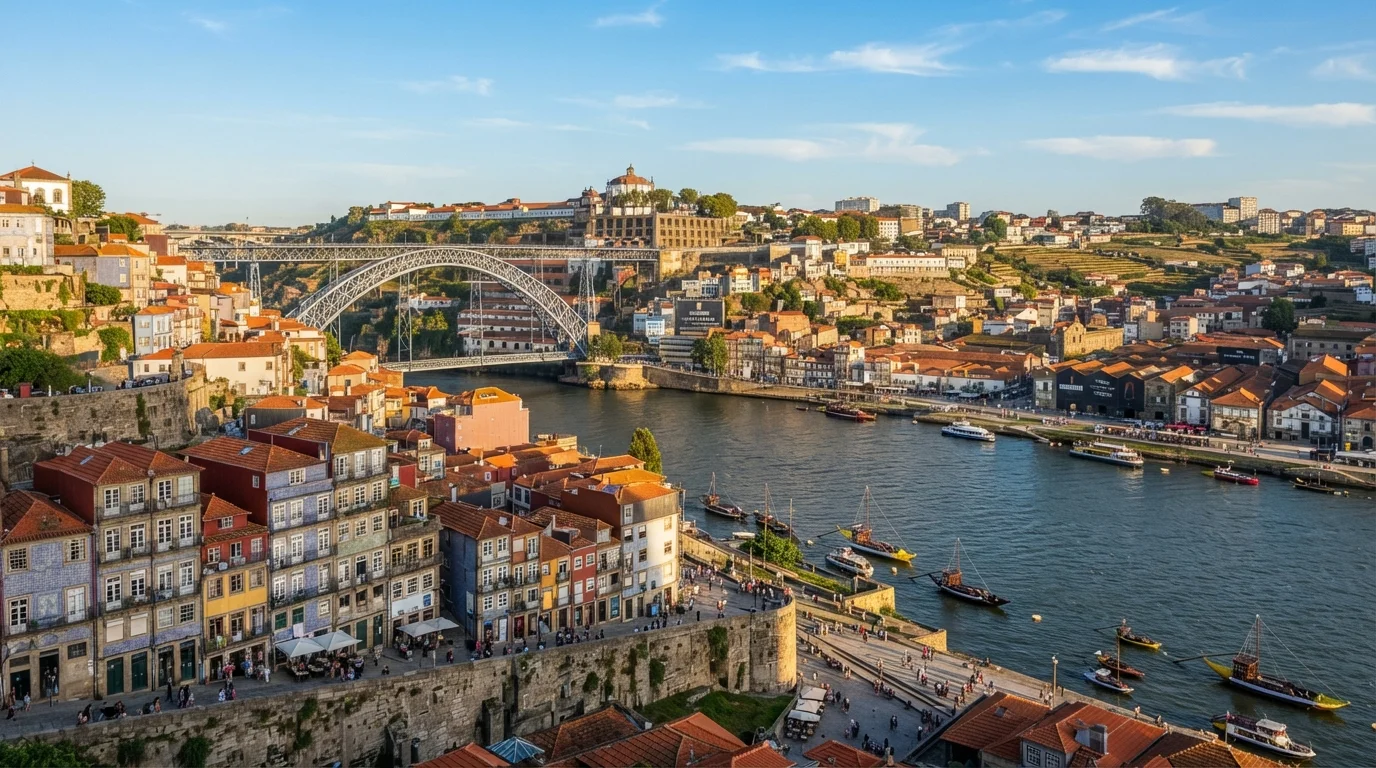
Porto sits at the mouth of the Douro River in northwestern Portugal and is the country's second-largest city - but it feels nothing like a secondary destination. It's gritty in the best sense: azulejo-tiled facades peel beside freshly renovated wine bars, Gothic churches anchor neighborhoods full of independent bookshops, and the river draws locals and visitors together in an easy, unhurried way.
This is a city built on commerce and craft - centuries of wine trade, textile manufacturing, and maritime culture gave Porto a working-class backbone that's still visible. It rewards curiosity and slow walking far more than a checklist approach. First-timers who arrive expecting a manicured tourist showpiece often leave pleasantly surprised by the city's lived-in authenticity.
Azulejo
The distinctive blue-and-white (and sometimes polychrome) decorative ceramic tiles that cover the facades of many historic buildings throughout Portugal. They are one of Porto's most recognizable visual features.
Port wine
A sweet fortified wine produced from grapes grown in the Douro Valley and typically aged in barrel at lodges in Vila Nova de Gaia. It comes in styles ranging from light and dry to rich and aged.
Tasca
A small, informal, often family-run Portuguese restaurant or tavern serving traditional home-style cooking, typically at modest prices.
Funicular
A cable-powered rail car that climbs steep hillsides along a fixed track. Porto has a historic funicular that connects the lower Ribeira waterfront to the upper city.
Bacalhau
Salt-dried cod that is a cornerstone of Portuguese cuisine. It is rehydrated before cooking and prepared in a wide variety of traditional recipes throughout the country.
Prato do dia
Literally 'dish of the day' - a rotating daily special offered at many Portuguese restaurants, typically at lunchtime, that showcases fresh, seasonal ingredients at a set price.
Getting Around: Walkability, Hills, and Transit
Porto is walkable - but it is not flat. The historic center tumbles across a series of steep hills, and routes that look short on a map can involve serious climbs over uneven cobblestone. Comfortable, broken-in shoes are essential, and building some hill-climb buffer into your daily plans will save frustration.
The metro system is clean, reliable, and covers major neighborhoods including the airport connection. Trams and funiculars (notably the Bonde do Infante and the Funicular dos Guindais) add charm and utility on specific corridors. Taxis and rideshare apps operate throughout the city and are reasonably priced by Western European standards.
Download an Offline Map Before You Arrive
Porto's older streets don't always map perfectly to real-time navigation apps, and data connectivity can be spotty in some narrow alleys. Download an offline city map before you land - it makes spontaneous exploration far less stressful and helps you orient yourself by neighborhood rather than pin-to-pin directions.
If you're arriving somewhere new for the first time, our guide on orienting yourself quickly in an unfamiliar city offers practical first-day strategies that translate well to Porto's neighborhood layout.
Neighborhoods Worth Slowing Down In
Ribeira is the postcard - narrow medieval lanes, riverside cafés, and brightly painted townhouses. It's deservedly popular and worth an evening stroll, though it can feel crowded midday in peak season.
Bonfim, just east of the center, has emerged as a favorite for independent restaurants, natural wine bars, and local residents. It's quieter, more residential, and gives a clearer sense of day-to-day Porto.
Cedofeita runs along a long commercial street lined with galleries, concept stores, and neighborhood restaurants. It's a natural place to fill an afternoon without a fixed agenda.
Vila Nova de Gaia, across the Dom Luís I Bridge, is technically a separate municipality - and home to most of Porto's famous wine lodges. The cable car from the Gaia side offers sweeping river views that justify the fare on their own.
The Dom Luís I Bridge Is Worth Crossing Twice
Porto's iconic iron bridge has two levels, each offering a different perspective. The upper level carries the metro and pedestrians and delivers panoramic river views; the lower level is more street-level and connects directly to the Ribeira. Walking across both levels - once in each direction - takes less than 30 minutes and gives you a natural feel for the city's layout on both banks.
Port Wine, Food, and the Eating Culture
Port wine - a fortified wine produced in the Douro Valley and aged in lodges along the Gaia riverside - is deeply woven into the city's identity. Most lodges offer guided tours and tastings; the experience is educational as well as enjoyable, covering wine styles from dry whites to rich vintage Ports.
Beyond wine, Porto's food culture centers on hearty, unfussy cooking. The francesinha - a layered meat sandwich smothered in a beer-based tomato sauce and topped with a fried egg - is the city's signature dish and genuinely worth trying once. Bacalhau (salt cod) appears in dozens of preparations. Lunch is typically the larger, more affordable meal of the day; dinner tends to run late, often after 8 p.m.
Neighborhood tascas (small, informal restaurants) often offer a prato do dia (dish of the day) at lunchtime that represents excellent value and rotating, seasonal cooking.
Practical Basics Before You Go
Porto's climate is mild and Atlantic-influenced. Rain is possible year-round, so a packable layer and a compact umbrella earn their weight in your bag. Summers are warm without being extreme; winters are cooler but rarely harsh.
Electrical outlets use the standard European two-pin plug (Type F). Portugal operates on Central European Time (UTC+1 in winter, UTC+2 in summer).
Entry requirements, visa rules, and any travel advisories vary by nationality and change over time. Always check your own government's official travel guidance and the Portuguese authorities' current requirements well before departure - do not rely on third-party travel sites as your definitive source for entry rules.
Portugal's Official Tourism Portal
Visit Portugal's government-backed tourism site provides regional information, seasonal event listings, and general destination guidance useful for pre-trip planning.
Andante Transit Card Information
Porto's public transport system (metro, buses, funicular) uses a unified reloadable card. Checking the official Andante portal before arrival helps you understand fare zones and reloading options.
Accessibility in the historic center is genuinely limited by cobblestones and steep grades. If this is a consideration for you or your travel companions, researching specific accommodation locations and planned routes in advance is time well spent.