

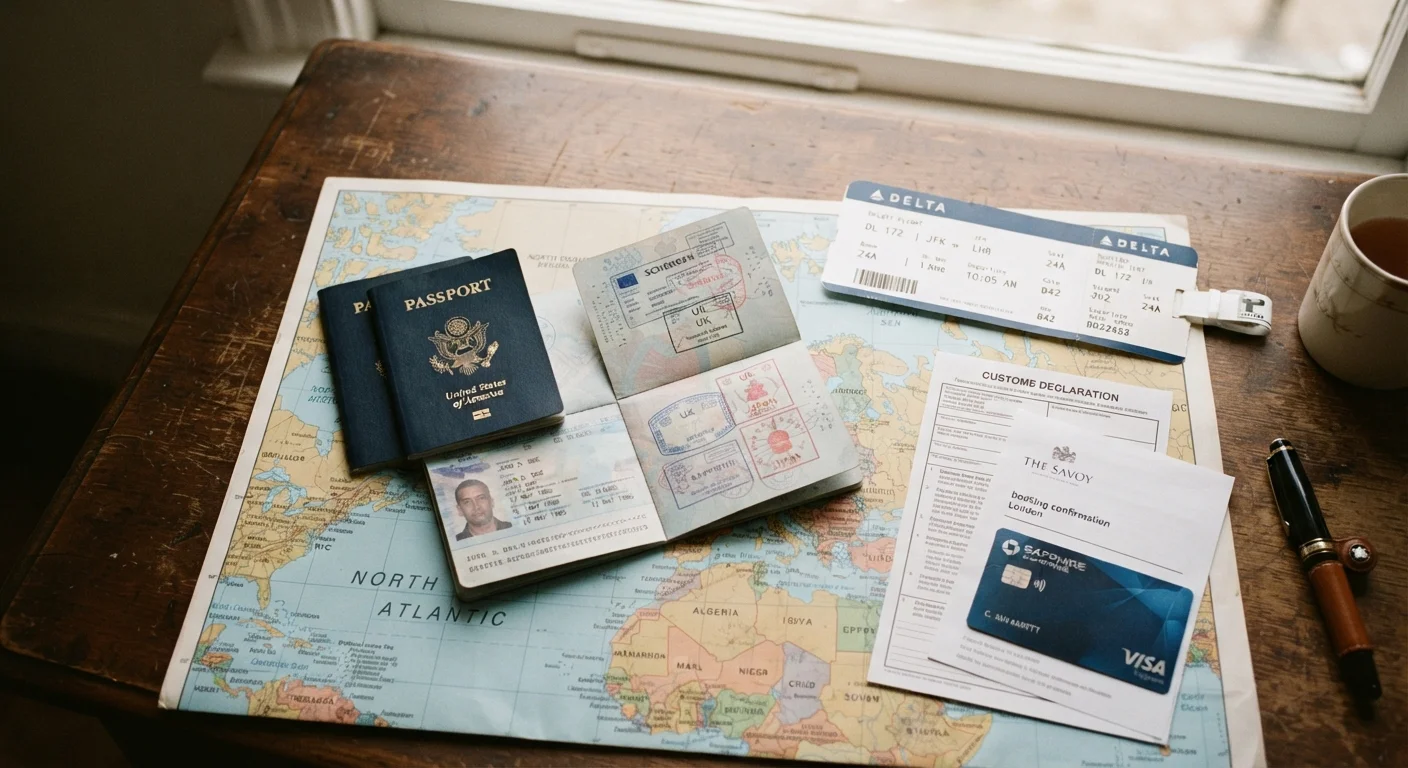
| Passport validity buffer | 6 months beyond return date (many countries) (US Department of State travel guidance) |
| Typical visa application lead time | 4-12 weeks (embassy visas) (General guidance; varies by country and season) |
| Primary official source (US travelers) | travel.state.gov (US Department of State) |
| Health/vaccination guidance | CDC Travelers' Health website (Centers for Disease Control and Prevention) |
| Customs cash declaration threshold (US) | $10,000 or equivalent (US Customs and Border Protection) |
| Entry rule verification timing | At least 8-12 weeks before departure (General travel planning best practice) |
Why Entry Requirements Deserve More Than a Last-Minute Check
Many travelers assume entry requirements are a simple box to tick - book the flight, grab the passport, go. In practice, the rules governing who can enter a country, under what conditions, and with what documentation are layered, destination-specific, and subject to change. Getting this wrong can mean denied boarding, turned away at the border, or an unexpected quarantine.
Entry requirements typically cover four areas: passport validity, visa status, health documentation, and customs rules. Each category has its own verification sources, timelines, and consequences for non-compliance. For a fuller picture of how these fit into broader trip preparation, see our international trip planning guide.
| Passport validity buffer | 6 months beyond return date (many countries) (US Department of State travel guidance) |
| Typical visa application lead time | 4-12 weeks (embassy visas) (General guidance; varies by country and season) |
| Primary official source (US travelers) | travel.state.gov (US Department of State) |
| Health/vaccination guidance | CDC Travelers' Health website (Centers for Disease Control and Prevention) |
| Customs cash declaration threshold (US) | $10,000 or equivalent (US Customs and Border Protection) |
| Entry rule verification timing | At least 8-12 weeks before departure (General travel planning best practice) |
Core Concepts: What You're Actually Checking
Before diving into where to look, it helps to know what each term means in practice.
Visa
An official authorization - stamped in your passport or issued electronically - that permits entry into a foreign country for a specified purpose and duration. Requirements differ by nationality and destination.
Visa Waiver
A bilateral or multilateral agreement that allows citizens of certain countries to enter another country without a traditional visa, typically for short tourist or business stays. Travelers may still need to register online before arrival (e.g., ESTA for the US).
Passport Validity Rule
A requirement, enforced by many countries, that your passport must remain valid for a set period - often six months - beyond your planned departure date from that country.
Customs Declaration
A mandatory disclosure to border authorities of goods, cash, or restricted items you are bringing into a country. Failing to declare required items can result in fines, confiscation, or denial of entry.
Electronic Travel Authorization (eTA)
A digital pre-entry permission required by some countries before boarding a flight, even when no traditional visa is needed. It is typically applied for online and linked to your passport electronically.
Health Documentation
Official records - such as vaccination certificates or test results - required by some destinations as a condition of entry. Requirements vary significantly by country and may change based on public health conditions.
One area travelers consistently underestimate is the passport validity rule. Many countries require your passport to remain valid for six months beyond your intended departure date - not just through the trip itself. A passport expiring three months after your return may still trigger a problem at check-in. Always check this well in advance.
Visa rules are equally nuanced. A visa waiver program may let you enter one country visa-free for 90 days, while a neighboring country requires a pre-arranged tourist visa - even for the same passport. Some visas must be obtained at an embassy weeks ahead; others are available on arrival or as an electronic authorization applied for online. For a structured checklist covering these distinctions, our pre-trip verification guide walks through each step.
Where to Find Reliable, Up-to-Date Entry Information
The most authoritative sources for entry requirements are official government channels - your own country's foreign affairs ministry and the destination country's official immigration authority. In the US, the Department of State's travel website publishes country-specific information pages covering visas, safety advisories, and health notices. The CDC provides guidance on recommended vaccinations and health precautions by destination.
Third-party travel blogs and forums can provide useful context, but they should never substitute for official sources on entry rules. Policies change - sometimes with very little public notice - and an out-of-date forum post won't get you through the border.
Official Sources Beat Everything Else
For entry requirements, the only sources worth trusting are official government websites - your country's foreign ministry and the destination's immigration authority. Travel agencies, airline staff, and online forums can provide helpful context, but they are not responsible for ensuring you meet entry conditions. Final authority rests with the destination country's border officials, and rules can change without broad announcement.
If you're heading to a specific destination for the first time, pairing entry requirement research with practical on-the-ground context helps enormously. Our guide on what travelers underestimate about Southeast Asia illustrates how visa logistics, health rules, and cultural norms intersect in ways that surprise even experienced travelers. And if Morocco is on your list, our Morocco pre-trip overview covers those specifics in detail.
Timing, Customs, and What to Keep Handy
Start your entry-requirement research at least eight to twelve weeks before departure - longer if you need to apply for a visa through an embassy. Processing times vary widely and are not always predictable. If your passport needs renewal, factor in additional lead time.
At customs, most countries require travelers to declare goods above a certain value, restricted items (food products, plants, medication quantities), and currency over a threshold. Undeclared items can be confiscated, and fines or delays are common. Check the destination country's customs authority website for the current list of restricted and prohibited items.
Travel with printed or easily accessible digital copies of your key documents: visa approval emails, vaccination records, travel insurance details, and hotel confirmations. Some border agents request proof of onward travel or sufficient funds for your stay - knowing this ahead of time prevents a stressful scramble. Our travel itinerary guide covers exactly what documents and confirmations belong in a well-organized trip file.
First-time international travelers will find the full process laid out clearly in our ground-up planning primer, which covers documentation alongside every other pre-departure step.
This article provides general travel information and education only. Entry requirements, visa rules, health regulations, and customs policies change frequently and vary by individual circumstance. Always verify current requirements directly with official government sources and your destination country's immigration authority before traveling.