

| Engine oil check frequency | Monthly or before long trips (General industry guidance) |
| Coolant flush interval (typical) | Every 30,000-50,000 miles (Varies by vehicle; consult owner's manual) |
| Brake fluid type | DOT 3, DOT 4, or DOT 5.1 (check owner's manual) (Do not mix types) |
| Transmission fluid interval | 30,000-60,000 miles (conventional); some sealed units are lifetime-fill (Consult your vehicle's owner's manual) |
| Washer fluid safe substitutes | None - use rated washer fluid only |
| Fluids to check cold | Engine oil, coolant reservoir level |
Why Vehicle Fluids Matter
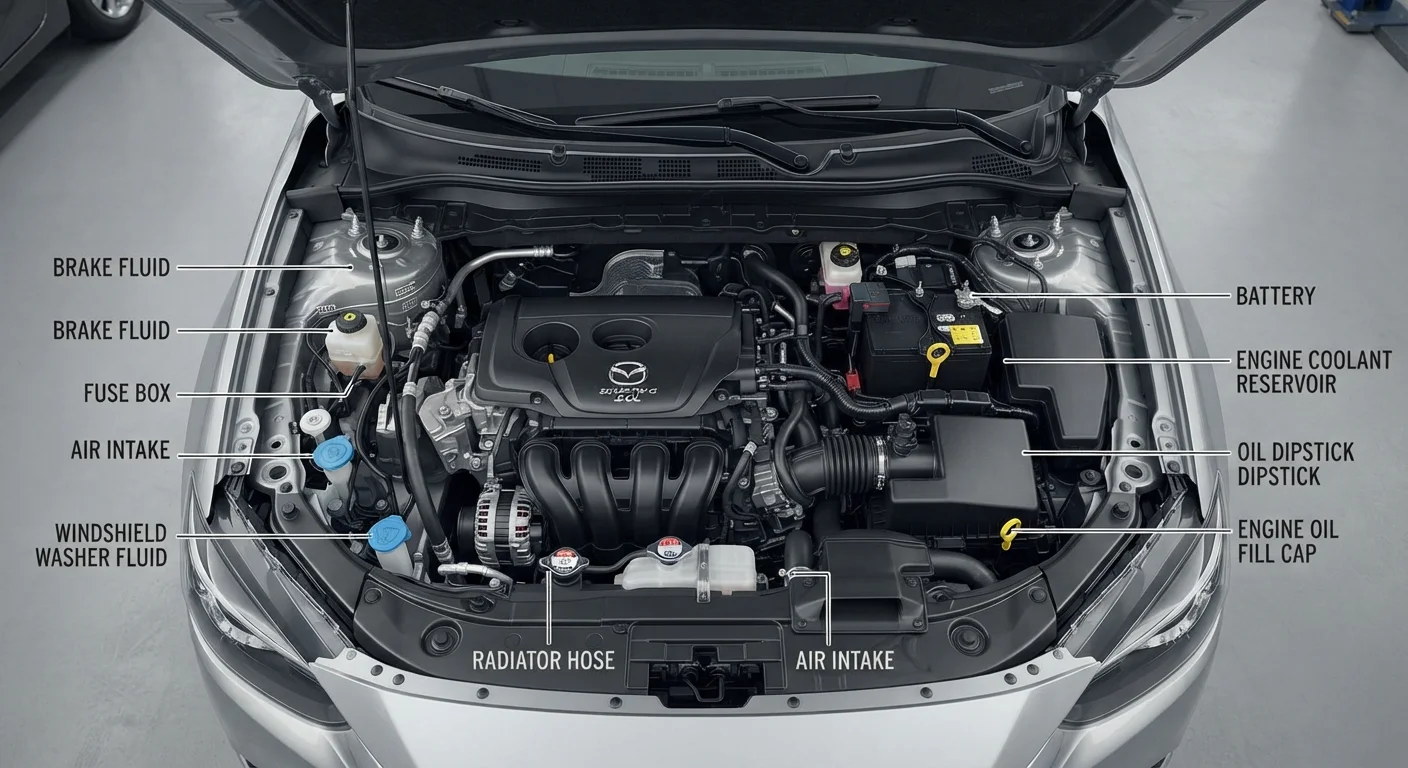
Your vehicle relies on a carefully coordinated set of fluids to keep every major system running safely. Miss one, and you risk anything from a rough ride to a catastrophic repair bill. The good news: most fluid checks take less than five minutes and require no tools. Understanding what each fluid does - and where it lives - is the foundation of smart, long-term maintenance.
| Engine oil check frequency | Monthly or before long trips (General industry guidance) |
| Coolant flush interval (typical) | Every 30,000-50,000 miles (Varies by vehicle; consult owner's manual) |
| Brake fluid type | DOT 3, DOT 4, or DOT 5.1 (check owner's manual) (Do not mix types) |
| Transmission fluid interval | 30,000-60,000 miles (conventional); some sealed units are lifetime-fill (Consult your vehicle's owner's manual) |
| Washer fluid safe substitutes | None - use rated washer fluid only |
| Fluids to check cold | Engine oil, coolant reservoir level |
The Six Essential Fluids Explained
Engine Oil
Engine oil lubricates the hundreds of moving metal parts inside your engine, reducing friction and carrying heat away from critical components. Low or degraded oil accelerates wear dramatically. Check the dipstick with the engine off and the car on level ground - the oil should sit between the MIN and MAX marks and appear amber to light brown. Dark, gritty, or milky oil signals it's time for a change or a mechanic visit. See our guide on common DIY oil change mistakes before attempting it yourself.
Coolant (Antifreeze)
Coolant circulates through the engine and radiator to regulate operating temperature, preventing both overheating in summer and freeze-up in winter. The reservoir is typically translucent with MIN/MAX lines visible without opening anything. Coolant should be checked cold - never open the radiator cap on a warm engine, as pressurized hot coolant can cause serious burns. Color varies by formulation (green, orange, pink), and different types should not be mixed.
Brake Fluid
Brake fluid transmits the force of your foot on the pedal through the hydraulic brake lines to the calipers and wheel cylinders. It absorbs moisture over time, which lowers its boiling point and reduces braking effectiveness. The reservoir is typically near the firewall on the driver's side. Fluid should be clear to light yellow; dark or murky fluid warrants inspection. For a deeper look at brake system upkeep, the brake wear myths guide separates fact from fiction.
Transmission Fluid
Automatic transmissions depend on fluid for both lubrication and hydraulic pressure to shift gears smoothly. Many modern vehicles have a sealed transmission with no user-accessible dipstick - consult your owner's manual. When a dipstick is present, fluid should be pinkish-red and not smell burnt. Manual transmissions use a separate gear oil accessed via a fill plug, typically checked by a technician.
Power Steering Fluid
This fluid pressurizes a hydraulic assist system that makes steering lighter and more responsive. Many newer vehicles use electric power steering and have no fluid reservoir at all. If your car does have one, check it with the engine warm. Whining or stiff steering can signal low fluid or a developing leak.
Windshield Washer Fluid
The only fluid on this list you can safely top off anytime without mechanical concern. Use a washer fluid rated for your climate - plain water can freeze in cold weather and leave residue. Do not substitute household glass cleaners, which can damage pump seals and leave smears.
Viscosity
A measure of a fluid's resistance to flow. Engine oil viscosity ratings (e.g., 5W-30) describe how the oil performs at both cold start and operating temperature.
DOT rating
A U.S. Department of Transportation classification for brake fluid that indicates its minimum dry and wet boiling points. Higher DOT numbers generally tolerate more heat.
Hydraulic system
A system that uses pressurized fluid to transmit force. Both brakes and automatic transmissions rely on hydraulic principles to function.
Coolant reservoir
A translucent plastic tank connected to the radiator that holds overflow coolant and allows level checks without opening the radiator cap.
Sealed transmission
An automatic transmission designed without a user-accessible dipstick. Fluid level and condition must be checked by a technician using specialized equipment.
Spotting Leaks and Knowing When to Act
A puddle under your parked car is worth identifying before assuming the worst. Color and consistency are your first clues:
- Clear water: Usually condensation from the air conditioning - generally normal.
- Bright green, orange, or pink: Likely coolant; address promptly to avoid overheating.
- Dark brown or black, oily: Engine oil leak - location matters, so have it inspected.
- Clear to light brown, oily, near a wheel: Could be brake fluid; treat as urgent and have brakes checked immediately.
- Reddish and thin: Transmission or power steering fluid.
If you drive a high-mileage vehicle, seals and gaskets are more prone to seeping, so fluid checks deserve closer and more frequent attention. When in doubt about any leak or fluid condition, a qualified mechanic can diagnose the source quickly and safely.
Always Consult Your Owner's Manual First
Fluid types, capacities, and service intervals vary significantly by make, model, and model year. Using the wrong fluid - even if it looks similar - can cause damage that voids warranties or requires expensive repairs. Your vehicle's owner's manual is the authoritative source for the correct specifications. When the manual is unavailable, a dealership service department or qualified mechanic can confirm the right fluid for your vehicle.