

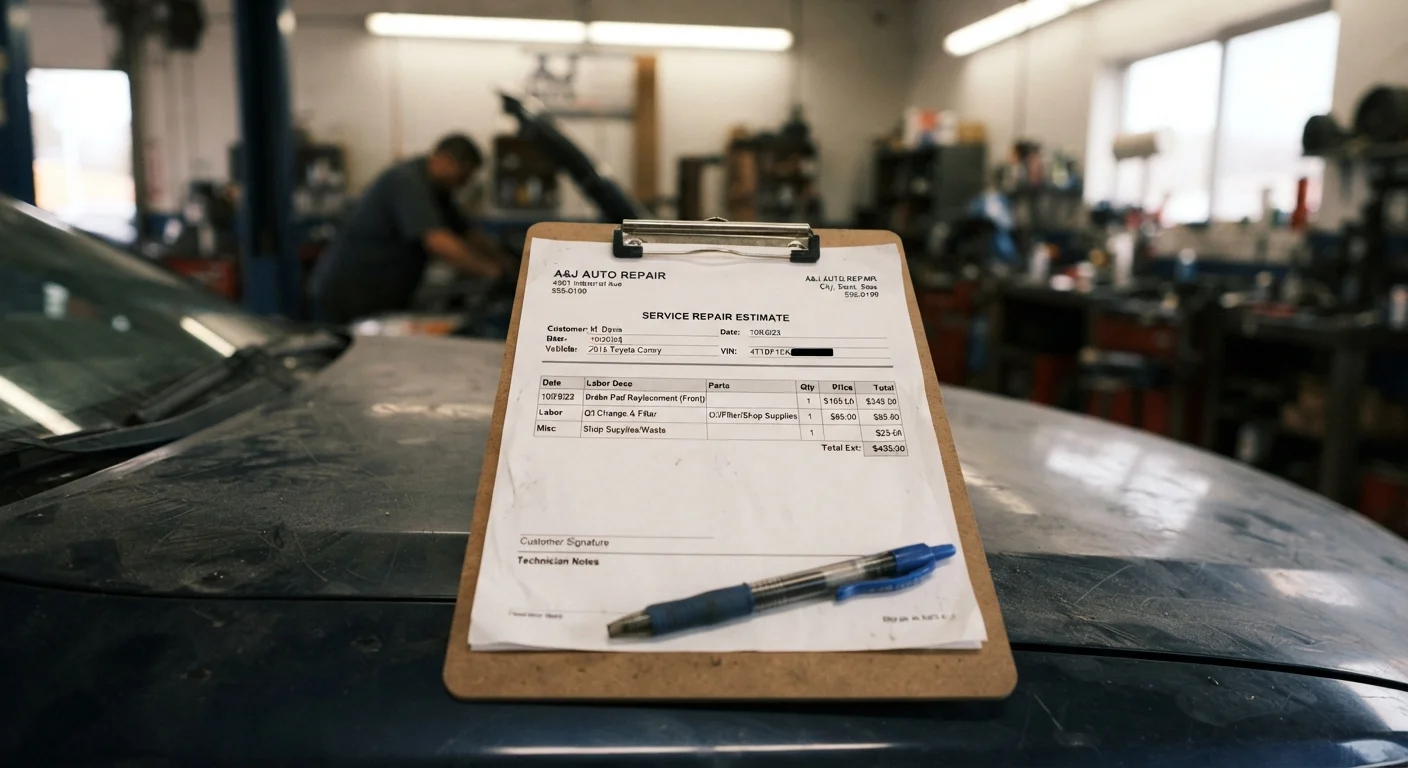
Key Takeaways
- Repair estimates typically separate labor, parts, and diagnostic fees into distinct line items.
- Labor rates vary by shop type and region; asking about them upfront is completely reasonable.
- Parts markups above wholesale cost are standard practice, but the margin can differ significantly.
- A diagnostic fee covers the time spent identifying the problem and may or may not apply toward repair cost.
- Requesting an itemized written estimate before work begins protects you legally and financially.
- You have the right to ask questions, request clarification, or get a second opinion on any estimate.
What you will need
Why Estimates Feel Confusing - and How to Change That
A mechanic's estimate is a business document first, not a consumer-friendly summary. Shops format them to satisfy their own invoicing systems, which means the layout and terminology can vary widely from one business to the next. Labor hours follow industry flat-rate conventions that have nothing to do with your individual vehicle's condition. Parts numbers reference catalogues most drivers have never seen. And fees like 'hazmat disposal' or 'shop supplies - 10%' appear with little context.
None of this means the charges are improper - most are entirely standard. The challenge is simply that the document assumes a level of industry familiarity most drivers reasonably do not have. Learning the structure of an estimate once means you will be better equipped every time you bring a vehicle in for service. It also helps you catch genuine errors, which do occur.
Delaying routine maintenance often compounds into larger, costlier repairs - and being able to read an estimate clearly makes it easier to understand what deferred upkeep has actually cost you.
What you will need
The Anatomy of a Standard Repair Estimate
Most itemized estimates share a predictable structure once you know what to look for. Understanding each section makes the step-by-step review below much faster.
- Header information: Shop name, your vehicle's year, make, model, VIN, mileage at drop-off, and the date. Verify these match your vehicle exactly - errors here can cause parts ordering mistakes.
- Diagnostic or inspection fee: Charged for the technician's time identifying the problem. May or may not be credited toward repair.
- Labor lines: Each task listed with hours and an hourly rate. Rates commonly range from roughly $80 to over $180 per hour depending on shop type and region, though rates outside this range also exist.
- Parts lines: Each part listed with a part number, quantity, and unit price. OEM versus aftermarket should be noted.
- Shop supplies / environmental fees: Typically a flat amount or a small percentage of the total.
- Taxes: Applied to parts in most states; labor taxation varies by state law.
- Total and authorization line: Your signature here authorizes the work. Do not sign until you have reviewed everything.
Written Repair Estimate
The document you will be reading and analyzing - must be itemized to be useful.
Online Labor Guide Reference (e.g., industry-standard labor time databases)
Helps verify whether the flagged labor hours for a given repair fall within typical published ranges.
Pen or Highlighter
Mark line items you want to ask about or verify before authorizing work.
With this structure in mind, the steps below walk you through a methodical review.
Confirm the estimate is fully itemized
Before reading a single number, verify that the estimate lists each type of charge separately - labor, parts, and fees should each appear on their own lines. A single lump-sum figure tells you almost nothing useful. If the document only shows a total, ask the service writer to reprint it with full itemization before proceeding.
Identify and understand the diagnostic fee
Many estimates include a diagnostic or inspection fee - a charge covering the technician's time spent identifying what is wrong with your vehicle. This is a legitimate cost; diagnosing modern vehicles accurately requires trained labor and equipment. Key questions to ask: Is this fee flat or hourly? Will it be credited toward the repair cost if you authorize the work at this shop? Get the answer in writing.
Review the labor charges line by line
Labor charges reflect the shop's hourly rate multiplied by the estimated time to complete each task. Shops typically use published labor-time guides (industry-standard flat-rate manuals) to determine hours rather than clocking actual time. Check that each labor line specifies: the task being performed, the number of hours charged, and the rate per hour. If multiple repairs are listed, each should carry its own labor entry.
Understand the parts charges and markups
Parts listed on an estimate are almost always marked up above the shop's wholesale cost - this is a standard, legitimate revenue component for repair businesses. Each parts line should show the part name, part number, quantity, and unit price. OEM (original equipment manufacturer) parts are typically priced higher than aftermarket alternatives; ask which type is being quoted and whether alternatives are available. Your decision should weigh cost, warranty coverage on the part, and the shop's recommendation for your specific vehicle.
Spot additional fees - shop supplies, disposal, and taxes
Beyond labor and parts, estimates often include a shop supplies or environmental fee (covering consumables like rags, fluids, and disposal of hazardous materials), plus applicable sales tax on parts. These are generally legitimate, but they should be clearly labeled rather than appearing as mystery line items. Question any fee that lacks a plain-language explanation.
Compare, ask questions, and authorize work deliberately
Once you have reviewed every line, note any items that seem unclear or unusually high. It is entirely appropriate to ask the service writer to explain any charge or to request a brief hold while you consider the estimate. Getting a second opinion on a major repair is also reasonable - knowing the right questions to ask before agreeing to a repair can make that conversation more productive. Only sign when you understand and accept every line item.
After You Review: Common Scenarios and What to Do
Even a careful review sometimes surfaces situations that require a follow-up conversation with the shop.
The total is higher than you expected
Ask which line item is driving the cost. Is it labor hours, an expensive OEM part, or the diagnostic fee? Understanding the source of the cost helps you ask a targeted, informed question - such as whether an aftermarket part option exists or whether any of the labor tasks can be deferred safely.
The estimate has changed since the original quote
If additional problems were found once the vehicle was disassembled, the shop should contact you before proceeding. Most states legally require authorization for charges that exceed the original estimate by a set percentage. If your invoice significantly exceeds what you authorized, ask for a detailed explanation and reference your signed estimate.
Vague Line Items Are a Red Flag
An estimate that lumps costs together under a single line like 'miscellaneous repairs' or 'shop supplies (variable)' without any further detail makes it difficult to verify what you are actually paying for. Ask the service writer to break down any ambiguous items before you sign.
You are unsure whether the repair is necessary
A second opinion is always reasonable for significant repairs. Knowing what to ask before agreeing to a repair can help you navigate that conversation constructively, without damaging your relationship with the shop.
Cross-Reference Parts Costs Independently
Many parts manufacturers and major auto parts retailers publish suggested retail prices online. Looking up the part number on your estimate takes only a few minutes and gives you a useful reference point when reviewing the shop's markup. This is general research - it does not replace a professional assessment of which parts your vehicle actually needs.
Always Get the Estimate in Writing
Verbal estimates carry little legal weight if a dispute arises. Most states require shops to provide a written estimate before beginning work if the cost exceeds a certain threshold. Ask for a written, itemized estimate every time - and do not authorize work until you have one in hand.