

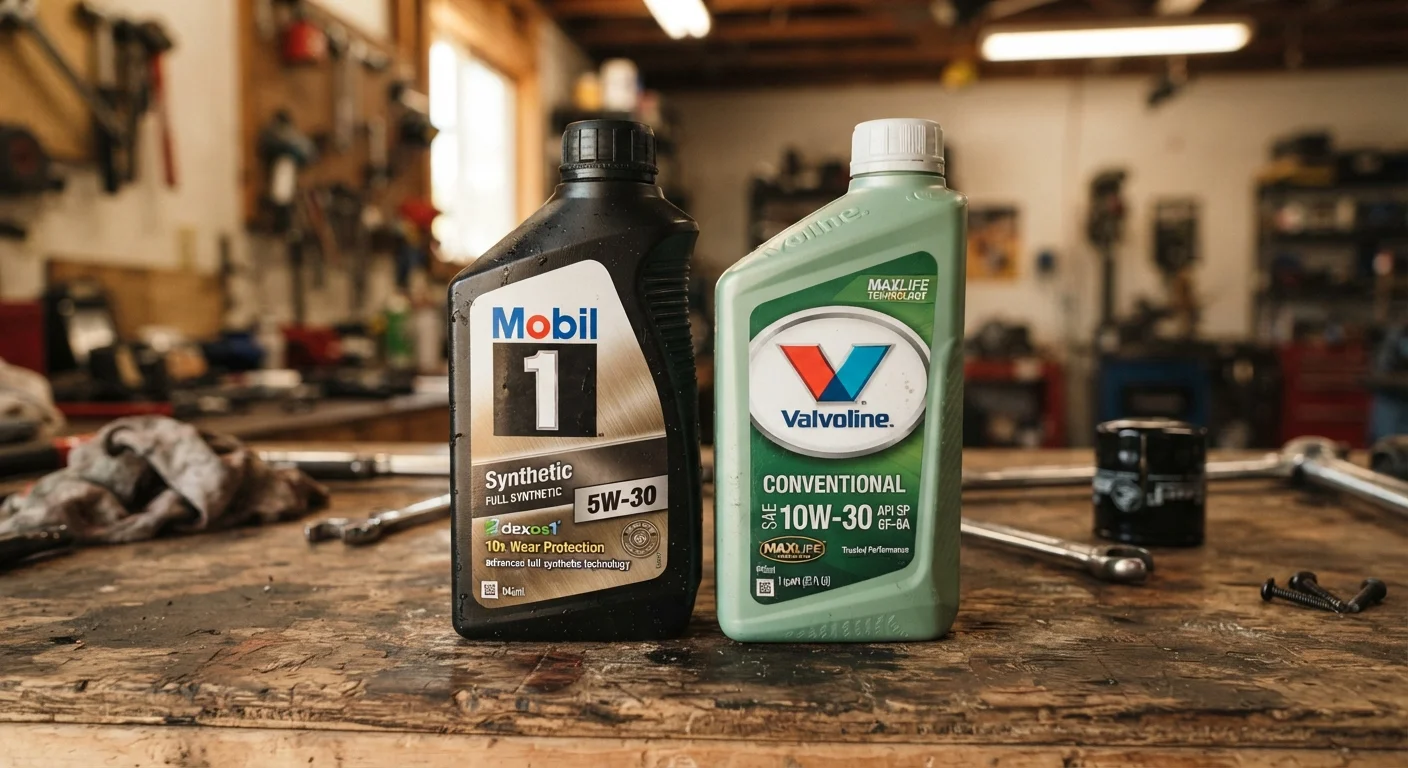
Key Takeaways
- Synthetic oil is chemically engineered; conventional oil is refined directly from crude petroleum.
- Synthetics typically allow longer change intervals-often 7,500 to 10,000+ miles versus 3,000-5,000 for conventional.
- Many modern engines are factory-specified for synthetic oil; always check your owner's manual.
- Conventional oil remains a practical choice for older engines not designed around synthetic formulations.
- Switching from conventional to synthetic is generally safe and does not cause seal leaks in modern vehicles.
- The viscosity grade (e.g., 5W-30) matters as much as the oil type-match the grade your manufacturer specifies.
Option A
Synthetic Motor Oil
The engineered, high-performance formulation.
Best for: Drivers seeking longer change intervals, extreme-temperature protection, and maximum engine cleanliness.
Option B
Conventional Motor Oil
The time-tested, widely available standard.
Best for: Owners of older or low-mileage vehicles with simpler engines and standard operating conditions.
If you drive a newer vehicle with a turbocharged or high-performance engine
Synthetic Motor Oil
Modern turbocharged engines run hotter and require oil that resists thermal breakdown. Most manufacturers specify full synthetic for these applications.
If you own an older vehicle with high mileage on conventional oil
Conventional Motor Oil
Long-running engines conditioned on conventional oil may have tolerances and seal conditions better suited to staying with the same type-consult your mechanic before switching.
If you drive frequently in extreme cold or hot climates
Synthetic Motor Oil
Synthetics flow more readily at low temperatures and maintain viscosity stability at high temperatures, giving better protection during cold starts and summer heat.
If you want the longest possible oil change intervals
Synthetic Motor Oil
Synthetic formulations resist oxidation and breakdown longer, supporting extended intervals that reduce how often you need to service your vehicle.
If your vehicle's manufacturer explicitly calls for conventional oil and budget is a priority
Conventional Motor Oil
Where conventional oil meets the manufacturer's specification, it provides adequate protection at a lower upfront cost per oil change.
How Each Oil Is Made
Motor oil performs a straightforward job-lubricating metal engine components to reduce friction, dissipate heat, and carry away contaminants. What differs between synthetic and conventional oil is how each is produced and how consistently it performs under stress.
Conventional motor oil begins as crude petroleum extracted from the ground. Refining removes many impurities, but the resulting base oil still contains a natural mix of hydrocarbon molecules of varying shapes and sizes. That molecular inconsistency means its protective properties can degrade more quickly under high heat or prolonged use.
Synthetic motor oil is manufactured through chemical processes that build uniform, purpose-designed molecules from base compounds. This engineering produces an oil with fewer impurities, more consistent viscosity across temperature ranges, and greater resistance to oxidation and sludge formation. For a broader look at all the fluids keeping your vehicle running, see our guide to fluids under the hood.
| Criterion | Synthetic Motor Oil | Conventional Motor Oil |
|---|---|---|
| Base source | Chemically engineered molecules | Refined crude petroleum |
| Typical change interval | 7,500-15,000 miles | 3,000-7,500 miles |
| Cold-start protection | Flows faster at low temps | Slower flow until warmed up |
| Heat resistance | High; resists viscosity breakdown | Moderate; thins more under heat |
| Sludge resistance | Excellent | Adequate under normal conditions |
| Cost per quart | Higher upfront | Lower upfront |
| Required by modern engines | Many manufacturers specify it | Common in older engine specs |
Performance Differences That Matter Day to Day
The practical gap between the two oil types shows up most clearly in three areas: cold-weather startups, heat resistance, and how long the oil stays effective.
During cold starts-when most engine wear occurs-conventional oil can be sluggish to flow until it warms up. Synthetics reach critical engine surfaces faster at low temperatures, reducing that early-morning wear window. In extreme heat, synthetic oil maintains its viscosity better, meaning it keeps forming a protective film between moving parts rather than thinning out.
Resistance to sludge is another key distinction. Sludge is a thick, gel-like deposit that forms when oil degrades-it can block oil passages and starve components of lubrication. Synthetic oil's refined molecular structure resists this breakdown significantly longer than conventional oil does.
~40%
Engine wear occurring at cold start
Engineering research consistently identifies cold-start conditions as responsible for a disproportionate share of total engine wear over a vehicle's life.
10,000+ mi
Typical synthetic oil change interval
Many full synthetic formulations are rated for 10,000 miles or more under normal driving conditions, compared to 3,000-5,000 miles historically recommended for conventional oil.
~70%
New U.S. vehicles factory-filled with synthetic
Industry estimates suggest the majority of new passenger vehicles sold in the U.S. are now factory-filled with full synthetic or synthetic blend motor oil due to tighter engine tolerances and performance demands.
It's worth noting that synthetic blend oils exist as a middle category-conventional base stock mixed with synthetic to offer partial performance improvements at a lower price point than full synthetic. These can be a reasonable fit for some driving profiles, but always defer to your owner's manual specification.
Change Intervals: The Real-World Cost Calculation
One of the most common misconceptions is that conventional oil is simply cheaper. Per quart, it typically is-but the math shifts when you account for change intervals.
Conventional oil is generally changed every 3,000-5,000 miles under normal driving conditions, though many modern vehicles can stretch to 5,000-7,500 miles. Full synthetic oil is commonly rated for 7,500-10,000 miles or more, with some formulations and vehicles supporting up to 15,000 miles between changes when conditions allow.
Longer intervals mean fewer service visits per year, which affects both time and total maintenance cost. That said, driving conditions matter. Frequent short trips, stop-and-go traffic, towing, or extreme temperatures all count as severe service-conditions that shorten effective oil life regardless of type. Under severe conditions, even synthetic oil should be changed more frequently than its maximum interval suggests.
If you're considering changing your own oil, it's worth understanding the common mistakes drivers make. Our article on why DIY oil changes go wrong covers the pitfalls to avoid, from selecting the wrong viscosity grade to improper drain plug torque.
Always Follow Your Owner's Manual
No general recommendation overrides what your vehicle's manufacturer specifies. The owner's manual lists the required oil viscosity grade and, increasingly, the required oil type or certification standard (such as API or ILSAC ratings). Using the wrong specification-even a technically 'better' oil-can void warranty coverage or fail to meet engineering requirements. When in doubt, a qualified mechanic can confirm the right specification for your specific vehicle.