

| Diagnostic Standard | OBD-II (On-Board Diagnostics, 2nd generation) (Mandatory on all US cars and light trucks sold after January 1, 1996) |
| Red Light Urgency | Stop or seek service immediately |
| Amber Light Urgency | Schedule service soon - typically within days |
| TPMS Trigger Threshold | 25% below recommended tire pressure (Required on all US vehicles manufactured after September 2007 (TREAD Act)) |
| Check Engine Codes | Readable by any OBD-II scan tool, available at many auto parts stores |
| Flashing vs. Steady Check Engine | Flashing = active misfire; requires prompt attention |
Why Warning Lights Exist (and Why You Shouldn't Ignore Them)
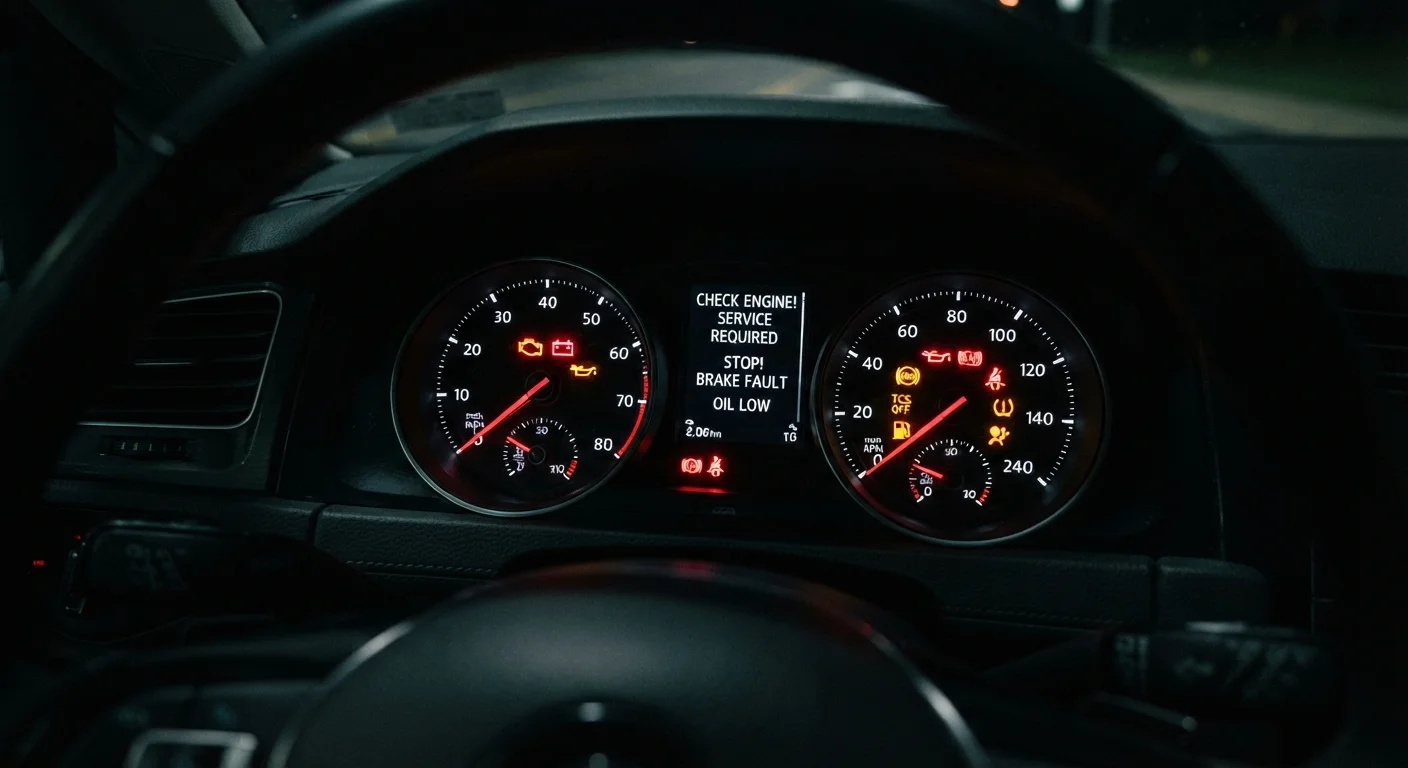
Modern vehicles use an onboard diagnostics system - known as OBD-II in cars manufactured after 1996 - to continuously monitor hundreds of sensors throughout the engine, drivetrain, and safety systems. When something falls outside normal operating parameters, the system triggers a warning light on your instrument cluster. These lights aren't suggestions; they're the car's way of communicating a detected fault or condition that needs attention.
Ignoring them is one of the most common ownership mistakes that compound costs. A minor sensor issue left unaddressed can cascade into a failed component. Understanding what each light means helps you make smarter decisions about when to drive on, when to schedule service, and when to pull over immediately.
| Diagnostic Standard | OBD-II (On-Board Diagnostics, 2nd generation) (Mandatory on all US cars and light trucks sold after January 1, 1996) |
| Red Light Urgency | Stop or seek service immediately |
| Amber Light Urgency | Schedule service soon - typically within days |
| TPMS Trigger Threshold | 25% below recommended tire pressure (Required on all US vehicles manufactured after September 2007 (TREAD Act)) |
| Check Engine Codes | Readable by any OBD-II scan tool, available at many auto parts stores |
| Flashing vs. Steady Check Engine | Flashing = active misfire; requires prompt attention |
The Most Common Warning Lights Decoded
Not all warning lights carry equal urgency. Most dashboards use a color-coded system: red signals a critical issue requiring immediate action, amber or yellow signals a condition that needs attention soon, and green or blue indicates an active system (like high beams or turn signals). Here are the lights drivers encounter most often:
- Check Engine (amber engine icon): One of the most misunderstood lights on any dashboard. It can indicate anything from a loose gas cap to a misfiring cylinder. A steady check engine light typically means schedule a diagnostic scan soon. A flashing check engine light signals an active misfire that can damage the catalytic converter - reduce speed and seek service promptly.
- Oil Pressure Warning (red oil can icon): This is a stop-now light. Low oil pressure can destroy an engine within minutes of running. Pull over safely, shut off the engine, and check the oil level before driving further. Do not confuse this with the oil life reminder, which simply tracks maintenance intervals.
- Temperature Warning (red thermometer icon): Indicates the engine is overheating. Turn off the A/C, turn on the heater to help dissipate heat, and pull over when safe. Continuing to drive an overheating engine risks severe internal damage.
- Battery / Charging System (red battery icon): Signals the charging system isn't maintaining voltage. The vehicle is running on reserve battery power only. Limit electrical loads, avoid turning the engine off, and get to a shop as soon as possible.
- Tire Pressure Monitoring System - TPMS (amber exclamation in tire icon): One or more tires has dropped significantly below recommended pressure. Check all four tires and inflate to the pressure listed on the driver's door jamb sticker - not the number on the tire sidewall.
- Brake Warning (red circle with exclamation): If the parking brake is released and this light remains on, it may indicate low brake fluid or a hydraulic fault. Have the brake system inspected before driving further.
- ABS Warning (amber ABS letters): The antilock braking system has detected a fault. Standard braking still works, but ABS intervention won't be available. See our guide to ABS and stability systems for more on what these technologies actually do.
- Traction Control / Stability Control (amber car with squiggly lines): If illuminated briefly during acceleration, it's working normally. If it stays on, the system may be disabled or have a fault.
OBD-II
On-Board Diagnostics, second generation - a standardized vehicle self-diagnostic system required on all US cars and light trucks sold after 1996. It monitors engine, emissions, and other systems and stores fault codes readable by a scan tool.
Fault Code (DTC)
A Diagnostic Trouble Code stored by the OBD-II system when a sensor reading falls outside normal range. Technicians read these codes to identify the source of a warning light.
TPMS
Tire Pressure Monitoring System - a sensor-based system that alerts drivers when tire pressure drops significantly below the manufacturer's recommended level.
Catalytic Converter
An emissions control device in the exhaust system that converts harmful combustion byproducts into less harmful gases. Engine misfires can damage it quickly, which is why a flashing check engine light requires prompt action.
ABS
Antilock Braking System - prevents wheel lockup during hard braking, helping drivers maintain steering control. A fault in the system disables this safety feature without affecting standard brake function.
Oil Pressure
The force at which engine oil circulates through lubrication passages. Critically low pressure deprives engine components of lubrication and can cause rapid, severe mechanical damage.
When to Pull Over Immediately vs. When to Schedule Service
The distinction between a stop-now and a schedule-soon light can prevent costly mistakes in both directions - panicking over a low washer fluid alert or, more dangerously, driving on with a failing oil pressure system.
Pull over immediately (red lights, active symptoms): Oil pressure warning, temperature warning, brake warning with spongy pedal, or any warning accompanied by unusual sounds, burning smells, or loss of control. If you're on the highway, signal and move to the shoulder safely before stopping.
Schedule service within a day or two (amber, no active symptoms): A steady check engine light, TPMS alert, ABS warning, or battery light when the car is running normally. Reduce non-essential driving until the issue is diagnosed.
Monitor and address at next service (amber, informational): Service reminders, low washer fluid, low fuel warnings. These don't signal a mechanical fault.
Before any extended drive, it's worth running through a pre-trip vehicle checklist to catch warning conditions before they become roadside problems. If a light does leave you stranded, knowing how to handle roadside emergencies makes a real difference.
Get the Code Before You Clear the Light
Many drivers reset a check engine light without reading the stored fault code first - losing valuable diagnostic information. An OBD-II scan tool can be used at home or at many auto parts retailers at no charge. Always retrieve and record the code before clearing it, so a technician has something to work with if the light returns.