

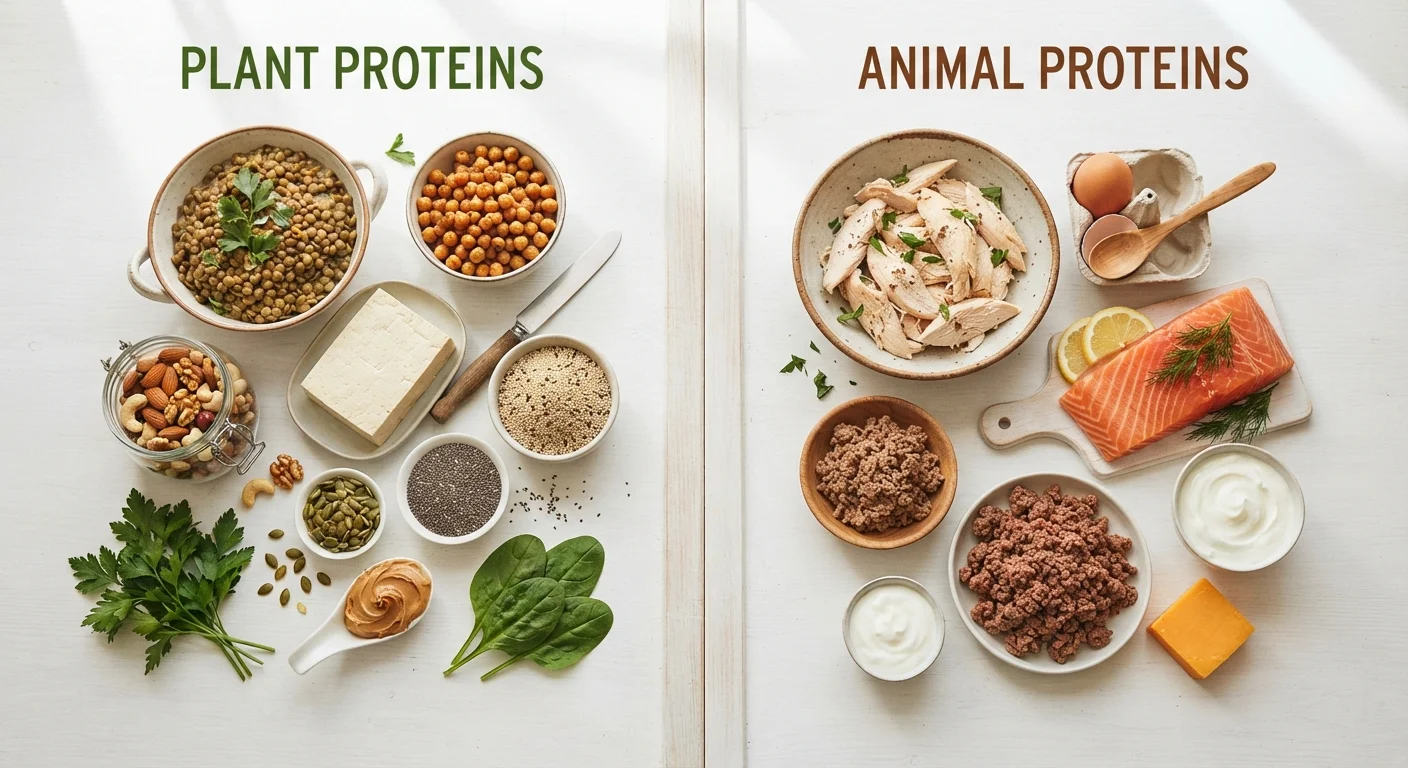
Key Takeaways
- Animal proteins are 'complete,' containing all nine essential amino acids in sufficient amounts; most plant proteins are not.
- Plant proteins can be nutritionally complete when a varied diet combines complementary sources like legumes and grains.
- Animal proteins are generally digested and absorbed more efficiently, though the gap varies significantly by food.
- Plant protein sources deliver added benefits - fiber, antioxidants, and phytonutrients - not found in animal protein.
- Long-term health outcomes depend on overall dietary pattern, not protein source alone.
- Consult a registered dietitian before making major dietary changes, especially with specific health conditions.
Option A
Plant-Based Protein
The fiber-rich, environmentally lighter option.
Best for: People seeking to increase vegetable intake, reduce saturated fat, or follow vegetarian and vegan dietary patterns.
Option B
Animal Protein
The complete amino acid, high-bioavailability classic.
Best for: People prioritizing easily absorbed complete proteins, particularly those with higher muscle-building or recovery demands.
If you follow a vegetarian or vegan lifestyle
Plant-Based Protein
A well-planned plant-based diet can meet all protein needs. Combining varied sources like legumes, soy, and whole grains covers your essential amino acid requirements.
If you have elevated protein needs due to intense exercise or recovery
Animal Protein
Animal proteins' high bioavailability and complete amino acid profiles make them efficient for muscle protein synthesis, which is well-supported by sports nutrition research.
If you want to improve digestive health alongside meeting protein goals
Plant-Based Protein
Plant protein sources like lentils, beans, and edamame deliver prebiotic fiber that supports gut microbiome health alongside adequate protein.
If you're managing cardiovascular risk factors
Plant-Based Protein
Research consistently associates replacing red and processed meat with plant protein sources with improved lipid profiles and reduced cardiovascular risk markers.
If you want maximum dietary flexibility without restricting food groups
Animal Protein
Animal proteins require less dietary planning to meet daily protein and micronutrient targets, making them straightforward to incorporate across varied eating patterns.
What Makes a Protein 'Complete' or 'Incomplete'?
Proteins are built from amino acids - 20 in total, nine of which are classified as essential because the body cannot synthesize them. These nine must come from food. A protein source is called complete when it provides all nine in adequate proportions.
Animal proteins - including eggs, dairy, poultry, meat, and fish - are universally complete by this definition. Most plant proteins, with the notable exception of soy and quinoa, are considered incomplete because they lack one or more essential amino acids in meaningful amounts. This doesn't make plant protein inadequate; it means variety matters. Combining rice with beans, or whole grain bread with nut butter, produces a complete amino acid profile across a meal or a day. The idea that these combinations must happen in a single meal has been largely set aside by nutrition science.
For a broader look at how food categories and labels can mislead, see our overview of nutrition myths science has moved past.
| Criterion | Plant-Based Protein | Animal Protein |
|---|---|---|
| Amino acid completeness | Usually incomplete (soy and quinoa are exceptions) | Complete in all sources |
| Digestibility (DIAAS) | Moderate; improved by cooking and processing | Generally high across most sources |
| Fiber content | High - a significant added benefit | None |
| Vitamin B12 | Absent; supplementation usually needed | Naturally present |
| Saturated fat | Typically low | Varies; higher in red and processed meats |
| Heme iron availability | Non-heme iron; lower absorption rate | Heme iron; more readily absorbed |
| Associated health pattern | Linked to lower cardiovascular and metabolic risk | Varies; fish and poultry show neutral/positive associations |
Absorption, Bioavailability, and Digestibility
Not all protein consumed is fully used by the body. Bioavailability describes how much of a protein's amino acids are actually absorbed and available for physiological use. Nutritionists often assess this using the DIAAS method, the current gold standard endorsed by the Food and Agriculture Organization.
Animal proteins - particularly eggs, dairy, and meat - score consistently high on DIAAS. Many plant proteins score lower, largely because plant cell walls and compounds like phytates can limit absorption. However, processing and cooking narrow this gap considerably. Fermented soy products and well-cooked legumes are digested far more efficiently than raw seeds or unprocessed grains.
~74%
DIAAS score for cooked black beans
Compared to a reference score of 100+ for eggs, illustrating the bioavailability gap between plant and animal proteins - though cooking significantly improves legume digestibility.
~1.6-2.2g/kg
Daily protein range for active adults
Research published in sports nutrition literature suggests this range supports muscle protein synthesis regardless of whether the source is plant-based or animal-based.
~30%
Lower cardiovascular mortality risk
A meta-analysis in the British Medical Journal found that higher plant protein intake was associated with approximately 30% lower cardiovascular mortality compared to lower intake.
It's also worth noting that bioavailability doesn't operate in isolation. How a protein is prepared, what it's eaten with, and an individual's gut health all influence absorption - a point explored further in our article on what current gut health research actually supports.
Beyond Protein: What Each Source Brings to the Table
Protein rarely arrives in food without companions. Animal proteins typically come packaged with important micronutrients: vitamin B12 (found almost exclusively in animal foods), heme iron (more readily absorbed than plant-based non-heme iron), zinc, and long-chain omega-3 fatty acids from oily fish. Red and processed meats, however, also carry saturated fat and - in the processed category - high sodium, which are factors in cardiovascular and metabolic health.
Plant proteins arrive with their own nutritional entourage: dietary fiber, polyphenols, antioxidants, and phytonutrients like isoflavones in soy. These compounds support gut microbiome diversity, are associated with lower inflammation markers, and are largely absent from animal protein sources. People relying heavily on plant protein, particularly vegans, should monitor B12, iron, zinc, and vitamin D, and may benefit from supplementation under professional guidance.
A Note on Protein Needs and Special Populations
Protein requirements vary meaningfully by age, health status, and activity level. Older adults, pregnant individuals, and those managing chronic illness may have distinct protein needs that affect how these comparisons apply to them. Children's nutritional needs also differ from adults'. If you or someone in your care falls into any of these categories, dietary guidance from a registered dietitian is strongly recommended rather than applying general population guidelines.
Understanding food in context - not just its macronutrient profile - is central to evaluating dietary choices. Our comparison of whole foods versus processed foods explores this principle further.
What Long-Term Research Suggests
Large observational studies - including data from Harvard's Nurses' Health Study and the PURE study - suggest that dietary pattern matters more than any single protein source. Diets higher in plant protein are generally associated with lower risks of cardiovascular disease, type 2 diabetes, and all-cause mortality. Diets high in processed red meat show the strongest adverse associations; unprocessed red meat, fish, and poultry show more modest or neutral associations in most analyses.
It's important to interpret these findings carefully. Observational research cannot establish causation, and many lifestyle factors travel alongside protein choices. People who eat more plant protein also tend to eat more vegetables, less refined food, and exercise more frequently - making it difficult to isolate protein source as the active variable.
The current scientific consensus, reflected in guidance from the American Heart Association and the Dietary Guidelines for Americans, is that a variety of both protein sources can fit within a health-supporting diet, with an emphasis on legumes, fish, poultry, and nuts over processed and red meats.
This article is for general informational and educational purposes only and does not constitute medical or dietary advice. Please consult a registered dietitian or qualified healthcare professional before making significant changes to your diet, especially if you have a health condition or specific nutritional needs.