

| Core organizing steps | Sort → Purge → Contain → Label → Maintain (Common framework used by professional organizers) |
| Most overlooked organizing step | Maintenance (regular audits) (Cited frequently in professional organizing literature) |
| Purpose of decanting | Visual uniformity + faster access |
| Zoning principle | Store items where you use them |
| One-in-one-out goal | Prevent re-accumulation after decluttering |
| Vertical space benefit | More storage without expanding footprint |
Why Organization Has Its Own Language
If you've ever tried to follow a decluttering method or watched an organizing tutorial and felt lost in the vocabulary, you're not alone. Terms like decant, zone, and flow get used constantly in home organization content - but they're rarely defined. This glossary closes that gap.
Whether you're tackling a single junk drawer or rethinking an entire room, understanding these terms helps you follow any method with confidence and communicate clearly about what your space needs. For a deeper look at the physical strategies behind many of these concepts, see our guide to foundational storage principles.
Decant
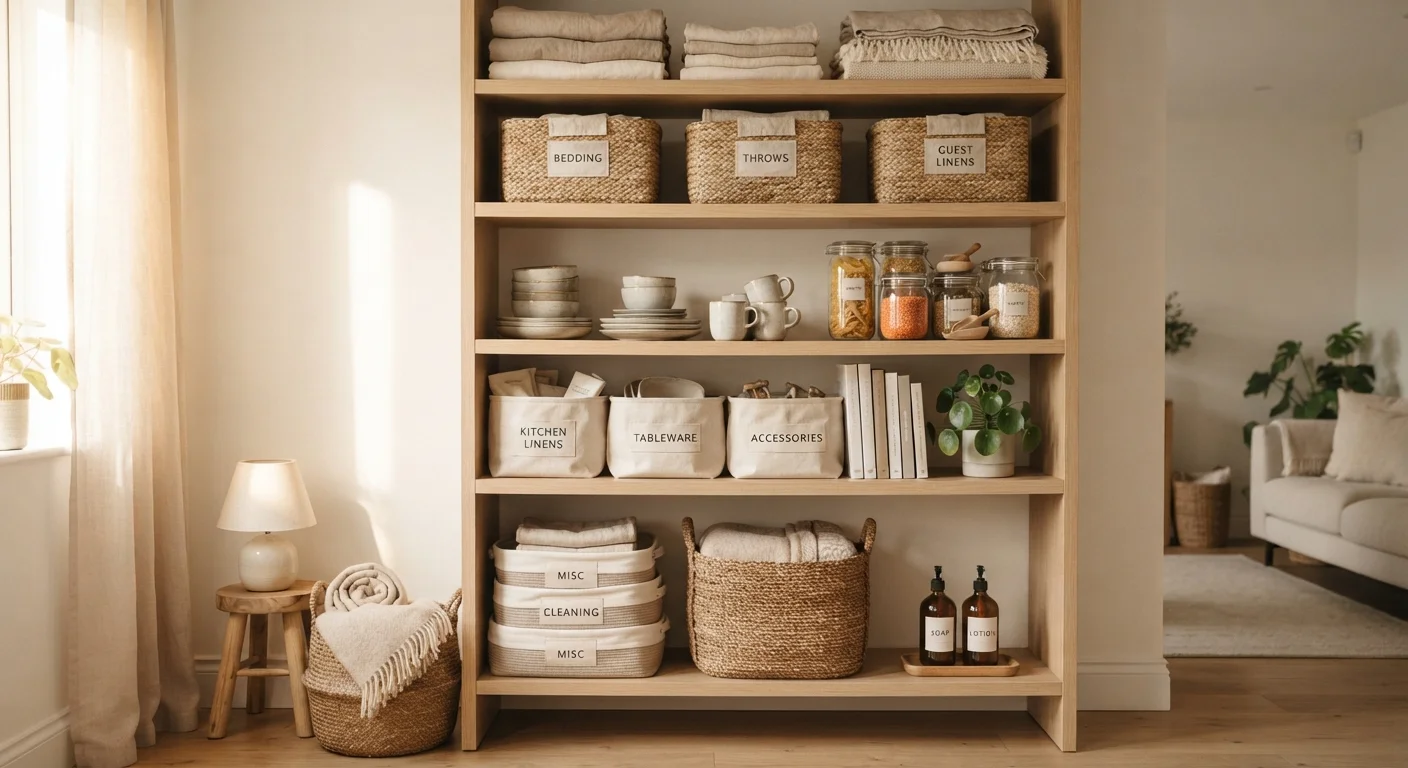
To transfer items from their original packaging into uniform containers, usually for pantry or bathroom storage. Decanting creates visual consistency and often makes contents easier to measure or access.
Zone
A defined area in a room dedicated to a specific activity or category of items - for example, a coffee zone near the kitchen counter. Zoning reduces searching time by anchoring related items in one logical spot.
Category
A grouping of like items treated as a single unit during sorting (e.g., all books, all cleaning supplies). Working by category rather than by room is a cornerstone of many popular decluttering methods.
Home (noun)
The designated, consistent place where a specific item always lives. An item has a 'home' when every household member knows exactly where to put it back after use.
Flow
The ease with which a person moves through a space and completes tasks. Good organizational flow means storage locations mirror the natural sequence of how you use items.
One-In-One-Out Rule
A maintenance practice where one item is removed from a category every time a new item of the same type enters the home. This prevents gradual re-accumulation after an initial declutter.
Decision Fatigue
The mental exhaustion that results from making too many choices. Organizers use this concept to explain why overstuffed spaces feel draining - too many items compete for attention and require constant micro-decisions.
Vertical Space
The usable height of a wall, cabinet, or closet above floor level. Utilizing vertical space is a core storage strategy that increases capacity without expanding a room's footprint.
Contain
To gather loose items inside a bin, basket, or box so they occupy a defined boundary. Containing is a finishing step in organizing that keeps categories from creeping into adjacent areas.
Purge
The process of removing items you no longer need, use, or want from a space. A purge typically precedes any organizing step, since there's no value in neatly storing things you don't need.
Audit
A systematic review of everything within a category or space to assess what remains and whether the current system is working. Regular audits (often seasonal) maintain organization over time.
Touch-It-Once
A productivity and organizing principle suggesting you handle each item only once - putting it directly in its home rather than setting it down temporarily. Reduces clutter caused by 'I'll deal with that later' habits.
Key Concepts at a Glance
The terms below appear across organizing books, professional consultations, and DIY projects. Knowing them helps you evaluate advice critically and choose approaches that fit your household.
| Core organizing steps | Sort → Purge → Contain → Label → Maintain (Common framework used by professional organizers) |
| Most overlooked organizing step | Maintenance (regular audits) (Cited frequently in professional organizing literature) |
| Purpose of decanting | Visual uniformity + faster access |
| Zoning principle | Store items where you use them |
| One-in-one-out goal | Prevent re-accumulation after decluttering |
| Vertical space benefit | More storage without expanding footprint |
One pattern you'll notice: most professional organizing frameworks focus on reducing decision fatigue. That's why concepts like categories, homes, and one-in-one-out keep appearing - they build systems that largely run themselves once set up.
These Terms Apply Across Any Method
Whether you follow a named decluttering system or prefer an informal approach, this vocabulary is method-neutral. You'll encounter these terms in books, professional consultations, and online tutorials alike. Familiarity with the language lets you mix and adapt strategies rather than feeling locked into one rigid system.