

Key Takeaways
- Organizing before decluttering just relocates clutter rather than reducing it.
- Buying storage containers before editing your belongings often wastes money and space.
- A true declutter pass makes any organizing system faster, simpler, and more durable.
- Sentimental items and decision fatigue are the most common reasons people skip decluttering.
- Sustainable organization depends on starting with less, not finding smarter places to put more.
The Core Problem: Organizing Around Too Much Stuff
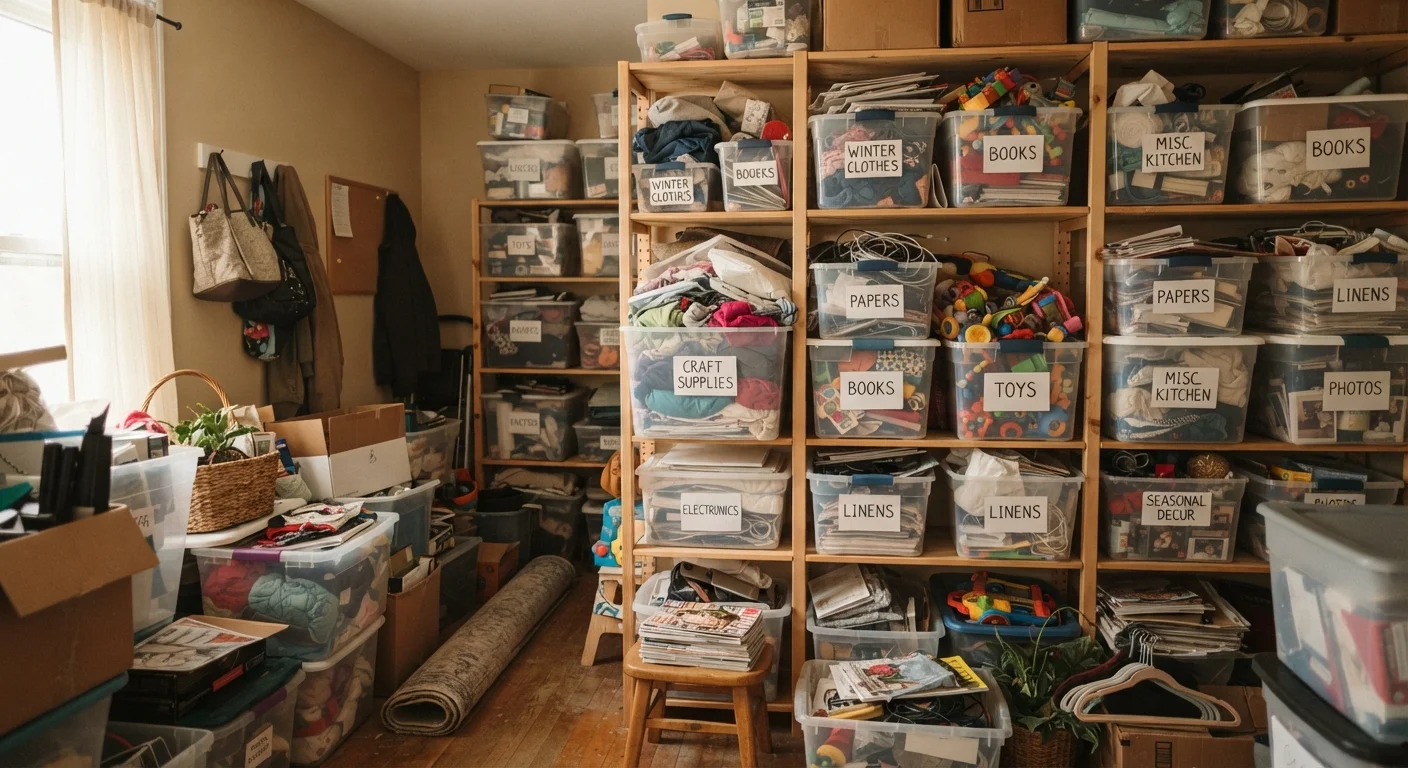
When a space feels chaotic, the instinct is to bring in order - labels, bins, a better shelf arrangement. That impulse is understandable, but it skips a critical first step. Organizing without first decluttering is essentially shuffling the same volume of belongings into tidier-looking arrangements. Within weeks, the system starts to buckle under the weight of too much stuff.
The math is straightforward: a space designed to hold forty items will feel cramped if seventy items are organized into it. No container system or labeling scheme changes that ratio. The only solution is to reduce what goes into the space before deciding how to arrange it.
This is the foundational principle behind any lasting organizational approach - and it's the step most people skip. See how pre-reorganization questions can help you clarify what a space actually needs before you touch a single item.
80%
Of clutter is items never or rarely used
Professional organizers commonly cite this general estimate to illustrate how much stored volume in most homes consists of things that see little to no regular use.
~$1,200
Average annual spending on home organization products
Consumer spending research suggests American households spend substantial sums on storage products each year, much of which goes toward containing belongings rather than reducing them.
The Mistakes That Keep Clutter in Place
Most people don't skip decluttering because they're lazy - they skip it because the process is harder than it looks. Making real decisions about what to keep is emotionally taxing, especially for items tied to memory, money, or uncertainty about the future. Rearranging is easier, and it produces visible results that feel satisfying in the short term.
But each of the following patterns keeps clutter locked in place, even when a space looks temporarily improved.
Rearranging items instead of removing them.
Why it happens: Rearranging feels productive and is emotionally easier than making decisions about what to keep or discard. The visible movement of things creates a false sense of progress.
Buying storage containers before decluttering is complete.
Why it happens: Attractive organizers signal a fresh start, and shopping for them feels like taking action. Many people underestimate how much they'll eventually let go of.
Treating every item as equally worth keeping.
Why it happens: Letting go of things feels like waste, especially for items that were expensive or were gifts. This leads to keeping things "just in case" without evaluating actual use.
Skipping the declutter step for sentimental or shared items.
Why it happens: Sentimental objects carry emotional weight that makes objective decisions difficult. Items belonging to other household members may feel off-limits.
Organizing room by room without addressing category overlap.
Why it happens: Working one room at a time seems logical, but similar items are often scattered throughout a home - meaning you never see the full volume of what you own.
For a structured way to work through each area of your home, the room-by-room decluttering walkthrough offers practical guidance space by space.
Don't Shop for Organizers Too Early
Purchasing baskets, bins, and drawer dividers before you know what you're keeping is one of the most common organizational missteps. You can't accurately measure your storage needs until after the decluttering process is complete. Buying organizers prematurely often results in ill-fitting containers, wasted money, and yet another thing to store.
Why Decluttering First Makes Every Next Step Easier
Once you've reduced what you own to what you genuinely use and value, the organizational step becomes significantly simpler. You're working with a manageable volume, the categories are clearer, and your storage choices match your actual needs rather than a wishful estimate.
More Storage Is Not the Solution
Adding bins, shelves, or drawer organizers to a space that hasn't been decluttered treats the symptom, not the cause. When the volume of stuff exceeds what a space reasonably holds, no organizational system will hold up over time. Reduce first, then contain what remains.
Decluttering also makes habits easier to maintain. When there's less to put away, routines take less effort, and the system doesn't collapse the moment life gets busy. That's the difference between a one-time reorganization project and an environment that actually stays functional. The organizational habits that actually stick are almost always built on a leaner starting point.
If you're unsure which approach fits your home - sorting by location or by category - it helps to compare your options before beginning. The decluttering methods comparison can help you choose the approach that matches your space and schedule.