

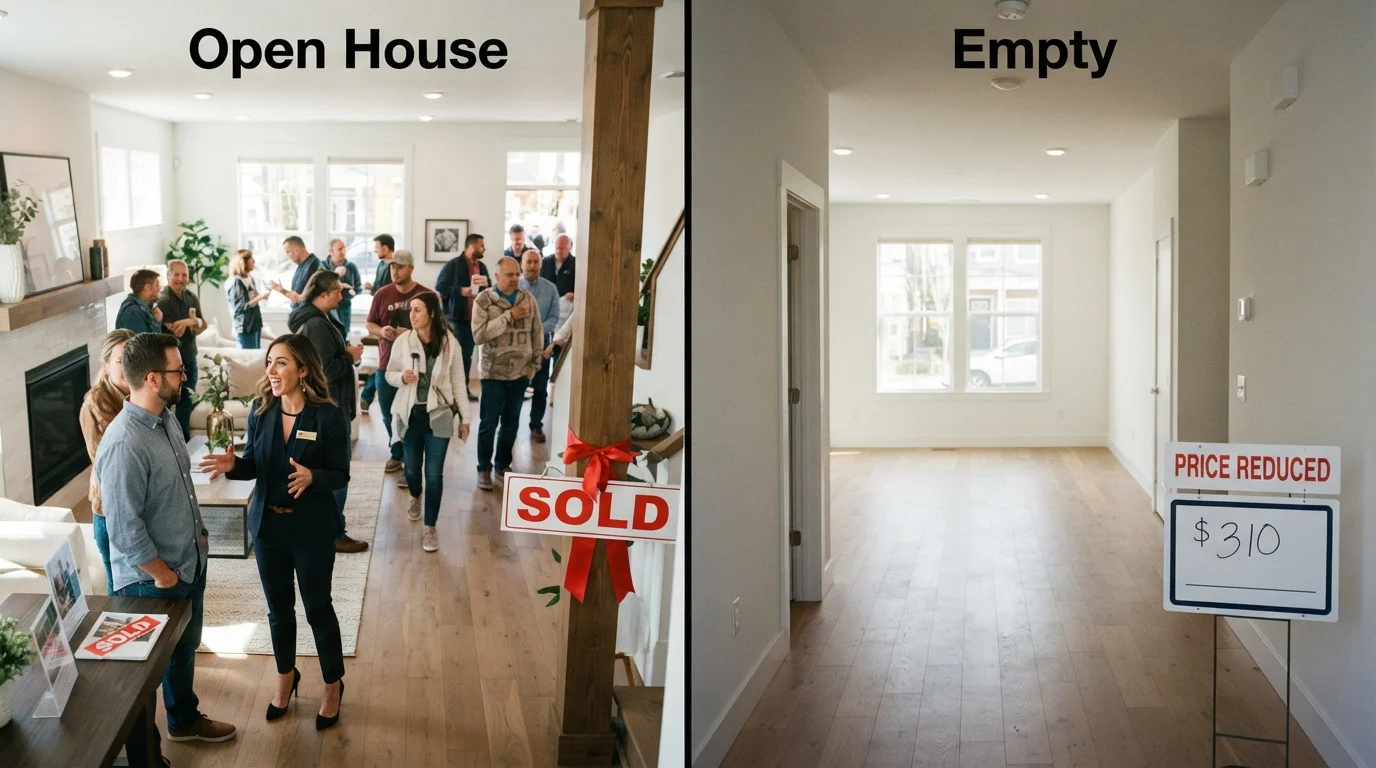
Key Takeaways
- A seller's market forms when housing demand significantly exceeds available inventory, pushing prices upward.
- A buyer's market emerges when supply outpaces demand, giving purchasers more leverage and negotiating room.
- Market type directly affects pricing strategy, offer timelines, contingency terms, and closing concessions.
- Local conditions can diverge sharply from national trends - neighborhood-level data matters most.
- Understanding which market you're in helps set realistic expectations for both price and process.
Option A
Seller's Market
When demand outpaces supply, sellers hold the cards.
Best for: Homeowners looking to maximize sale price with minimal concessions and shorter listing periods.
Option B
Buyer's Market
When inventory exceeds demand, buyers gain negotiating power.
Best for: Purchasers seeking price reductions, seller concessions, and more time to make considered decisions.
If you're listing a home and want maximum return
Seller's Market
Elevated demand and limited inventory typically support stronger sale prices and fewer concessions from sellers during negotiations.
If you're purchasing and want negotiating leverage
Buyer's Market
Higher inventory gives buyers room to negotiate on price, request repairs, and include contingencies without losing the deal.
If you need to sell quickly regardless of conditions
Seller's Market
Properties in a seller's market typically spend fewer days on market, reducing carrying costs and timeline uncertainty.
If you're a first-time buyer concerned about being outbid
Buyer's Market
Less competition means offers are less likely to escalate above asking price, making the process more predictable for newer buyers.
What Defines Each Market Type
Housing market conditions are primarily determined by the relationship between supply - available homes for sale - and demand - the number of qualified buyers actively looking. When these forces fall out of balance, the negotiating environment shifts substantially for everyone at the table.
A seller's market exists when buyer demand exceeds available listings. This imbalance tends to compress days on market, trigger multiple-offer situations, and push final sale prices above list price. Sellers can often decline contingencies or request favorable closing terms without risking the deal.
A buyer's market occurs when inventory outpaces active buyer demand. Homes sit longer, price reductions become more common, and sellers become more willing to offer concessions - covering closing costs, agreeing to repairs, or accepting lower offers - to secure a transaction.
Economists and real estate professionals often use months of supply (also called absorption rate) as a quick diagnostic tool. Roughly six months of supply is considered a balanced market; below that figure typically signals seller-favorable conditions, while above it suggests buyer advantage. For a broader glossary of terms you'll encounter when tracking these dynamics, see our Housing Market Vocabulary guide.
| Criterion | Seller's Market | Buyer's Market |
|---|---|---|
| Inventory level | Low - few homes available | High - many homes available |
| Days on market | Short - homes sell quickly | Longer - homes linger on listings |
| Offer price vs. list price | Often at or above asking | Often below asking |
| Contingencies | Buyers may waive to compete | Buyers retain full contingencies |
| Closing cost concessions | Rarely offered by seller | Commonly negotiated |
| Inspection negotiations | Buyers absorb more issues | Sellers more likely to make repairs |
| Price reductions | Uncommon | Frequent |
How Each Market Changes the Negotiating Table
Market type reshapes negotiation on almost every dimension: price, contingencies, inspection outcomes, and closing timelines.
< 3 months
Supply signaling strong seller's market
The National Association of Realtors has historically used a supply level below three months as an indicator of notably tight, seller-favorable conditions.
6 months
Supply level considered a balanced market
Real estate economists broadly treat six months of housing supply as the threshold between buyer- and seller-favorable conditions.
30-50%
Homes selling above list price in competitive markets
During periods of intense seller's market conditions in major US metros, Redfin and similar platforms have reported large shares of homes closing above asking price.
In a Seller's Market
Buyers frequently waive or shorten inspection and financing contingencies to remain competitive. Escalation clauses - where a buyer agrees to beat any competing offer up to a ceiling - become common. Sellers rarely need to contribute to closing costs, and appraisal gaps (when a home appraises below the agreed price) are often absorbed by buyers rather than renegotiated.
In a Buyer's Market
The dynamic reverses. Buyers can request seller-paid closing cost contributions, negotiate repair credits after inspection, and include longer due-diligence periods. List prices are more likely to be starting points for negotiation rather than firm figures. This environment suits buyers who want time to conduct thorough due diligence - an approach especially relevant to those navigating the homebuying process for the first time.
It's worth noting that neither market type is permanent. Local job growth, interest rate movements, new construction volume, and migration patterns can all shift conditions within months. Markets can also diverge by neighborhood - a city's urban core and its suburbs don't always move in sync. Exploring how urban and suburban housing markets diverge can sharpen your read on local conditions.
Practical Implications for Buyers and Sellers
Knowing your market type before entering a transaction helps calibrate strategy and manage expectations - but it doesn't replace local expertise.
For buyers: In a seller's market, getting pre-approved (not just pre-qualified) for a mortgage before making any offer is essential. Speed and certainty matter more than negotiating price. In a buyer's market, patience and thoroughness pay off - use the inspection process fully and don't hesitate to ask for concessions.
For sellers: A seller's market isn't a reason to skip preparation. Homes that are well-presented and correctly priced from the start still outperform ones that are overpriced and later reduced, even in favorable conditions. In a buyer's market, pricing strategy and presentation become even more critical to standing out in a crowded field.
In either environment, choosing a real estate agent with genuine local knowledge and a clear communication style can make a meaningful difference. Our guide on questions to ask a real estate agent before you hire one outlines what to look for in that conversation.
National Trends Don't Tell the Whole Story
Housing market conditions are highly localized. A national report showing a balanced market can mask neighborhoods where supply is critically tight alongside zip codes where inventory has piled up. Before drawing conclusions about your leverage as a buyer or seller, look at data specific to the city, neighborhood, and property type you're focused on. Your real estate agent or a local market report is a more reliable guide than headline figures alone.