

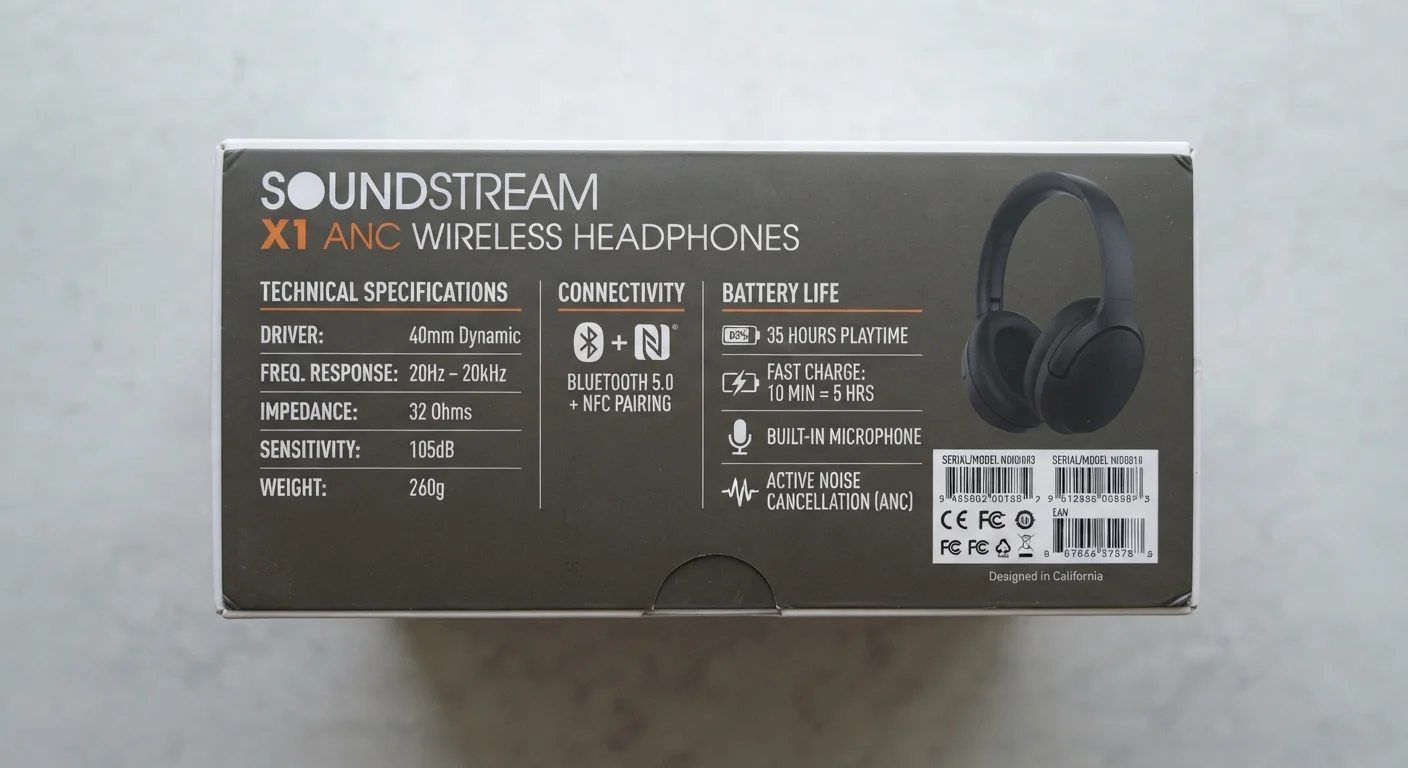
| Most common spec categories on gadget boxes | Processor, RAM, Storage, Display, Battery, Connectivity |
| Standard wireless charging protocol | Qi (pronounced 'chee') (Wireless Power Consortium) |
| IP68 water resistance depth (typical) | 1.5 meters for up to 30 minutes (Varies by manufacturer - always verify product documentation) |
| Common display refresh rates | 60 Hz, 90 Hz, 120 Hz |
| Highest-quality common Bluetooth audio codec | LDAC (up to 990 kbps) (Sony specification; device support required) |
| 5G spectrum bands in US deployments | Low-band, mid-band, mmWave |
Why Spec Sheet Jargon Feels Overwhelming (And How to Read It)
Whether you're looking at a smartphone, a pair of wireless earbuds, or a tablet, the box is covered in numbers and abbreviations that don't explain themselves. Terms like GHz, mAh, and IP68 appear on virtually every gadget - but manufacturers rarely pause to define them. This glossary is your quick-reference guide to the 30 terms you're most likely to encounter, explained in plain language.
If you're brand new to consumer tech, it may also help to start with our introduction for first-time gadget owners, which covers how modern devices connect and store data from the ground up.
| Most common spec categories on gadget boxes | Processor, RAM, Storage, Display, Battery, Connectivity |
| Standard wireless charging protocol | Qi (pronounced 'chee') (Wireless Power Consortium) |
| IP68 water resistance depth (typical) | 1.5 meters for up to 30 minutes (Varies by manufacturer - always verify product documentation) |
| Common display refresh rates | 60 Hz, 90 Hz, 120 Hz |
| Highest-quality common Bluetooth audio codec | LDAC (up to 990 kbps) (Sony specification; device support required) |
| 5G spectrum bands in US deployments | Low-band, mid-band, mmWave |
Performance and Processing Terms
These specs describe how fast and capable a device's core computing hardware is.
- GHz (Gigahertz)
- A measure of processor clock speed - how many billions of cycles per second the chip completes. Higher GHz can indicate faster single-task performance, though modern chip design means raw GHz is only part of the picture.
- CPU (Central Processing Unit)
- The main processor - the brain of the device. It handles general instructions and application logic.
- GPU (Graphics Processing Unit)
- A specialized chip for rendering images, video, and visual output. Important for gaming, video playback, and photo editing.
- RAM (Random Access Memory)
- Short-term working memory measured in GB. More RAM lets a device run more apps simultaneously without slowing down. It is separate from storage.
- Storage (GB / TB)
- How much data a device can hold permanently - apps, photos, videos, files. Measured in gigabytes (GB) or terabytes (TB). Unlike RAM, this data stays when the device is powered off.
- SoC (System on a Chip)
- An integrated circuit that combines the CPU, GPU, RAM, and other components onto a single chip. Common in smartphones and tablets.
- nm (Nanometer process node)
- Refers to the manufacturing precision of a chip. Smaller numbers generally mean more efficient, faster chips that generate less heat.
Display and Visual Specs
Screen quality is one of the most noticeable aspects of any device, and these terms describe what you'll actually see.
- Resolution (e.g., 1080p, 4K)
- The number of pixels displayed horizontally and vertically. Higher resolution means sharper images. 1080p means 1,920 × 1,080 pixels; 4K roughly doubles each dimension.
- PPI (Pixels Per Inch)
- A measure of pixel density on a screen. Higher PPI means finer detail and smoother text, especially on smaller displays like phone screens.
- Hz (Hertz / Refresh Rate)
- How many times per second the screen redraws its image. A 60 Hz display refreshes 60 times per second; 120 Hz feels noticeably smoother for scrolling and animation.
- nits (Display Brightness)
- The unit of screen brightness. Higher nit counts make screens easier to read in direct sunlight. Outdoor-facing displays often exceed 1,000 nits.
- HDR (High Dynamic Range)
- A display capability that renders a wider range of light and shadow, making images look more lifelike. HDR10 and Dolby Vision are common standards.
- OLED / AMOLED
- Display panel technologies where each pixel produces its own light. They offer deeper blacks and vivid colors compared to traditional LCD panels, which use a separate backlight.
For a deeper look at how display and camera specs interact on smartphones, see our guide to smartphone camera specs.
Battery, Power, and Durability Terms
These specs tell you how long a device will last and how well it survives everyday use.
mAh (Milliampere-hour)
The unit used to measure battery capacity. A higher mAh rating generally means a larger battery that can store more energy. However, how long a battery lasts in use also depends on the device's power consumption.
Watt (W) / Charging Speed
The rate at which a charger delivers power. Higher wattage chargers can refill a battery faster - sometimes called fast charging or rapid charging. The device itself must also support the higher wattage to benefit.
IP Rating
Ingress Protection rating - a two-number code indicating how well a device resists dust and water. The first digit rates solid particle protection (0-6); the second rates liquid protection (0-9). IP68 is among the highest common ratings.
Wireless Charging (Qi)
A charging method that transfers power through electromagnetic induction, removing the need for a physical cable connection. Qi is the widely adopted open standard used by most wireless charging pads.
Battery Cycles
A full charge cycle equals one complete discharge and recharge. Over hundreds of cycles, rechargeable batteries gradually hold less total charge - manufacturers often publish estimated cycle counts before capacity noticeably degrades.
MIL-SPEC
Short for MIL-STD-810, a U.S. military durability testing standard. Devices citing this compliance have passed tests simulating harsh environmental conditions, though manufacturers set their own specific test parameters.
For devices that connect wirelessly, understanding the full picture means knowing a few connectivity terms as well - our wireless technology explainer covers Bluetooth, Wi-Fi, and NFC in practical terms. You can also explore the full range of wireless standards in our Wi-Fi and Bluetooth comparison guide.
Connectivity and Audio Specs
These terms describe how devices communicate wirelessly and how they handle sound.
- Wi-Fi (802.11 standards)
- The wireless networking technology that connects devices to the internet. You'll see designations like Wi-Fi 5 or Wi-Fi 6 - higher numbers generally mean faster and more reliable connections.
- Bluetooth
- A short-range wireless protocol for connecting accessories like headphones, keyboards, and speakers without cables. Version numbers (e.g., Bluetooth 5.3) indicate improvements in range, speed, and power efficiency.
- NFC (Near Field Communication)
- Very short-range wireless communication - typically within an inch or two. Used for contactless payments, quick device pairing, and data transfer.
- 5G / LTE
- Mobile network technologies used by smartphones to send and receive cellular data. LTE (4G) is widely available; 5G offers higher potential speeds and lower latency where network infrastructure supports it.
- USB-C / Lightning / Micro-USB
- Physical port standards for charging and data transfer. USB-C is now the most common and versatile; Lightning was used by older Apple devices; Micro-USB appears on older Android accessories.
- Codec (Audio)
- A compression format that encodes and decodes audio signals. Common wireless audio codecs include SBC, AAC, aptX, and LDAC - higher-quality codecs preserve more audio detail over Bluetooth.
- Latency
- The delay between an audio or video signal being sent and being received. Lower latency matters most for gaming, video calls, and watching video with wireless earbuds.
If you want to explore a broader set of electronics terminology, the consumer electronics glossary covers 50 terms that appear on product pages across categories.
Spec Numbers Don't Tell the Whole Story
A higher number doesn't always mean a meaningfully better experience. Battery life, for example, depends on both mAh capacity and how efficiently the device's software and processor use that power. When comparing devices, consider how specs interact rather than evaluating each number in isolation. Real-world usage patterns vary considerably from manufacturer test conditions.
Certification and Standards Markings
Spec sheets often include certification labels that indicate tested performance under specific conditions.
- IP Rating (Ingress Protection)
- A two-digit code (e.g., IP67, IP68) indicating resistance to solid particles and liquids. The first digit covers dust, the second covers water. IP68 means complete dust protection and can withstand submersion beyond 1 meter - exact depth and duration vary by manufacturer testing conditions.
- MIL-SPEC (MIL-STD-810)
- A U.S. military testing standard. Devices claiming MIL-SPEC compliance have passed tests for shock, vibration, temperature extremes, and humidity - though exact test parameters can vary between manufacturers.
- UL / CE / FCC
- Regulatory certification marks. FCC approval is required for devices sold in the US that emit radio frequency signals. CE indicates compliance with European regulations. UL marks indicate safety testing by Underwriters Laboratories.
Armed with these definitions, spec sheets become far less intimidating. You can also explore practical guidance for specific device categories in our cell phones hub and electronics hub.
30+
Spec terms on a typical smartphone box
Product packaging and spec sheets for modern smartphones routinely list three dozen or more technical specifications across performance, display, camera, and connectivity categories.
IP68
Highest water resistance rating on most flagship phones
IP68 is the most common top-tier rating for consumer smartphones, though submersion depth and duration limits vary by manufacturer test conditions.
120 Hz
Refresh rate now common on mid-to-high-range displays
A display refresh rate of 120 Hz, once found only on premium devices, has become widely available across mid-range smartphones and tablets.