

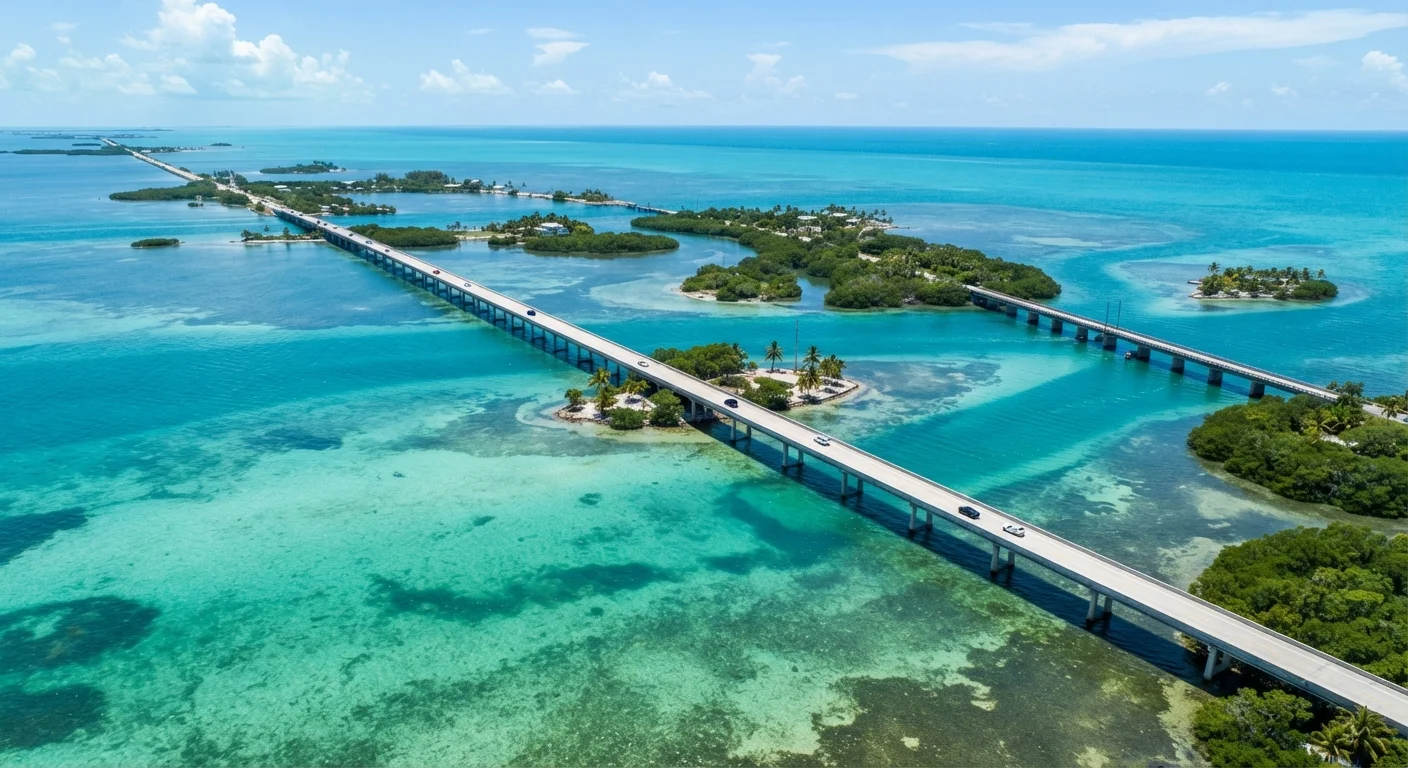
The Drive Itself: Overseas Highway Realities
US-1, better known here as the Overseas Highway, connects the Florida mainland to Key West across roughly 113 miles and 42 bridges. It sounds cinematic - and certain stretches genuinely are - but the drive also has honest quirks worth knowing before you leave Miami.
Expect two lanes for most of the route. One RV or cautious driver can slow traffic for miles, and passing opportunities are scarce. Budget at least 3.5 to 4 hours from Florida City to Key West without stops; with stops, a full day is realistic and often more enjoyable. Speed limits drop frequently through island communities, and enforcement is active.
The best scenery concentrates around Mile Markers 40-47 (the Seven Mile Bridge area) and the short oceanside stretches in the Upper Keys. Much of the Middle Keys is commercial strip, with gas stations and fast-food signs competing with water views. If you want a scenic-drive experience on par with the California coast, see our honest PCH breakdown for comparison - the two trips scratch very different itches.
Island by Island: Honest Snapshots
Key Largo is the gateway and the dive capital. John Pennekamp Coral Reef State Park anchors most visitors' plans, and rightly so - the reef snorkeling here is accessible and often excellent. The town itself is largely a commercial corridor; don't expect a quaint village feel.
Islamorada calls itself the Sport Fishing Capital of the World, and serious anglers would struggle to argue. The atmosphere is slightly more relaxed than Key Largo, with a handful of art galleries and waterfront restaurants adding texture. Sunset views from the Atlantic side can be genuinely beautiful.
Marathon sits mid-Keys and serves as a practical base. It's more residential and workmanlike than resort-polished, which some travelers prefer. The Dolphin Research Center here offers educational programming; it's a legitimate facility focused on conservation, not performance shows.
Big Pine Key and the Lower Keys are where the chain gets quieter. The National Key Deer Refuge protects the tiny Key deer - a subspecies of white-tailed deer found only here - and Blue Hole is a freshwater lens worth a stop. Drive slowly: deer cross roads frequently, and speed limits in the refuge are strictly enforced.
Key West requires calibrating expectations. Duval Street is loud, tourist-saturated, and can feel more like a theme park than a historic town - especially during spring break or Fantasy Fest. But Bahama Village, the cemetery, the historic seaport, and the quieter residential streets of the Old Town offer real texture. Sunrise at Fort Zachary Taylor State Park beats the famous Mallory Square sunset crowd by a wide margin.
Practical Planning Notes
Accommodation prices in the Keys can be significantly higher than mainland Florida, and inventory is limited - particularly in Key West. Booking months ahead is common practice, not alarmism. Camping at Bahia Honda State Park is one of the few genuinely affordable options with direct water access, but sites fill up fast.
Seasonality matters. Winter (December-April) brings dry weather, lower humidity, and peak prices. Summer is hot, humid, and prone to afternoon storms, but rates drop and crowds thin. Hurricane season runs June through November; travelers should monitor forecasts and understand their accommodation's cancellation policies before booking.
Reef health is an important context: Florida's coral reefs have declined significantly over decades due to warming waters, disease, and runoff. Snorkeling and diving are still worthwhile, but managing expectations helps - you may not encounter the vibrant reef walls of promotional photography. Sunscreen choices matter here; reef-safe formulations are required in many Keys waters and are the responsible option regardless.