

Key Takeaways
- Carry-ons eliminate checked bag fees and baggage claim wait times but limit what you can pack.
- Checked luggage suits longer trips, family travel, and journeys requiring gear that can't fly in a cabin.
- Airline size and weight rules vary - always verify before you arrive at the airport.
- Your itinerary type, trip length, and personal packing habits should drive the decision.
- Many travelers find a hybrid approach - one carry-on plus a personal item - covers most trips well.
No checked bag fees on most airlines
Many carriers allow one carry-on free of charge, making it a straightforward way to reduce travel costs, especially on multi-leg itineraries where fees stack.
Skip baggage claim entirely
Walking straight off the plane and out of the terminal can save 20-45 minutes - time that adds up quickly on frequent trips.
Your bag stays with you throughout the journey
Carry-ons eliminate the risk of lost, delayed, or misrouted luggage, which is a real concern particularly on connecting flights.
Faster check-in and more flexibility
Without a checked bag, you can often use streamlined check-in options, switch flights more easily, and move through the airport at your own pace.
Strict size and weight limits apply
Airline carry-on dimensions and weight caps differ by carrier and sometimes by aircraft type. Non-compliance at the gate can result in last-minute fees that exceed what checking a bag would have cost.
Liquids and certain items are restricted
TSA rules limit liquids to containers of 3.4 oz or less in a single quart-sized bag, ruling out full-size toiletries and some specialty items like certain medications in liquid form.
Overhead bin space is never guaranteed
On full flights, gate agents may require passengers to check their carry-on at no additional cost - but this varies by airline and boarding position.
Checked bags increase lost luggage risk on connections
Tight layovers raise the statistical likelihood of bags being delayed or rerouted. Travelers on multi-stop itineraries should weigh this carefully.
Fees can be substantial on budget carriers
Some low-cost airlines charge for checked bags at rates that rival or exceed the ticket price itself, making it important to build bag fees into total trip cost comparisons.
Our Verdict
Neither carry-on nor checked luggage wins outright - the better choice depends on trip length, destination, and what you genuinely need to bring. Carry-ons reward disciplined packers on shorter trips with speed and savings, while checked bags offer real freedom for longer journeys, families, or gear-heavy adventures. Knowing the trade-offs before you book makes the airport a lot less stressful.
Carry-ons suit solo travelers and weekend-to-week trips; checked bags are better for longer stays, family trips, or any journey requiring specialized or oversized gear.
Why This Decision Matters More Than You Think
The carry-on vs. checked bag debate sounds like a minor logistical detail, but it quietly shapes your entire airport experience - from check-in to baggage claim to what you can actually do at your destination. Make the call intentionally and the trip flows. Make it by default and you might be paying surprise fees at the gate or hauling an overstuffed roller through cobblestone streets.
This isn't about which option is objectively better. It's about matching your luggage strategy to your actual trip. Trip planning resources can help you think through the bigger picture, but luggage choice is one lever that's easy to get right once you understand the trade-offs.
The Case for Carry-On: Speed, Savings, and Control
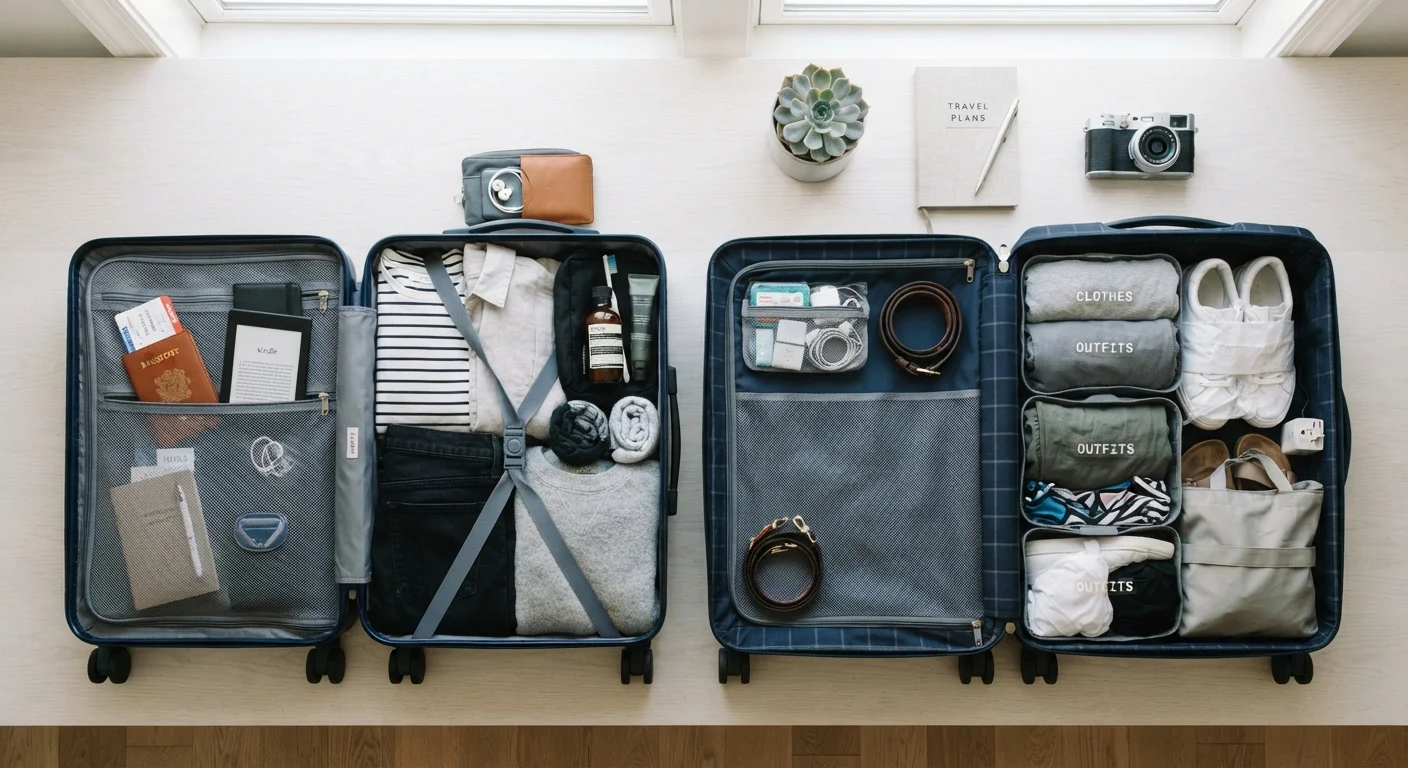
Traveling with only a carry-on is the closest thing to a travel superpower - when your trip allows it. You skip the check-in desk, breeze past baggage claim, and your belongings stay with you the entire flight.
No checked bag fees on most airlines
Many carriers allow one carry-on free of charge, making it a straightforward way to reduce travel costs, especially on multi-leg itineraries where fees stack.
Skip baggage claim entirely
Walking straight off the plane and out of the terminal can save 20-45 minutes - time that adds up quickly on frequent trips.
Your bag stays with you throughout the journey
Carry-ons eliminate the risk of lost, delayed, or misrouted luggage, which is a real concern particularly on connecting flights.
Faster check-in and more flexibility
Without a checked bag, you can often use streamlined check-in options, switch flights more easily, and move through the airport at your own pace.
The financial case is also real. Many airlines on domestic and international routes charge per checked bag, and those fees add up quickly on multi-leg itineraries. Avoiding them entirely can meaningfully offset other trip costs. For a fuller look at how carry-on habits can work against you, see common carry-on packing errors that slow travelers down at security.
If you want to refine your packing approach further, packing light without sacrificing essentials offers a practical system built around versatility.
The Case for Checked Luggage: Room, Flexibility, and Fewer Compromises
There are trips where checking a bag isn't a concession - it's the smarter call. A two-week international trip, a ski weekend, a family vacation with children, or a destination requiring formal attire all push the limits of what a carry-on can realistically hold.
Strict size and weight limits apply
Airline carry-on dimensions and weight caps differ by carrier and sometimes by aircraft type. Non-compliance at the gate can result in last-minute fees that exceed what checking a bag would have cost.
Liquids and certain items are restricted
TSA rules limit liquids to containers of 3.4 oz or less in a single quart-sized bag, ruling out full-size toiletries and some specialty items like certain medications in liquid form.
Overhead bin space is never guaranteed
On full flights, gate agents may require passengers to check their carry-on at no additional cost - but this varies by airline and boarding position.
Checked bags increase lost luggage risk on connections
Tight layovers raise the statistical likelihood of bags being delayed or rerouted. Travelers on multi-stop itineraries should weigh this carefully.
Fees can be substantial on budget carriers
Some low-cost airlines charge for checked bags at rates that rival or exceed the ticket price itself, making it important to build bag fees into total trip cost comparisons.
Always Verify Your Airline's Specific Rules
Carry-on size limits, personal item policies, and checked bag fees are set independently by each airline and can change. Rules also differ between domestic and international routes on the same carrier. Before you pack, check the luggage policy directly on your airline's official website - not a third-party booking summary - to avoid surprises at the gate.
Checked bags also remove a layer of airport anxiety for travelers who prefer not to navigate overhead bin competition or worry about liquids in security lines. If your flight involves a connection, however, factor in the added risk of delayed or misrouted luggage, which is statistically more common on itineraries with tight layovers.
How to Decide: A Practical Framework
Rather than defaulting to habit, run your trip through a few key questions before packing:
- Trip length: Trips of five days or fewer are typically manageable with a carry-on for most climates and activity types. Longer trips often justify checking a bag.
- Activities and gear: Hiking poles, ski boots, golf clubs, and certain sports equipment cannot go in a cabin bag. Neither can full-size toiletries if you're not prepared to buy at your destination.
- Flight itinerary: On budget carriers, overhead bin space may be limited or charged separately. Verify your airline's specific policy - carry-on rules vary more than most travelers expect.
- Personal pace: If you're moving between multiple cities or relying on public transit, a smaller bag is significantly easier to manage.
~1%
US flights with mishandled checked bags
The US Department of Transportation's Air Travel Consumer Report tracks baggage mishandling rates, which have historically hovered around 1% of checked bags on domestic flights.
20-45 min
Average time saved skipping baggage claim
Industry travel analyses commonly estimate that carry-on-only travelers save between 20 and 45 minutes per trip by bypassing baggage claim at arrival.
Before finalizing your packing plan, use a pre-departure checklist to make sure nothing critical gets left behind regardless of which bag you choose.