

Key Takeaways
- Packing light is a skill built on deliberate decision-making, not simply owning fewer things.
- A versatile capsule wardrobe using neutral, mix-and-match pieces is the backbone of any light-packing system.
- Knowing the difference between 'might need' and 'will definitely use' eliminates most overpacking.
- The right packing method-rolling, bundling, or compression-can meaningfully reduce bulk.
- Always verify carry-on size limits and liquid rules with your specific airline before travel.
Why Most Travelers Overpack (and How to Break the Cycle)
Overpacking is rarely about greed - it's about anxiety. The fear of needing something you don't have drives most travelers to stuff bags with duplicate items, just-in-case outfits, and gadgets they haven't touched in months. The result? Checked bag fees, aching shoulders, and time wasted at baggage claim.
The science of packing light starts with a mindset shift: you are not preparing for every conceivable scenario. You are packing for the most likely version of your trip. That distinction alone removes a remarkable amount of dead weight from any bag.
If you find yourself second-guessing every item, our versatile pre-departure checklist offers a structured starting point that covers documents, clothing, and electronics without encouraging excess.
Apply a one-week rule: lay out everything you think you need, then edit it down to what you'd use in a single week regardless of trip length.
Most travelers use a narrow subset of what they pack. A week's worth of versatile items covers nearly any trip duration when combined with access to laundry or hand-washing. This prevents the 'just in case' spiral that inflates bag weight.
Choose dual-purpose items over single-use ones whenever possible.
Every item in a bag competes for finite space and weight. Items that serve more than one function - a sarong that doubles as a beach towel and a light blanket, for instance - deliver more value per ounce.
Pack shoes last and limit yourself to two pairs maximum for most trips.
Shoes are the heaviest, bulkiest items most travelers carry. Two well-chosen pairs - one for active use, one for casual or evening wear - handle the overwhelming majority of travel scenarios.
Write a post-trip audit listing every item you didn't touch.
Habits change when backed by data. Tracking unused items across multiple trips reveals your personal packing blindspots and builds a smarter packing list over time.
Use your destination's resources - don't carry what you can buy or borrow there.
Travelers often pack against the assumption that nothing will be available at their destination. In practice, groceries, pharmacies, and basic supplies exist almost everywhere, often at reasonable prices.
Building a Capsule Wardrobe for Any Destination
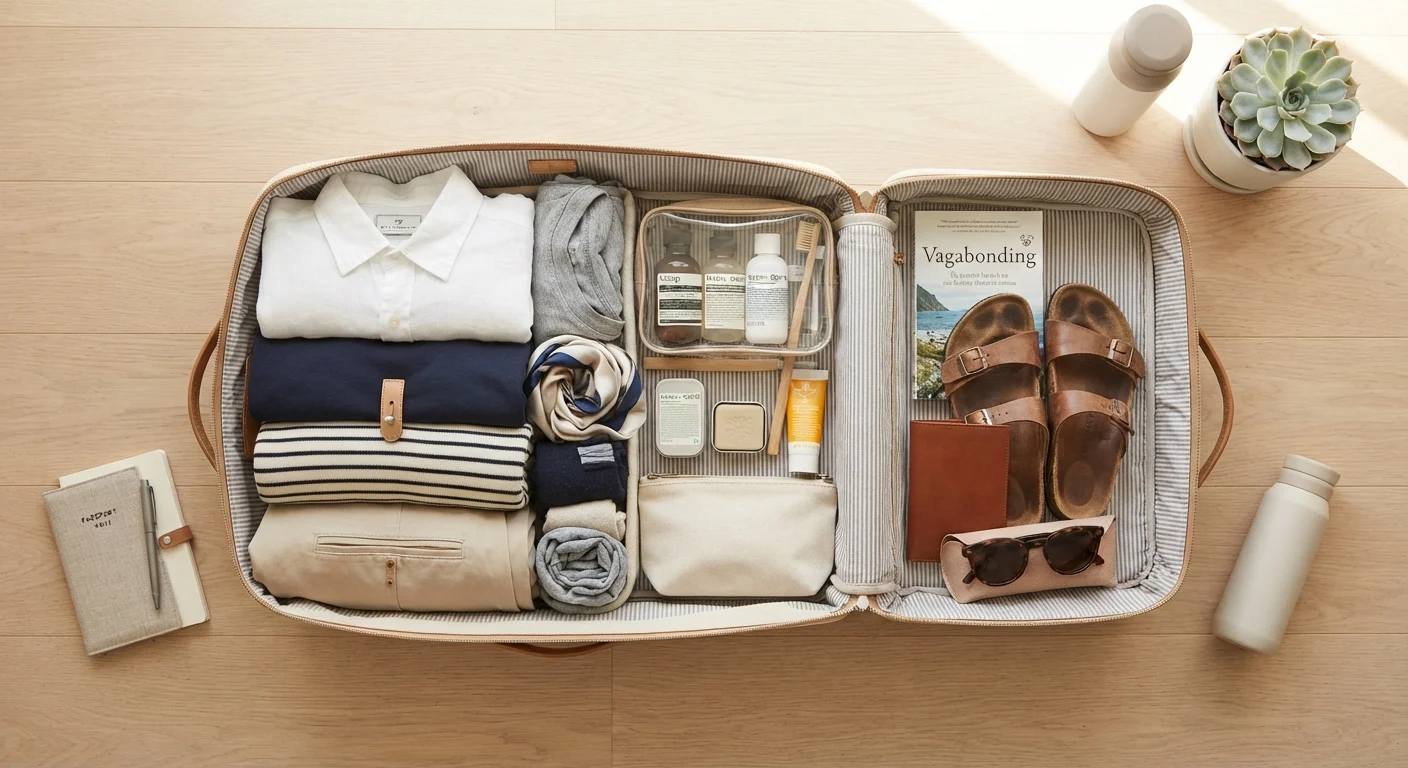
The most powerful tool a light packer has is a capsule wardrobe - a small, deliberately chosen set of garments that mix and match across multiple outfits. Aim for neutral colors that layer well and fabrics that resist wrinkles and dry quickly after hand-washing.
A workable framework for most trips under two weeks: three to four bottoms, five to six tops, one versatile outer layer, and one pair of shoes that handles both walking and a nicer dinner. Re-wearing items is not a compromise - it is the strategy.
Test Your Packing Before Departure Day
Pack your bag completely two days before you leave, then carry it around for 20 minutes. If it's uncomfortable or unmanageable, that's useful information while you still have time to adjust. Waiting until the morning of travel to discover a bag is too heavy leaves you with no good options.
Climate variability doesn't require doubling your wardrobe - it requires smarter layering. A lightweight merino base layer and a packable windbreaker can bridge significant temperature swings without adding meaningful weight. For more on matching your luggage approach to a specific trip type, see our breakdown of carry-on vs. checked luggage trade-offs.
Packing Methods That Actually Save Space
How you pack is nearly as important as what you pack. Three techniques dominate the conversation:
- Rolling reduces creasing in casual fabrics and makes items easier to see at a glance.
- Bundle packing wraps garments around a central core object, minimizing folds and wrinkles - useful for dress shirts or blazers.
- Compression packing cubes let you compact soft items and organize by category, which speeds up both packing and unpacking.
None of these methods is universally superior - the right choice depends on your clothing types and bag shape. Experimenting at home before your trip is the fastest way to find what works for your specific load.
~50%
Packed items typically left unused on a trip
Travel behavior research consistently suggests roughly half of packed items go untouched - a figure frequently cited by packing coaches and frequent-traveler communities.
7 lbs
Average weight saved switching to carry-on only
Travelers who consolidate from a checked bag to a carry-on commonly report saving between 5 and 10 pounds of total load, based on self-reported traveler surveys.
Also worth reconsidering: the toiletry bag. Most hotels and many Airbnb-style rentals provide basic soap, shampoo, and conditioner. Verifying this before you travel can eliminate an entire category of bulk. For a broader look at common packing pitfalls, your carry-on may be doing too much is worth a read.
The Quick-Win Habits That Make Light Packing Stick
Knowing the principles is one thing; building habits that make them automatic is another. The travelers who consistently pack light aren't doing something magical - they've internalized a repeatable system that gets easier every time they use it.
Good packing habits also transfer beyond travel. The same principles of intentionality and editing apply to home organization strategies - keeping only what genuinely earns its place. Once you have your system dialed in, pair it with a solid trip itinerary that holds up to make the whole journey run smoother.