

Key Takeaways
- Your car's color has no impact on insurance premiums - insurers don't track vehicle color.
- "Full coverage" is an informal term and does not mean every scenario is covered.
- Your personal auto policy typically does not cover business or rideshare use.
- Minimum state-required liability limits are often too low to cover a serious accident.
- Letting your policy lapse, even briefly, can raise your future premiums significantly.
Why Insurance Myths Are Expensive
Auto insurance is one of the largest recurring costs of car ownership, yet many drivers make coverage decisions based on myths passed down through conversations or popular culture. These misconceptions don't just cause confusion - they can leave drivers dangerously underinsured, or paying for coverage that doesn't match their actual needs.
Understanding what your policy actually does (and doesn't) cover is the foundation of smart ownership. For a broader look at what car ownership really costs, see the true cost of car ownership in the US.
Myth
Red cars cost more to insure because insurers penalize flashy colors.
Fact
Insurance companies do not factor vehicle color into premium calculations.
This myth is remarkably persistent, but insurers base premiums on factors such as the vehicle's make, model, year, engine size, safety ratings, and the driver's history - not paint color. A red sedan and a white sedan of the same make and model will carry identical base rates. The VIN (Vehicle Identification Number) used during the quoting process doesn't encode color data at all.
Myth
"Full coverage" means you're protected no matter what happens to your car.
Fact
"Full coverage" is an informal phrase - no policy covers every possible situation.
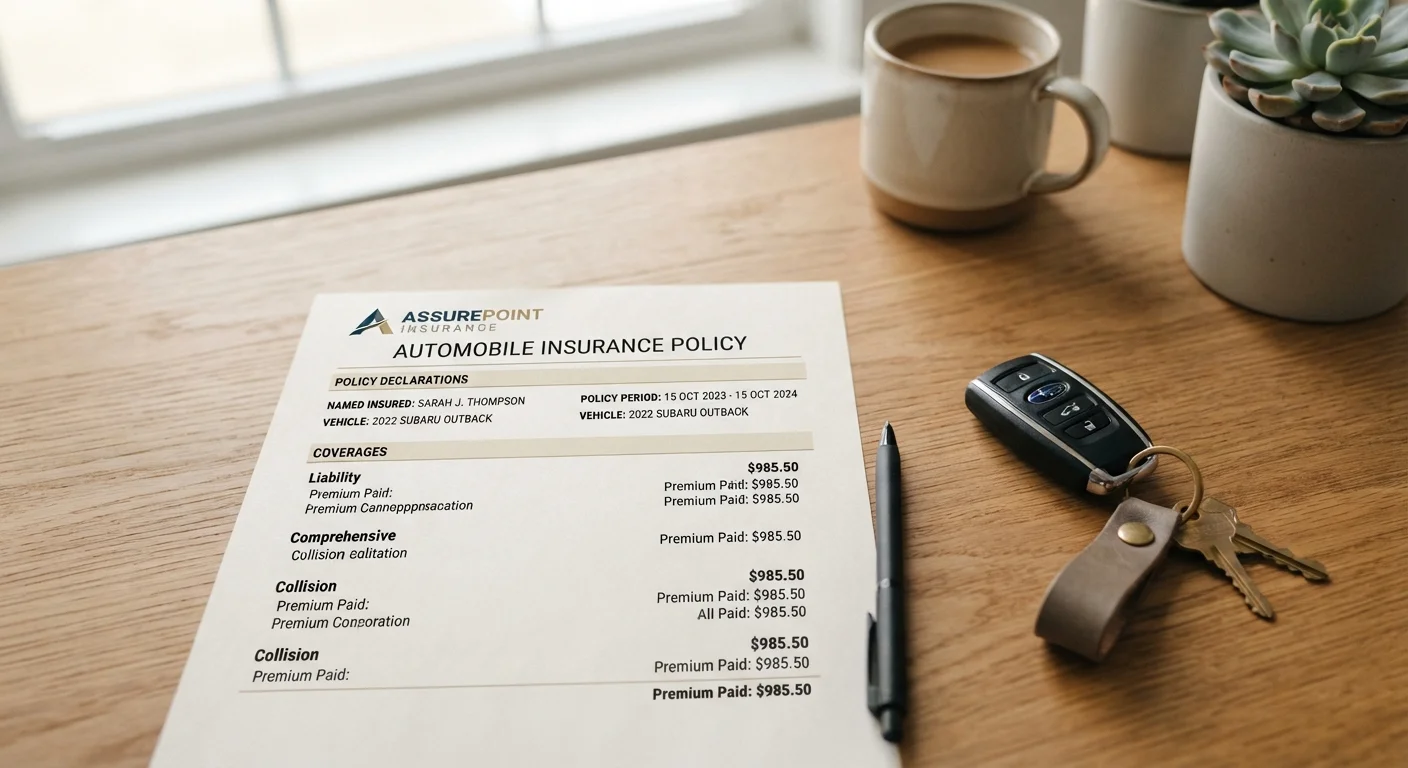
The term "full coverage" is widely used but has no standard legal or industry definition. It typically refers to a combination of liability, collision, and comprehensive coverage, but even that combination has exclusions. Mechanical breakdowns, normal wear and tear, custom equipment not listed on the policy, and certain natural disasters may not be covered depending on your specific policy language. Always read your declarations page and ask your insurer about exclusions before assuming you're protected.
Myth
Your personal auto policy covers you when driving for a rideshare or delivery service.
Fact
Personal auto policies typically exclude commercial and rideshare use.
Standard personal auto insurance is designed for personal, non-commercial driving. When you use your vehicle to carry paying passengers or make deliveries, most personal policies either exclude coverage entirely or create a coverage gap during the period when the app is active but a ride hasn't been accepted. Rideshare companies provide some coverage in certain phases, but gaps often exist. Drivers in the gig economy should ask their insurer about a rideshare endorsement or a commercial policy add-on.
Myth
You only need the minimum liability coverage your state requires.
Fact
State minimums are legal floors, not adequate financial protection for most drivers.
Every state sets minimum liability limits - but these amounts were often established years ago and may not reflect the real costs of a serious accident today. Medical bills, property damage, and legal liability from a single multi-vehicle accident can easily exceed a minimum-limit policy. If damages exceed your coverage, you may be personally responsible for the difference. Drivers should evaluate their assets and risk tolerance when selecting liability limits, not simply default to the legal minimum.
Myth
If someone borrows your car and crashes it, their insurance pays.
Fact
In most cases, auto insurance follows the car - not the driver.
The general principle in U.S. auto insurance is that coverage is attached to the vehicle and its owner's policy, not to whoever happens to be driving. If you lend your car to a friend and they cause an accident, your insurance is typically the primary coverage that responds - and your premiums may be affected. There are exceptions and nuances depending on state law and policy language, so understanding who is listed as a covered driver on your policy matters.
Myth
A short lapse in coverage won't affect your future premiums.
Fact
Even a brief gap in coverage is flagged by insurers and can raise your rates.
Insurers treat a lapse in coverage - even of just a few weeks - as a risk signal. Drivers with continuous coverage are statistically considered lower risk. A coverage gap can result in higher premiums when you reinstate or shop for a new policy. If you're between vehicles or temporarily not driving, ask your insurer about options to maintain continuous coverage at a reduced cost rather than canceling outright.
Coverage Gaps Drivers Don't See Coming
Some of the costliest insurance myths involve false assumptions about what a standard policy covers. Many drivers discover the gaps only after a claim is denied.
Don't Assume - Read Your Policy
The only reliable way to know what your auto insurance covers is to read your policy documents, including the exclusions section. Coverage terms vary significantly between insurers and states. If a term is unclear, contact your insurer directly or consult a licensed agent before you need to file a claim - not after.
One commonly misunderstood distinction is between liability, collision, and comprehensive coverage. Each serves a different function, and no single policy element handles everything. For a plain-language breakdown, see how liability, collision, and comprehensive coverage work together.
Drivers who finance or lease their vehicles should also be aware of what happens when a car is totaled and they owe more than the vehicle's market value. Gap insurance exists precisely to address this scenario - yet many owners don't know it's available until it's too late.
1 in 8
Drivers on U.S. roads are uninsured
According to the Insurance Research Council, roughly one in eight U.S. drivers carries no auto insurance, underscoring why uninsured motorist coverage matters.
~$2,000+
Average annual US auto insurance premium
The National Association of Insurance Commissioners has tracked average annual auto insurance expenditures rising steadily, with many states exceeding $2,000 per vehicle in recent years.
Choosing the right coverage level - especially on an older vehicle - involves real trade-offs. Comparing comprehensive and liability-only coverage can help drivers weigh whether broader protection is worth the added premium cost.
This article provides general information about auto insurance concepts. It is not legal or financial advice. Coverage terms, exclusions, and regulations vary by state and insurer. Consult a licensed insurance professional for guidance specific to your situation.