

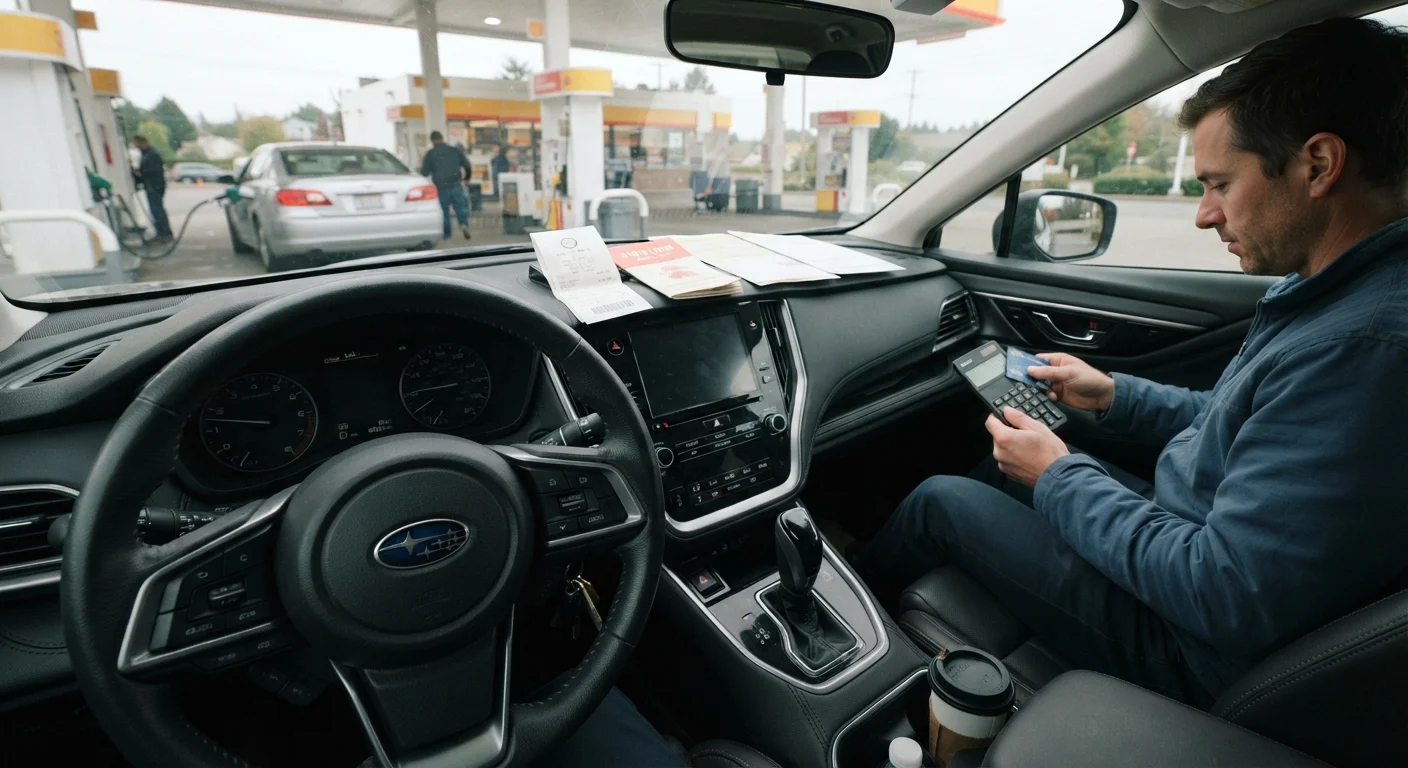
Key Takeaways
- Depreciation is typically the single largest cost of owning a vehicle over time.
- Insurance, fuel, and maintenance together often exceed the monthly loan payment.
- Registration fees, taxes, and financing interest add meaningful costs that are easy to overlook.
- Total annual ownership costs vary significantly based on vehicle type, location, and driving habits.
- Planning for all cost categories - not just the sticker price - prevents budget shortfalls.
True Cost of Car Ownership
The true cost of car ownership is the total amount a driver spends on a vehicle beyond the purchase price. It includes recurring expenses like fuel, insurance, and maintenance, as well as less obvious costs like depreciation, registration fees, and financing interest. Understanding these costs helps drivers make more informed decisions about which vehicle fits their budget.
Analysts often express this as a per-mile or annual figure; the American Automobile Association (AAA) publishes annual estimates by vehicle category that can serve as a useful general reference.
Why the Sticker Price Is Only the Starting Point
Most drivers focus on the monthly payment or purchase price when budgeting for a car. That figure, however, captures only a fraction of what the vehicle will actually cost. Once fees, insurance, fuel, upkeep, and value loss are tallied, the real annual outlay can surprise even careful planners.
Thinking in terms of total cost of ownership - not just the loan payment - gives a more accurate picture of how a vehicle fits into your overall financial life. For context on how similar hidden costs work in other purchase categories, see our piece on hidden costs of smartphone ownership.
$12,000+
Estimated average annual cost of owning a new vehicle
AAA's annual Your Driving Costs study regularly estimates total new-vehicle ownership costs in this range when all expense categories are included.
~50%
Value a new car can lose in its first three years
Depreciation rates vary by make, model, and market conditions, but significant value loss in the early years of ownership is a well-documented industry pattern.
~15%
Share of total ownership cost attributable to fuel
Fuel's proportion of total cost shifts based on vehicle efficiency, local prices, and annual mileage driven.
Depreciation: The Cost You Can't Avoid
Depreciation is the decline in a vehicle's market value over time - and for most drivers, it is the largest single cost of ownership. New vehicles can lose a significant portion of their value within the first few years, meaning a driver who sells or trades in after five years recovers far less than they paid.
Several factors influence how quickly a vehicle depreciates, including mileage, condition, market demand, and the original purchase price. Our full explainer on why cars lose value so fast covers these dynamics in depth. The key point: even if you never plan to sell, depreciation represents real lost wealth.
“Depreciation is the elephant in the room when it comes to car costs. Most people fixate on the interest rate or the monthly payment, but the value sliding off the vehicle each year is often larger than both combined.”
— AAA Spokesperson, American Automobile Association - annual driving cost research program
Insurance, Fuel, and Maintenance: The Recurring Layer
After depreciation, three categories account for the bulk of ongoing car costs:
- Insurance: Required in nearly every state, auto insurance premiums depend on your driving history, location, vehicle type, and coverage level. Many drivers carry misconceptions about what their policy covers - our article on car insurance myths addresses common gaps that can lead to unexpected out-of-pocket expenses.
- Fuel: Annual fuel costs depend on how much you drive, local gas prices, and your vehicle's fuel economy rating. Drivers who commute long distances or operate larger vehicles face substantially higher fuel bills.
- Maintenance and repairs: Routine services - oil changes, tire rotations, brake inspections - are predictable. Unexpected repairs are not. Setting aside a monthly amount for both planned and unplanned maintenance helps smooth out these costs over time.
Track Your Actual Annual Costs
Keep a simple running log of every car-related expense - fuel fill-ups, insurance bills, repair invoices, and registration renewals. After 12 months, you'll have an accurate personal baseline that's far more useful than any national average for planning future vehicle decisions.
Fees, Taxes, and Financing Interest
Several cost categories tend to be underestimated at purchase time:
- Registration and title fees
- Paid at purchase and renewed annually, these vary widely by state and sometimes by vehicle value or weight.
- Sales tax
- Applied at purchase in most states, often calculated on the full vehicle price before any trade-in credit depending on local rules.
- Financing interest
- If you carry a loan, the total interest paid over the loan term adds meaningfully to your cost. This functions similarly to other forms of debt - for a useful parallel, see our explainer on carrying credit card debt.
State-level rules around fees and inspections can shift your annual cost considerably. Drivers who move between states should review state-by-state car ownership rules to avoid surprises.
Costs Vary Widely by Location
Insurance minimums, registration fee structures, emissions testing requirements, and even fuel prices differ substantially from state to state. What a vehicle costs to own in one state may be noticeably different from the same vehicle in another. Always factor in local rules when estimating your actual annual outlay.
Building a Realistic Ownership Budget
A practical approach is to estimate all cost categories annually, then divide by 12 to arrive at a true monthly figure. This gives a clearer comparison to alternatives like leasing, using public transit, or car-sharing services.
Key categories to include in your estimate:
- Loan or lease payment (if applicable)
- Estimated annual depreciation
- Insurance premiums
- Fuel based on expected mileage and current average prices
- Scheduled maintenance and a reserve for unplanned repairs
- Registration, taxes, and any required inspection fees
- Financing interest (total paid over loan term, annualized)
Approaching car ownership as a multi-part budget - rather than a single monthly payment - helps drivers choose vehicles that fit their full financial picture, not just what they can afford at the dealership.
This article provides general educational information about vehicle ownership costs and is not a substitute for personalized financial advice. Costs vary widely based on individual circumstances, location, and vehicle choice.