

Key Takeaways
- Odometer fraud affects hundreds of thousands of vehicles annually and inflates a car's perceived value artificially.
- A salvage title signals the vehicle was declared a total loss by an insurer and may carry hidden structural risks.
- Lemon law buybacks, flood damage, and undisclosed accidents are common history issues that affect safety and resale.
- A professional pre-purchase inspection and a vehicle history report are two of the most protective steps a buyer can take.
- Title and history red flags directly affect insurance coverage options and future resale value.
Why Vehicle History Matters Before You Buy
A car's past doesn't stay in the past - it rides with you. Problems hidden in a vehicle's history can affect everything from daily reliability and safety to insurance premiums and resale value. Yet many buyers focus almost entirely on how a car looks and drives during a brief test, overlooking the paper trail that tells a far more complete story.
Understanding the most common vehicle history red flags gives you the ability to ask sharper questions, negotiate from a position of knowledge, or walk away from a deal that looks attractive on the surface. The issues covered below range from outright fraud to structural damage that may not be immediately visible - all of them worth knowing before you sign anything.
For related context on what car documents actually mean legally, see our guide to vehicle titles and liens.
Odometer Rollback
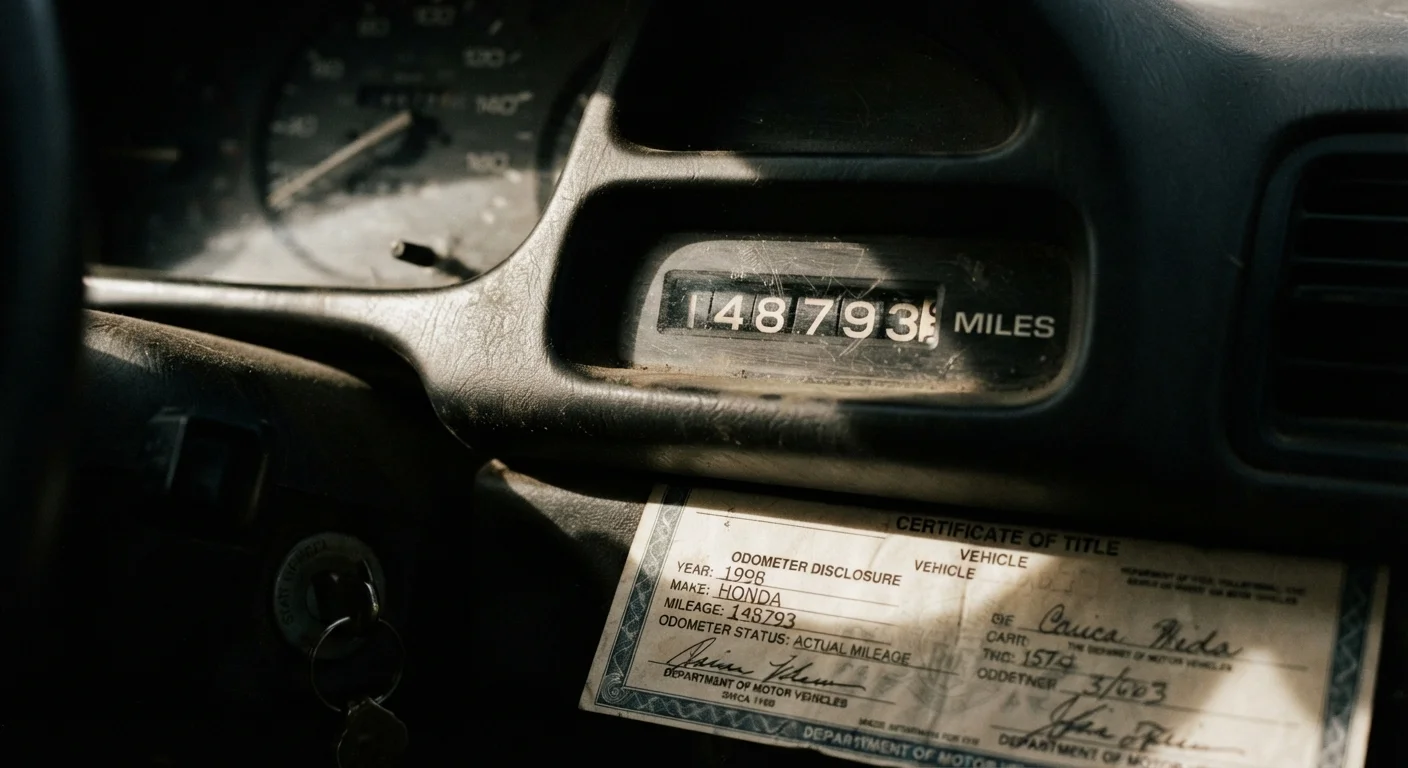
Odometer fraud - rolling back a vehicle's mileage reading to make it appear lower than it actually is - is a federal crime under the Motor Vehicle Information and Cost Savings Act, yet it remains a persistent problem. The National Highway Traffic Safety Administration has estimated that hundreds of thousands of vehicles sold each year may have tampered odometers.
The practical harm is significant: mileage is a primary factor in pricing, and a vehicle with artificially low mileage can be priced thousands of dollars above its actual market value. More critically, wear-related maintenance like timing belt replacements or transmission service may be overdue without the buyer realizing it.
Warning signs: Wear on the pedals, steering wheel, or driver's seat that seems inconsistent with the displayed mileage; service records showing higher mileage at a past date than the current odometer reading; digital odometers that appear recently replaced.
A car priced on falsely low mileage may already need thousands in overdue maintenance.
Salvage and Rebuilt Titles
When an insurer declares a vehicle a total loss - typically because repair costs exceed a set percentage of its market value - the state DMV brands the title as salvage. If the vehicle is subsequently repaired and passes a state inspection, it may receive a rebuilt or reconstructed title.
Both designations carry long-term consequences. Salvage and rebuilt vehicles are often difficult or impossible to insure for comprehensive and collision coverage through standard carriers, and they depreciate more steeply than clean-title equivalents. Structural repairs after a severe collision may not restore original crash-test integrity even if the vehicle looks normal.
Some states have different thresholds for what triggers a salvage designation, so a vehicle totaled in one state could theoretically be re-titled in another with less scrutiny - a practice sometimes called title washing. For more on what title designations mean legally, see our breakdown of vehicle titles and liens.
Rebuilt-title vehicles may look repaired but can still carry compromised structural integrity.
Flood Damage
Flood-damaged vehicles are a recurring problem, particularly in the years following major hurricanes or regional flooding events. Water intrusion - especially saltwater - causes corrosion to electrical systems, wiring harnesses, and metal components that can continue long after the vehicle appears dry and functional.
Flood damage doesn't always result in a formal salvage title, particularly when vehicles are moved across state lines before being re-titled. Buyers may unknowingly purchase a vehicle with hidden corrosion that only manifests months later as electrical gremlins, mold odor, or accelerated rust.
What to look for: Musty or chemical odors in the interior; rust or moisture staining in the trunk, under floor mats, or behind dashboard panels; corroded or replaced connectors in the fuse box; mud residue in areas not normally reached during cleaning.
Flood damage can remain hidden for months before causing serious electrical or mechanical failures.
Lemon Law Buybacks
Every US state has some form of lemon law that requires manufacturers or dealers to repurchase vehicles with persistent, unresolved defects. When a vehicle is bought back under these laws, it should receive a lemon law buyback or manufacturer buyback brand on its title.
This brand doesn't necessarily mean the vehicle is unsafe or still defective - in many cases the original problem has been corrected. However, it does signal that the vehicle had recurring issues serious enough to trigger a legal remedy, and it will typically affect resale value and may complicate insurance or financing.
Lemon law buyback vehicles are sometimes resold through auction without the brand being clearly disclosed to retail buyers, making it important to run a history report and check the title brand carefully before any purchase.
A lemon law buyback brand should always prompt deeper investigation into what the original defect was.
Undisclosed Accident History
Not every collision ends up in a history report. Minor accidents handled privately between drivers, or repairs done at shops that don't report to data aggregators, may leave no formal record. At the same time, major accidents that were reported can reveal patterns - repeated rear-end impacts, airbag deployments, or structural damage - that should inform how you assess a vehicle's current condition.
Airbag deployment in particular is a significant flag. Replacing an airbag system correctly is expensive, and improperly replaced airbags are a known safety risk. Always verify airbag system status through a diagnostic scan, not just a visual check.
For context on how unresolved vehicle problems can compound, this overview of common ownership mistakes is a useful companion read. Vehicles with accident history also tend to depreciate faster - a factor explored in why cars lose value so quickly.
Airbag deployments in a vehicle's history warrant a professional diagnostic scan before purchase.
Title Washing
Title washing refers to the practice of moving a vehicle with a branded title (salvage, flood, lemon) across state lines to obtain a clean title in a state with less stringent inspection or branding requirements. The result is a vehicle that legally carries a clean title but has a hidden history of serious damage or defects.
This is a form of fraud, but it can be difficult for buyers to detect through title inspection alone. Cross-referencing the vehicle's history report - which pulls from multiple state databases and insurance records - against the physical title is one of the more reliable ways to detect inconsistencies. Gaps in ownership records, unusually short registration periods in one state, or a mismatch between the title state and the vehicle's service history are worth investigating further.
A clean title alone is not proof a vehicle has a clean history - cross-check with a multi-state report.
Protecting Yourself Before and After Purchase
No single tool eliminates all risk, but combining a vehicle history report with a thorough pre-purchase inspection by an independent, qualified mechanic covers most of the issues described above. A history report aggregates data from state DMV records, insurance companies, and auction records - but it only reflects events that were reported. A mechanical inspection can surface physical evidence of problems that never made it into any database.
Get an Independent Pre-Purchase Inspection
Before finalizing any used vehicle purchase, arrange for a pre-purchase inspection by a qualified mechanic who has no financial stake in the sale. A thorough inspection can surface physical evidence of flood damage, frame repair, or mismatched panels that may not appear in any database. Most independent shops offer this service for a modest fee - treat it as basic due diligence, not an optional extra.
Once you own a vehicle, the best defense against history-related surprises is documentation going forward. A well-maintained service record helps establish that any pre-existing issues are being properly managed, and it supports resale value over time. See why keeping a vehicle maintenance log matters for a practical starting point.
History issues also intersect with ongoing ownership costs in ways that aren't always obvious. Vehicles with salvage or rebuilt titles, for example, may face restrictions on the type of insurance coverage available to them - a factor worth discussing with your insurer before finalizing any purchase. For a broader look at how ownership decisions compound over time, common ownership mistakes that escalate costs is worth reading alongside this article.
This article is for general informational purposes only. For legal questions about title fraud or insurance coverage decisions, consult a qualified professional in your state.