

| Document type | Certificate of Title |
| Primary purpose of title | Proves legal ownership of the vehicle |
| Primary purpose of registration | Authorizes the vehicle for road use in a given state |
| Who holds title during a loan | Typically the lienholder (lender) or the state DMV, depending on state rules |
| Registration renewal frequency | Usually annual, though some states allow multi-year renewals |
| Lien release required for | Selling a financed vehicle or obtaining a clean title |
The Three Documents and What They Actually Do
When you own or finance a vehicle, you'll encounter three distinct documents: a certificate of title, a registration certificate, and potentially a lien. Each serves a different legal function, and confusing them can lead to real problems - from failed private sales to unresolvable ownership disputes.
| Document type | Certificate of Title |
| Primary purpose of title | Proves legal ownership of the vehicle |
| Primary purpose of registration | Authorizes the vehicle for road use in a given state |
| Who holds title during a loan | Typically the lienholder (lender) or the state DMV, depending on state rules |
| Registration renewal frequency | Usually annual, though some states allow multi-year renewals |
| Lien release required for | Selling a financed vehicle or obtaining a clean title |
The title is the legal proof of ownership. It names who owns the vehicle and, if money is still owed, who holds a security interest (the lienholder). The registration is permission from your state to operate the vehicle on public roads - it must be renewed regularly and does not prove ownership. A lien is a legal claim recorded on the title by a lender when a loan is used to purchase the car. These three documents interact closely, but they are not interchangeable.
For a deeper look at how ownership rights shift depending on whether you lease or finance, see how leasing versus financing changes your ownership rights.
Certificate of Title: Proof of Ownership
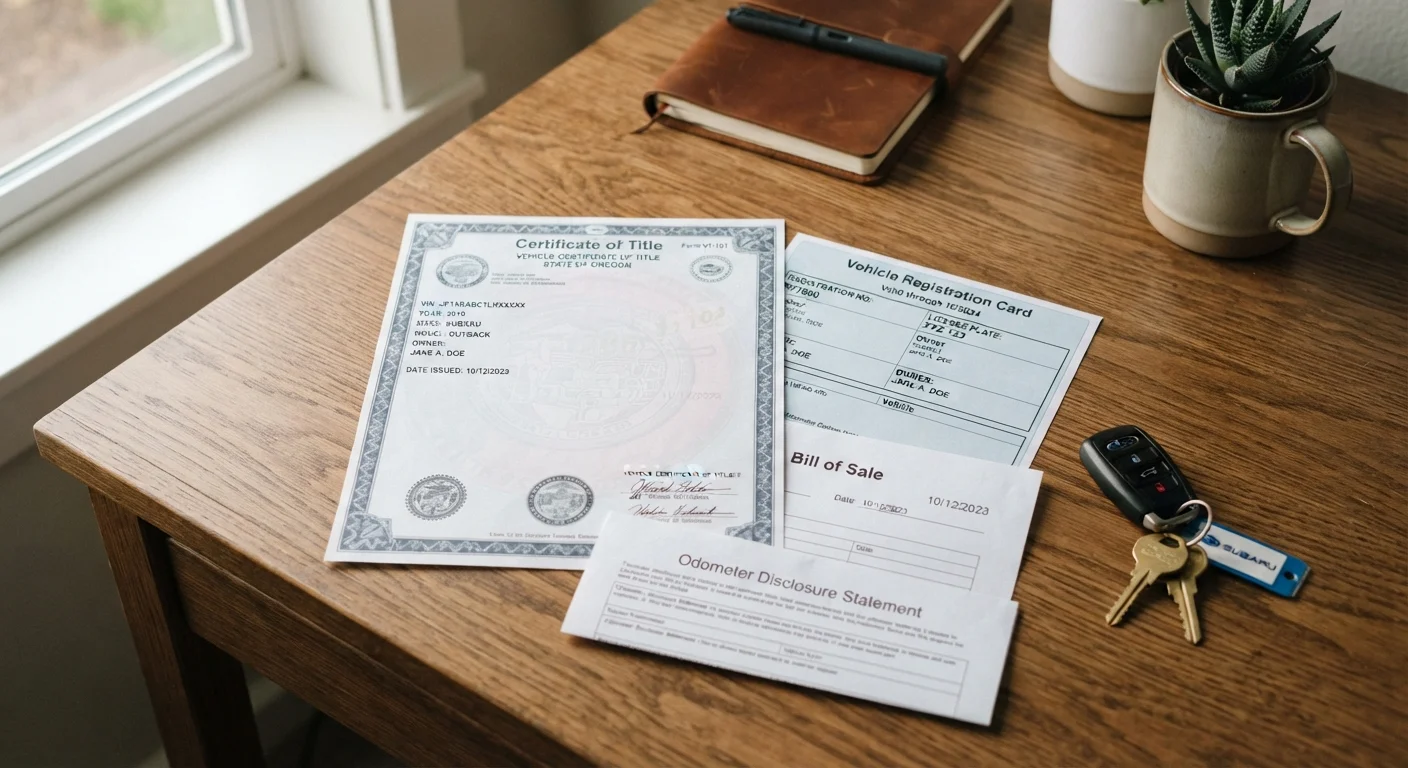
A certificate of title is a state-issued document that establishes legal ownership of a vehicle. It typically includes the vehicle identification number (VIN), the owner's name and address, the make and model, and any lienholder information. The title is generally held by the lienholder while a loan is outstanding; once the loan is paid off, the lien is released and a clean title is issued to the owner.
Titles can carry designations that reflect the vehicle's history. A salvage title indicates the car was declared a total loss by an insurer. A rebuilt or reconstructed title means the vehicle was salvaged but later repaired and reinspected. These designations significantly affect resale value and insurability. If you're buying a used car, reviewing the title history is essential - learn more about salvage titles and other vehicle history red flags.
Certificate of Title
A state-issued legal document that identifies the owner of a vehicle. It includes the VIN, owner details, and any lienholder information. Ownership transfers require signing over the title.
Registration Certificate
A document issued by a state motor vehicle agency granting permission to operate a specific vehicle on public roads. It requires periodic renewal and does not establish ownership.
Lien
A legal claim recorded on a vehicle's title by a lender. It prevents the owner from selling or transferring the title freely until the underlying loan is paid in full.
Lien Release
A document issued by a lender confirming that a vehicle loan has been repaid and the lender's claim on the title has been removed.
Salvage Title
A title designation indicating that an insurance company declared the vehicle a total loss due to damage, theft recovery, or other qualifying event.
VIN
Vehicle Identification Number - a unique 17-character code assigned to every motor vehicle. It appears on the title, registration, and the vehicle itself, and is used to track ownership history.
When you sell a vehicle, you sign (or "endorse") the title to transfer ownership to the buyer. Most states require this transfer to be completed within a set number of days. Failing to transfer promptly can create legal liability if the buyer operates the vehicle under your name.
Registration and Liens: What They Add
Your registration certificate - and the accompanying license plates and sticker - is issued by your state's motor vehicle agency and authorizes road use. It typically needs annual renewal and is tied to the vehicle's current owner of record. Registration fees vary by state and are sometimes based on the vehicle's value or weight. Crucially, a registration does not prove you own the car; it proves the car is authorized to be driven in that state.
A lien is recorded on the title whenever a lender finances a vehicle purchase. The lienholder - usually a bank, credit union, or manufacturer's financing arm - holds a legal claim to the vehicle until the loan is repaid. During this period, you generally cannot sell or transfer the title without the lender's involvement or loan payoff. Once the loan is settled, the lender sends a lien release document, and your state's DMV updates the title accordingly.
Title Holding Rules Vary by State
In some states, the physical title is mailed to the registered owner even while a lien is active; in others, the DMV or lender retains it until the loan is paid off. Check with your state's motor vehicle agency to confirm which practice applies to your situation. This distinction matters most when you're trying to sell or trade in a financed vehicle.
Requirements differ substantially from state to state. Some states hold the physical title at the DMV until a lien is released; others mail it to the lienholder. If you're relocating, re-titling and re-registration timelines will apply - see what changes when you move states with a car for specifics. State-level variation in registration deadlines, fees, and inspection requirements is covered in detail in our state-by-state car ownership rules guide.
If you're just getting started with vehicle ownership, the new driver's roadmap to car ownership walks through titling, insurance setup, and maintenance basics in one place.