

Key Takeaways
- A maintenance log creates a verifiable service history that supports resale value and warranty claims.
- Recording mileage, date, service type, and cost for every service visit is the minimum effective standard.
- Logs help mechanics diagnose problems faster by revealing patterns over time.
- Both paper and digital formats work - consistency matters more than the medium you choose.
Why a Maintenance Log Is Worth the Effort
Most drivers know they should keep up with oil changes and tire rotations, but far fewer document what they've actually done. A maintenance log - whether a small notebook in the glove box or a dedicated app - gives you something a memory alone cannot: a verified, timestamped record of your vehicle's service history.
That paper trail pays dividends in several ways. When selling a vehicle privately, a complete log demonstrates responsible ownership and can support a stronger asking price. When a warning light appears, a mechanic can review recent work and avoid repeating diagnostics already performed. And if a component fails suspiciously close to its expected service life, your records can support a warranty or goodwill claim with a dealer or manufacturer.
For more on how documented service history affects real-world ownership decisions, see why the paper trail matters more than you think.
Logs Support Warranty and Recall Claims
Some manufacturer warranties require documented proof that scheduled maintenance was performed at the specified intervals. Without a log or receipts, a claim may be denied even if the work was actually done. Keeping records doesn't guarantee coverage, but gaps in documentation can give dealers or manufacturers grounds to dispute claims. Always retain receipts from professional service visits alongside your log.
What Every Log Entry Should Include
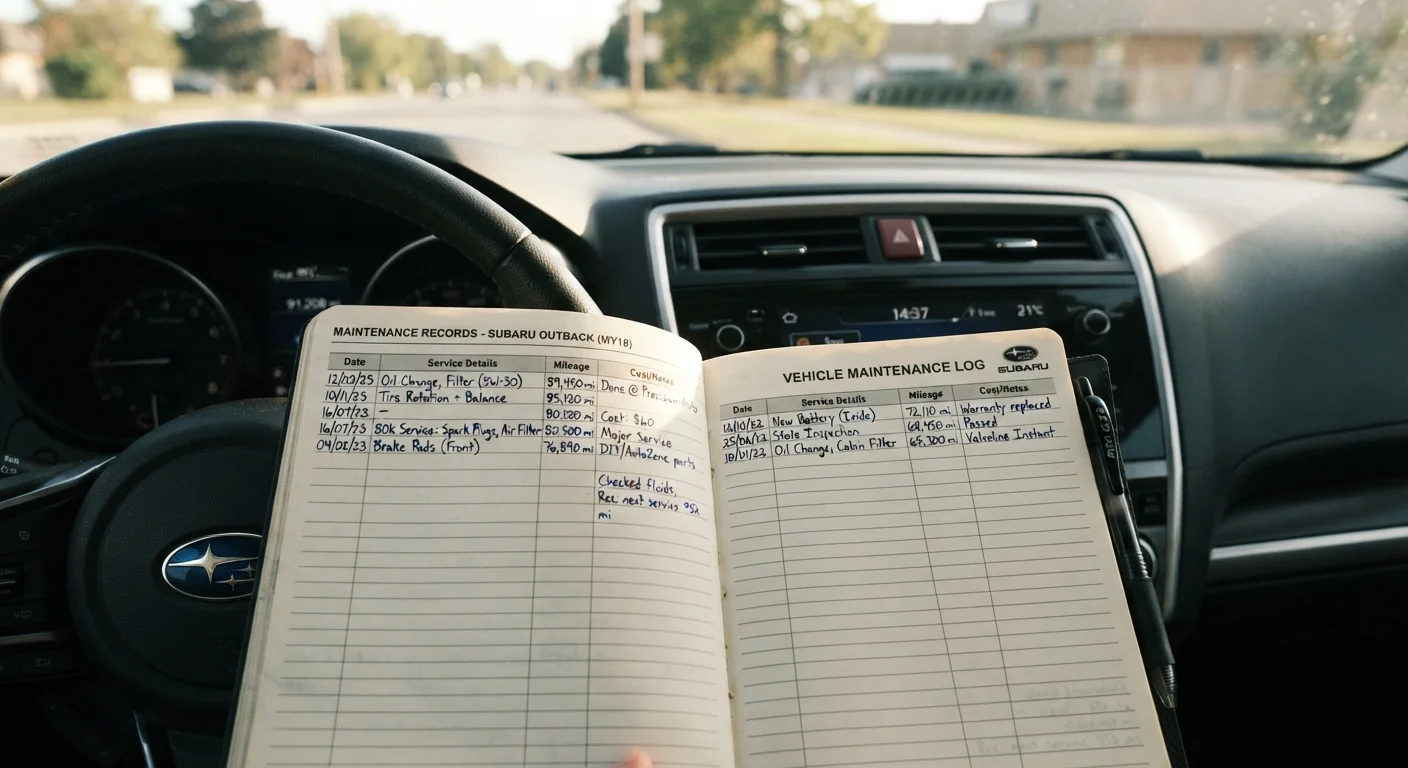
A useful log entry doesn't need to be elaborate. At minimum, each record should capture:
- Date of service - even time-based intervals are easier to track with exact dates.
- Odometer reading - the single most important data point for interval-based maintenance.
- Service performed - be specific (e.g., "synthetic oil change, 5W-30" rather than just "oil change").
- Parts or fluids used - noting specifications helps future technicians match the right materials.
- Who performed the work - shop name or "self" for DIY services.
- Cost - useful for budgeting and for spotting if a service was skipped due to price pressure.
Understanding whether your next service is triggered by miles or months is equally important. The time-based vs. mileage-based service intervals guide explains how to decide which threshold applies to your driving pattern.
Record every service immediately after it's performed, not weeks later from memory.
Delayed entries introduce errors - wrong mileage, forgotten parts, approximate dates. Accuracy is what makes a log useful for diagnostics and resale.
Log both professional services and DIY maintenance in the same place.
A fragmented record - some services in a shop's system, others untracked - creates blind spots. A unified log gives any future mechanic or buyer a complete picture.
Note the next due service date or mileage at the time of each entry.
Calculating intervals on the fly is how services get delayed. Recording the next due milestone while the information is in front of you eliminates that friction.
Keep copies of all receipts alongside your written log.
Receipts provide itemized detail - parts numbers, fluid specifications, technician notes - that brief log entries cannot fully capture. They also serve as independent verification.
Include tire-specific records - pressure checks, tread measurements, and rotation dates.
Tires are among the most safety-critical components, yet tire maintenance is often the least documented. A dedicated tire section helps you track wear patterns and rotation intervals accurately.
Getting Started and Staying Consistent
The most common reason drivers don't keep logs is friction - it feels like extra work after a service visit. The fix is to make the habit as low-effort as possible. Keep a small notepad and pen in the glovebox, or use a free app that lets you log a service in under a minute. Snap a photo of the shop receipt and attach it to the digital entry for a complete record without manual data entry.
If you're starting fresh on an older vehicle, don't be discouraged by missing history. Begin logging from today and build forward. For vehicles approaching or past 100,000 miles, detailed records become especially valuable - the high-mileage vehicle maintenance guide outlines which components deserve closer attention at that stage.
Seasonal changes also affect what you should be tracking. The seasonal car maintenance guide covers how your checklist should shift with the weather.
How Your Log Connects to Broader Ownership
A maintenance log doesn't exist in isolation - it's part of a broader ownership strategy. Consistent maintenance habits that separate long-lasting cars from premature breakdowns depend on knowing what's been done and when. Similarly, understanding why scheduled maintenance intervals exist helps you interpret your log entries rather than just collect them.
From a vehicle history perspective, a thorough log also serves as a counterweight to the kind of red flags covered in the vehicle history red flags guide - it demonstrates that mileage figures match the service record, which matters when buying or selling.
Think of the log as a low-cost insurance policy on your investment. The time it takes to fill in a few lines after each service is trivial compared to the diagnostic clarity, resale credibility, and scheduling confidence it provides over the life of the vehicle.
For a broader overview of responsible car ownership, the Car Ownership hub covers the key facts every US driver should know.