

Key Takeaways
- Most manufacturer service schedules list both a mileage and a time threshold - whichever comes first is typically the rule.
- Low-mileage drivers often need time-based servicing more than they realize, as fluids and seals degrade even without use.
- High-mileage drivers in normal conditions are usually governed by the odometer reading.
- Severe driving conditions - short trips, towing, extreme temperatures - can compress both intervals significantly.
- Your owner's manual is the definitive source for your specific vehicle's schedule.
Our Verdict
Neither time nor mileage alone tells the full story. For most drivers, the manufacturer's guidance is to act on whichever threshold is reached first. Low-mileage drivers should lean on time-based intervals to protect fluids and seals that degrade with age, while drivers who rack up miles quickly will typically hit mileage triggers before time ones. Matching your service strategy to your actual driving pattern is the most practical and cost-effective approach.
| Best for | Recommended |
|---|---|
| Low-mileage drivers (under 7,500 miles per year) | Time-based intervals |
| High-mileage commuters and frequent long-haul drivers | Mileage-based intervals |
| Drivers in severe conditions (towing, stop-and-go, extreme heat or cold) | Compressed intervals - whichever comes first, sooner |
| Most everyday drivers seeking a simple rule | Whichever threshold arrives first |
Why Service Intervals Have Two Triggers
Open almost any owner's manual to the maintenance section and you'll see entries like "every 5,000 miles or 6 months, whichever comes first." That dual-trigger format isn't filler - it reflects a genuine engineering reality. Fluids, seals, belts, and filters don't degrade only through use. They also break down through time, heat cycling, humidity, and oxidation, whether the vehicle sits in a driveway or logs daily highway miles.
Manufacturers set both thresholds because they can't predict how any individual owner will drive. The mileage figure protects drivers who rack up miles quickly; the time figure protects those who don't. Understanding which trigger governs your situation is the key to avoiding both premature wear and unnecessary service visits.
See our vehicle maintenance log guide for a practical way to track both thresholds without letting either one slip.
The Case for Mileage-Based Servicing
Mileage is the most intuitive trigger because engine wear is directly tied to how many times pistons cycle, how much fuel combusts, and how many miles oil circulates through heat and friction. For drivers covering 12,000 to 15,000 or more miles annually - a figure that meets or exceeds the U.S. average - the odometer will hit recommended service intervals before the calendar does.
For these drivers, time-based intervals are largely academic. Their oil accumulates combustion byproducts, their air filters clog, and their brake fluid absorbs moisture at a pace set by mileage more than months. Following the mileage trigger keeps service aligned with the actual mechanical load the vehicle has experienced.
~14,300
Average annual miles driven per U.S. driver
According to Federal Highway Administration data, the average American driver covers roughly 14,300 miles per year - meaning mileage triggers arrive before time triggers for most people.
1 in 4
Vehicles with overdue oil changes
Industry maintenance surveys have consistently found that a significant share of vehicles on U.S. roads are operating with degraded oil past the recommended service interval.
Drivers who frequently tow, haul, or navigate stop-and-go traffic may need to shorten even standard mileage intervals. The severe driving conditions guide explains precisely when and why this applies.
The Case for Time-Based Servicing
Low-mileage drivers - retirees, remote workers, those who primarily walk or use transit - often assume their car needs less maintenance because it's used less. In practice, the opposite can be true for several service items.
- Engine oil: Even unused oil oxidizes and loses its protective additives over time. Most manufacturers recommend changing it at least annually regardless of mileage.
- Coolant and brake fluid: Both absorb moisture from the atmosphere. Degraded brake fluid lowers the boiling point of the system, which matters most in exactly the emergency stop situations where you need full performance.
- Rubber components: Belts, hoses, and seals dry out and crack through age and temperature cycling, not just through use.
- Battery: Vehicles that sit for extended periods between short trips may not fully recharge, accelerating battery aging.
For a vehicle covering fewer than 7,500 miles per year, the calendar is likely to be the more relevant constraint on most fluid and seal services. Skipping the time-based interval because the odometer hasn't moved enough is one of the more common and costly maintenance oversights.
Check Both Triggers, Not Just One
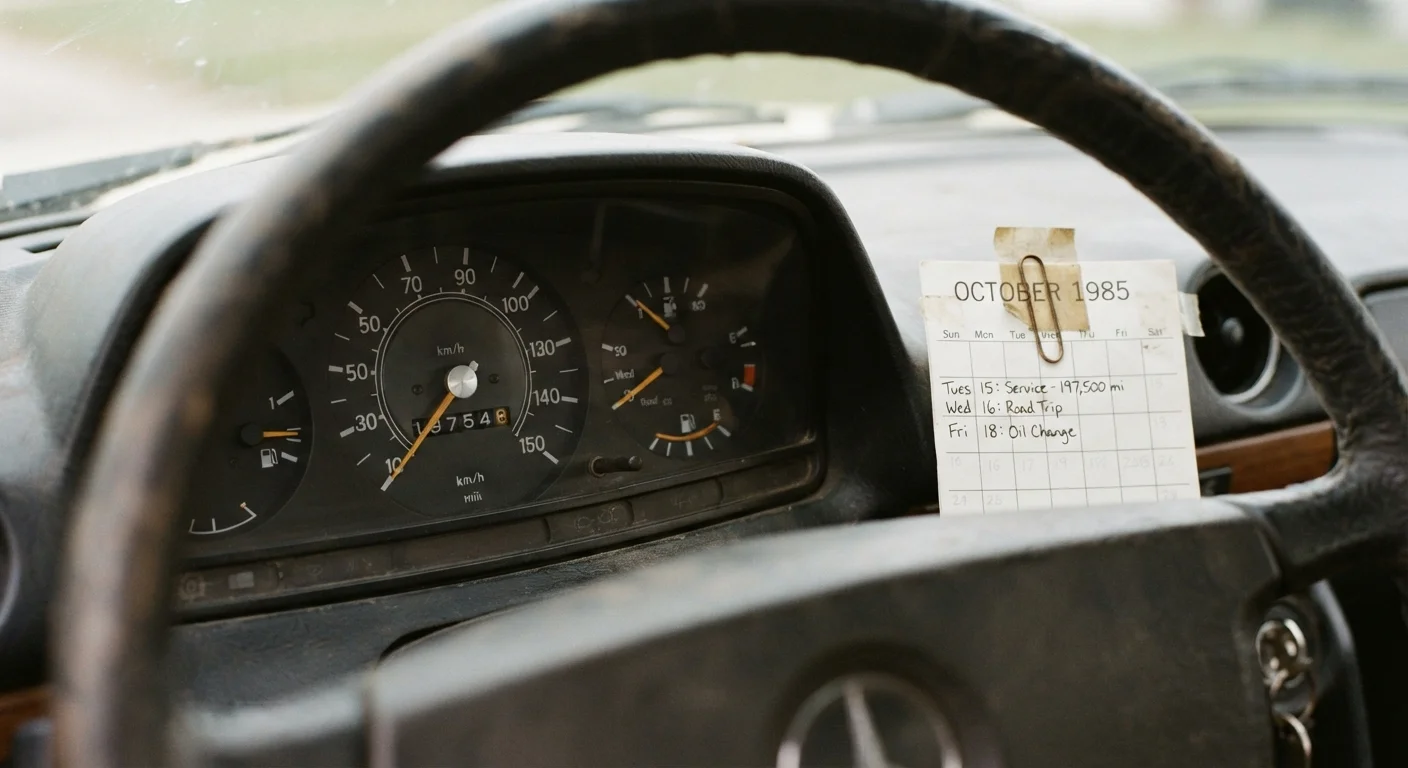
A practical habit is to note the date and odometer reading every time you service your vehicle. At a glance, you can then see whether the next service is triggered by months elapsed or miles accumulated - and act accordingly. This is especially useful if your driving pattern changes seasonally, such as during summer road trips or winter periods of reduced driving.
Comparing the Two Approaches Side by Side
The table below summarizes how key maintenance items align with each trigger type under typical driving patterns. Note that your owner's manual takes precedence for your specific vehicle.
| Service Item | Time-Based Trigger | Mileage-Based Trigger | Low-Mileage Driver Priority | High-Mileage Driver Priority | |
|---|---|---|---|---|---|
| Engine Oil | Every 6-12 months | Every 5,000-7,500 miles (conventional) | Time (annual minimum) | Mileage | |
| Coolant Flush | Every 2-5 years | Every 30,000-50,000 miles | Time | Either - whichever first | |
| Brake Fluid | Every 2-3 years | Varies by manufacturer | Time | Time (moisture absorption) | |
| Air Filter | Every 1-2 years | Every 15,000-30,000 miles | Time | Mileage | |
| Tire Rotation | Every 6 months | Every 5,000-7,500 miles | Time | Mileage | |
| Serpentine Belt | Every 4-5 years | Every 60,000-100,000 miles | Time (rubber aging) | Mileage |
For vehicles past the 100,000-mile mark, both intervals often tighten. High-mileage maintenance considerations are worth reviewing separately, as component tolerances and fluid needs can shift meaningfully at that stage.
Putting It Into Practice
The most reliable approach for any driver is to treat both triggers as active simultaneously and act on whichever arrives first. This doesn't require a complex system - a simple note in your phone or a maintenance log with the date and mileage of each service gives you a clear picture at a glance.
If your vehicle has an oil life monitoring system, use it as a supplement - not a replacement - for the manufacturer's scheduled intervals. These systems track driving conditions algorithmically but don't account for every variable, and they don't monitor all service items.
When in doubt about which interval applies or whether your driving qualifies as severe use, a qualified mechanic can review your actual patterns and advise accordingly. The dealership vs. independent mechanic tradeoffs are worth weighing when deciding where to have that conversation.
Consistent adherence to service intervals - whichever trigger applies - is one of the defining habits covered in maintenance habits that extend vehicle life.