

Key Takeaways
- Match highway speed before entering the travel lane - not after.
- Scan for a gap at least three seconds long before committing to a merge.
- Signal early to communicate intent, giving highway drivers time to adjust.
- Never stop at the end of an on-ramp unless traffic makes it physically unavoidable.
- Check mirrors and your blind spot in sequence immediately before changing lanes.
- Hesitation is a leading cause of on-ramp collisions - commit once you've identified a safe gap.
What you will need
Why Merging Feels Harder Than It Is
For many drivers, merging onto a highway produces a disproportionate amount of anxiety relative to the actual physical complexity of the task. The core challenge is perceptual: you are managing two streams of information simultaneously - your own speed and position on the ramp, and the speed and spacing of vehicles already traveling at highway velocity. When those two streams feel out of sync, hesitation follows, and hesitation is exactly what makes merging more dangerous.
Research on traffic conflicts consistently identifies on-ramps as locations where speed differentials between merging vehicles and highway traffic contribute to rear-end and sideswipe incidents. The solution is not to slow down and wait - it's to understand the process clearly enough to act with confidence. As explored in our guide to highway versus city driving risks, freeway environments demand anticipatory awareness rather than reactive responses, and merging is the most concentrated version of that skill.
What you will need
Properly Adjusted Side and Rearview Mirrors
Gives the widest possible view of adjacent lanes and approaching traffic before and during the merge.
Turn Signal
Communicates merge intent to highway drivers with enough lead time for them to adjust speed or position.
Speedometer
Helps you confirm your speed matches or closely approximates the flow of highway traffic before merging.
Step-by-Step: How to Merge Like an Experienced Driver
The following steps break the merge process into discrete, manageable actions. Working through them deliberately - even mentally rehearsing before you reach the ramp - builds the pattern recognition that experienced drivers apply automatically.
Assess highway speed as you enter the ramp
The moment you turn onto the on-ramp, observe the vehicles already traveling on the highway. Gauge their approximate speed visually - most US interstates flow between 60 and 75 mph. Your goal throughout the ramp is to reach that speed by the merge point, not before or after. Use the full length of the ramp for acceleration; it was engineered precisely for this purpose.
Identify a target gap in the right lane
Scan the right lane of the highway for an open gap that is at least three seconds of following distance long - roughly the size of two car lengths at highway speed. Note the vehicle just behind the gap (your rear boundary) and the vehicle ahead of it (your front boundary). Aim to slot between them smoothly. If no adequate gap exists yet, adjust your acceleration to create timing alignment.
Signal your intention early
Activate your turn signal while you are still on the ramp - ideally four to five seconds before you reach the merge point. An early signal gives highway drivers the opportunity to move left or adjust their speed, creating a more cooperative merge environment. Signaling at the last moment eliminates that cooperation window entirely.
Match speed and check mirrors in sequence
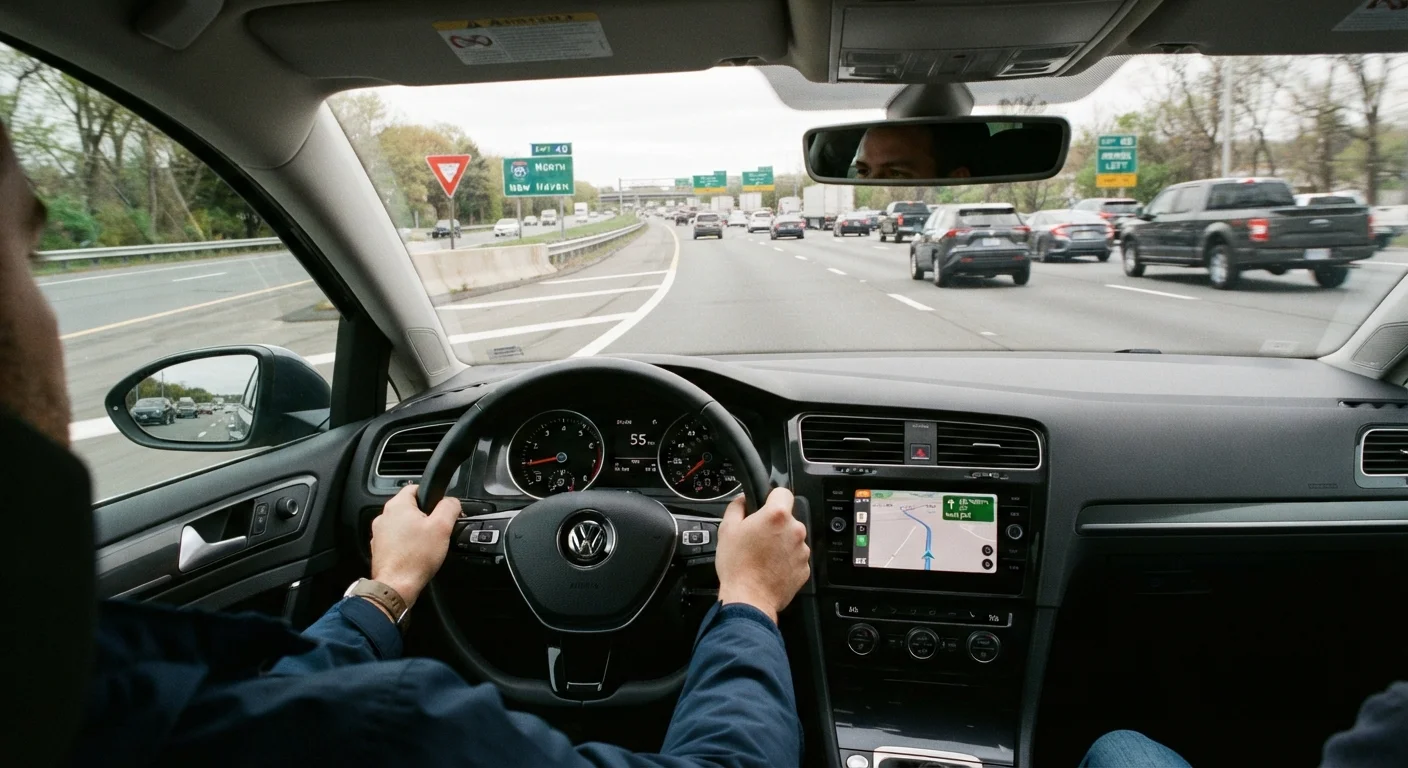
As you approach the merge point, confirm your speed matches highway traffic flow on your speedometer. Then check your rearview mirror, your right side mirror, and finally turn your head to check the blind spot to your left. Perform these checks in order - a vehicle that was clear in your mirror thirty seconds ago may have closed the gap considerably at highway speed.
Commit to the merge with a smooth, deliberate lane change
Once your gap is confirmed and your speed matches traffic, steer steadily into the travel lane without hesitation. Avoid sudden acceleration or braking during the transition. After merging, maintain the speed of surrounding traffic and check your mirrors again to confirm your position relative to other vehicles. Cancel your turn signal once you are fully in the lane.
Adjust following distance and settle into traffic flow
Once merged, establish a following distance of at least three seconds from the vehicle ahead - more in wet or low-visibility conditions. Avoid sitting in another driver's blind spot by either moving up slightly or dropping back. If the right lane is congested after your merge, remain patient and do not immediately cross multiple lanes. Give yourself and surrounding drivers a moment to stabilize before making further lane changes.
Never Stop on an Active On-Ramp
Stopping at the end of an on-ramp forces traffic behind you to brake unexpectedly and makes merging far more dangerous. The on-ramp exists to allow you to accelerate to highway speed. Only a complete blockage of highway traffic justifies stopping - and even then, stop well before the merge point, not at the lane's edge.
Pick Your Gap Before You Need It
Start scanning highway traffic as soon as you enter the on-ramp, not at the point of merge. Identifying your target gap early gives you time to adjust your acceleration and reduces last-second decision-making. Experienced drivers treat the entire ramp as a preparation zone, not just the final few feet.
Handling Difficult Merge Situations
Not every merge unfolds in ideal conditions. Short on-ramps, heavy traffic, aggressive drivers, or poor visibility all raise the difficulty level.
- Short ramps: Accelerate more aggressively early and begin gap identification sooner. Prioritize finding a gap over reaching a precise target speed.
- Congested traffic: At lower highway speeds, gaps open and close more slowly. Patience matters more than acceleration. Zipper merging - where each lane alternates one vehicle at a time - is widely recognized as the most efficient approach in heavy congestion.
- No cooperative gap: If highway drivers are not yielding space, adjust your speed to align with a natural gap rather than forcing entry. Our guide on managing aggressive drivers covers how to respond when other drivers are uncooperative without raising tension.
- Night or wet conditions: Increase your following distance once merged and allow extra time before changing lanes. Speed limits set legal maximums, not always safe targets - see our article on speed limits and road design for context.
Blind Spots Are Larger Than Mirrors Show
Highway-speed vehicles can disappear into your blind spot even after a mirror check. Always turn your head briefly to confirm the space beside you is clear before moving into the travel lane. Adjust your side mirrors outward so they capture the lane beside you rather than the side of your own vehicle.