

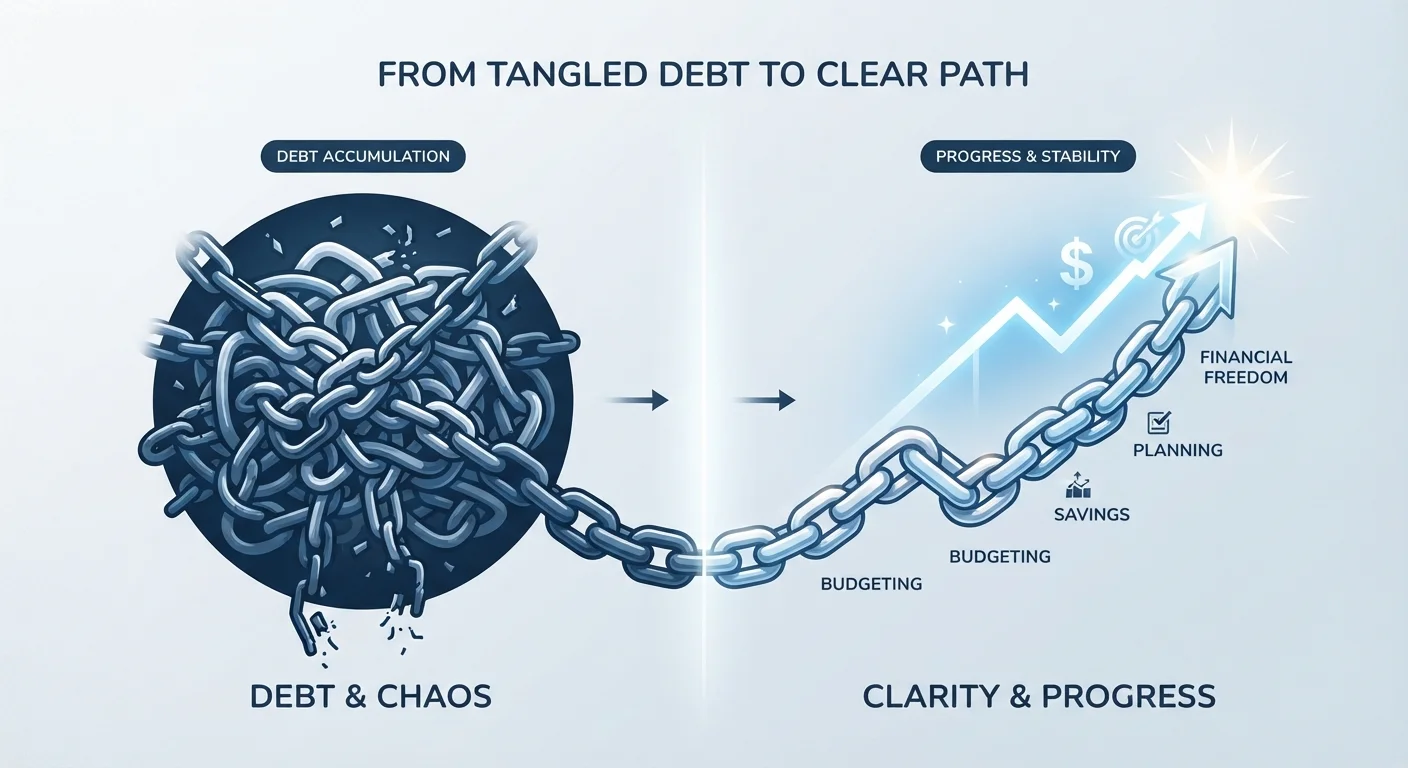
Key Takeaways
- Not all debt is equally harmful - interest rate and type matter more than debt itself.
- Small, consistent extra payments can meaningfully shorten repayment timelines without a windfall.
- Paying only the minimum keeps balances high far longer than most borrowers realize.
- Carrying a credit card balance does not improve your credit score.
- Saving and debt repayment can coexist - the right balance depends on your interest rates and goals.
Why Debt Myths Are Worth Addressing
Misconceptions about debt are remarkably common - and surprisingly costly. When people operate on faulty assumptions, they may avoid useful strategies, delay action, or make decisions that extend the time and money spent paying down balances. Clearing up these beliefs isn't about shaming anyone for past choices; it's about giving readers a more accurate foundation to work from.
The myths below appear frequently in everyday conversations and even in well-meaning financial advice. Each one contains a kernel of intuition that makes it feel plausible - which is exactly why they persist.
This article is for general informational and educational purposes only and does not constitute personalized financial advice. Consult a qualified financial professional for guidance specific to your situation.
Myths and Facts About Paying Off Debt
The following myth-and-fact pairs address the most persistent debt misconceptions, covering everything from minimum payments to the relationship between credit scores and carrying balances.
Myth
All debt is bad and should be eliminated as fast as possible, no matter what.
Fact
Debt varies significantly by type and interest rate; not all debt carries the same financial risk or urgency.
A federally subsidized student loan at a low interest rate is categorically different from a credit card balance at 20%+ APR. Lumping them together leads people to aggressively pay down low-rate debt while neglecting high-interest balances that compound quickly. General personal finance education typically prioritizes high-interest debt first - not all debt equally.
Myth
You need a large windfall - a bonus, tax refund, or inheritance - to make real progress on debt.
Fact
Small, consistent extra payments applied to principal can meaningfully reduce total interest and shorten repayment timelines.
Because interest on most consumer debt is calculated on the outstanding principal, even modest additional payments reduce the balance on which future interest accrues. Over months and years, this compounding effect works in the borrower's favor. Waiting for a windfall often means months or years of additional interest charges in the meantime. To understand the full picture of what carrying a balance actually costs, see the true cost of carrying credit card debt.
Myth
Making the minimum payment each month is fine - you're still paying down the debt.
Fact
Minimum payments are structured to keep balances - and interest revenue - elevated for as long as possible.
On a typical revolving credit card balance, minimum payments are often calculated as a small percentage of the balance or a flat dollar amount. This means the vast majority of each payment covers interest rather than principal. A balance that could theoretically be paid off in a few years with consistent larger payments can stretch to a decade or more on minimums alone. Minimum payment math illustrates this effect clearly.
Myth
Carrying a small credit card balance from month to month helps build your credit score.
Fact
Carrying a balance does not improve credit scores; it only generates interest charges.
Credit scoring models consider factors such as payment history and credit utilization - the ratio of your balance to your available credit limit. Paying your balance in full each month demonstrates responsible usage and keeps utilization low, both of which support a healthy score. Carrying a balance adds interest costs without providing any scoring benefit. This is one of the most persistent credit myths in circulation.
Myth
Once you're in debt, you shouldn't save any money until everything is paid off.
Fact
A small emergency fund can prevent new debt during unexpected expenses, making it a complement to debt payoff - not a competition.
Without any savings buffer, a single unexpected expense - a medical bill, a car repair, a job disruption - often forces people to use high-interest credit, undoing months of payoff progress. Most financial educators suggest building a modest liquid cushion even while carrying debt, then directing surplus funds toward high-interest balances. The right balance depends on your specific interest rates and income stability. For a broader look at this question, saving while in debt covers the key considerations.
For a closer look at how specific repayment strategies compare, the debt avalanche and debt snowball methods offer two structured frameworks worth understanding.
What These Myths Have in Common
Most debt misconceptions share a common flaw: they treat debt as a single, uniform problem rather than a set of variables - interest rate, balance size, loan type, and personal cash flow - that all interact differently. A mortgage at a low fixed rate is a fundamentally different financial instrument than revolving credit card debt at a high APR.
~$6,000
Average US credit card balance per borrower
According to Federal Reserve data, revolving consumer credit balances have remained persistently high, underscoring the practical relevance of debt repayment education.
20%+
Typical APR on credit card accounts assessed interest
Federal Reserve consumer credit data consistently shows average credit card interest rates well above 20%, making high-rate balances a priority over low-rate debt in most frameworks.
Recognizing that nuance is the starting point for building a plan that actually fits your circumstances. If you're weighing whether to consolidate existing balances, debt consolidation trade-offs deserve a balanced look before deciding. And if minimum payments have been your default strategy, understanding why minimum payments extend repayment can reframe the urgency.
Saving and Debt Aren't Always Opposites
One of the most consequential myths is that you must eliminate all debt before you can save a single dollar. In practice, financial educators broadly suggest that building even a small emergency fund while carrying debt can prevent a setback - like an unexpected car repair - from forcing you deeper into high-interest borrowing.
High-Interest Debt Compounds Against You Daily
Many credit card issuers calculate interest using a daily periodic rate applied to your average daily balance. This means every day a balance remains unpaid, interest is accruing - not just at the end of the month. Understanding this mechanism is essential to appreciating why even small extra payments made early in a billing cycle can reduce total interest owed. Consult a licensed financial professional if you're uncertain how your specific accounts work.
The question of when to save versus when to accelerate debt payoff isn't one-size-fits-all. Saving while in debt is a question of sequencing and interest rate math, not an either-or rule. Similarly, recognizing the habits that derail debt repayment can help you avoid the missteps that slow down even the most motivated borrowers.
Debt Relief Claims Often Oversimplify
Advertisements for debt settlement, rapid payoff programs, or guaranteed score repair frequently overstate results and may carry fees, tax implications, or credit score consequences. General financial education encourages skepticism toward any offer that promises to eliminate debt quickly or painlessly. Always research terms thoroughly and, where appropriate, consult a nonprofit credit counselor or licensed financial adviser before enrolling in any formal debt relief program.