

Key Takeaways
- Beverages contribute meaningfully to daily calorie and sugar intake, often more than people realize.
- Water is the most effective hydration source and adds zero calories to your diet.
- Sugary drinks - including fruit juice - can displace nutrient-dense foods without providing comparable nutritional value.
- Electrolytes in drinks matter during extended physical activity but are unnecessary for routine daily hydration.
- Reading beverage labels is just as important as reading food labels for understanding your diet.
Hydration and Nutrition
Hydration refers to maintaining adequate fluid levels in the body, while nutrition covers the intake of nutrients your body needs to function. These two concepts overlap significantly because beverages - not just food - deliver calories, sugars, vitamins, and electrolytes. The drinks you choose throughout the day are an active part of your dietary pattern, not a neutral backdrop to it.
Electrolytes such as sodium, potassium, and magnesium are dissolved minerals carried in fluids that help regulate nerve function, muscle contractions, and fluid balance at the cellular level.
Beverages Are Part of Your Diet - Not Separate From It
Most people carefully consider what they eat while paying little attention to what they drink. Yet beverages are a consistent and often significant source of calories, sugars, and nutrients throughout the day. Treating hydration as separate from nutrition is a common mental shortcut that can quietly undermine an otherwise thoughtful eating pattern.
The core framework of a balanced diet accounts for total intake - and that includes liquids. A day of carefully portioned meals can be offset by two or three high-sugar beverages consumed without much thought. Understanding your drinks as dietary inputs, not just hydration vehicles, is a meaningful shift.
~17%
Share of daily calories from beverages (US adults)
Data from the National Health and Nutrition Examination Survey suggests beverages account for roughly 17% of total daily caloric intake among US adults on average.
145 calories
Average calories in a 12-oz regular soda
A standard 12-ounce can of a typical cola-type soda contains approximately 145 calories and 39 grams of sugar, with negligible nutritional value beyond energy.
39g
Added sugar in a typical 12-oz energy drink
Many commercial energy drinks contain added sugars at or near the American Heart Association's recommended daily limit for added sugar in a single serving.
Where Beverages Fit in the Nutritional Picture
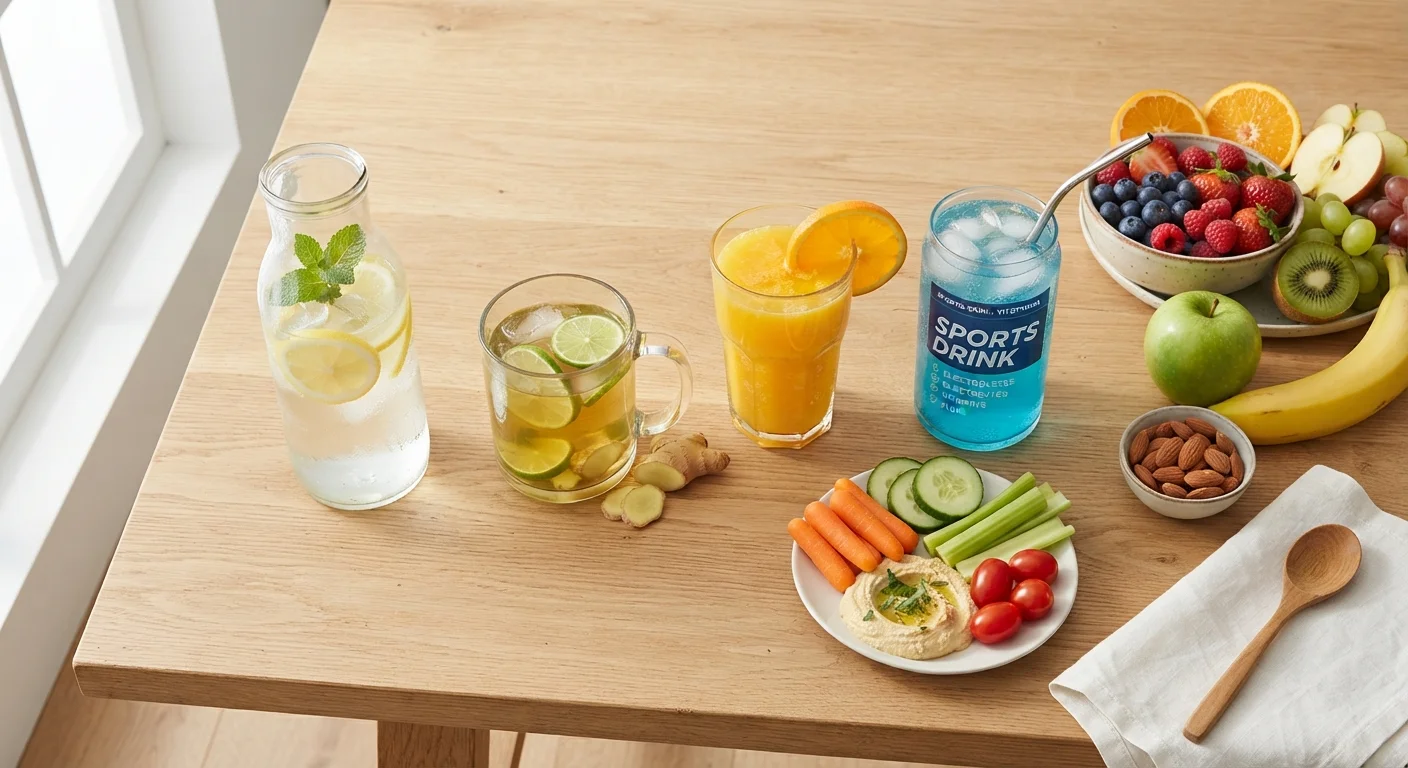
Different drinks carry very different nutritional profiles. Water, the most straightforward choice, delivers hydration with no calories, no sugar, and no additives. Unsweetened teas and black coffee sit close behind - providing fluid along with antioxidants and, in the case of coffee, a meaningful dose of magnesium.
Milk and fortified plant-based alternatives occupy another tier: they contribute protein, calcium, and vitamin D alongside their calorie content. Sugary drinks - sodas, sweetened teas, energy drinks, flavored waters, and many commercial juices - deliver calories and sugar rapidly, often with few accompanying nutrients. This is where the concept of nutrient density becomes especially relevant: a drink can provide energy without meaningfully nourishing the body.
Natural Sugar vs. Added Sugar in Beverages
Not all sugars in drinks are the same from a labeling standpoint. 100% fruit juice contains naturally occurring sugars, while sodas and flavored drinks often contain added sugars - sweeteners incorporated during processing. The 2020-2025 Dietary Guidelines for Americans recommend limiting added sugars to less than 10% of daily calories. Both types contribute to total caloric intake, but added sugars are the primary target for reduction.
Alcohol deserves its own mention. It adds calories (about 7 per gram), impairs nutrient absorption, and can affect appetite regulation - all factors that interact with overall dietary quality in ways that compound over time.
Liquid Calories and Why They're Easy to Overlook
Research consistently shows that people undercount calories from beverages. One reason is physiological: liquid calories appear to trigger less satiety signaling than the same number of calories from solid food. Another is perceptual - a drink doesn't feel like a meal, so it often doesn't get counted as one.
Fruit juice illustrates this well. A standard 8-ounce glass of orange juice contains roughly 110 calories and 21 grams of sugar - nearly as much as a full can of cola, and without the fiber that a whole orange would provide. If you're evaluating your intake honestly, reading the nutrition label on beverages is as important as reading labels on packaged foods.
Check the Serving Size Before You Drink
Many bottled beverages list nutrition facts per serving, but the bottle may contain two or more servings. A 20-oz bottle labeled '100 calories per serving' can easily deliver 250 calories if consumed in full. Always check the serving size first - the same habit that applies to food labels applies equally to drinks.
Electrolytes, Sports Drinks, and When They Actually Matter
Electrolytes - minerals like sodium, potassium, and magnesium - are lost through sweat and play a genuine role in hydration at the cellular level. This has been effectively marketed through sports drinks, but the science is more context-specific than the advertising suggests.
For everyday activity and moderate exercise, plain water replenishes fluid loss adequately for most healthy adults. Electrolyte-enhanced drinks become more relevant during prolonged, intense exercise (generally over 60 minutes), significant heat exposure, or in cases of illness involving fluid loss. Outside those scenarios, they add sugar and sodium without a clear benefit.
Staying hydrated while traveling - where schedules, climate, and access to food all shift - adds another layer of complexity. See our guide to staying healthy on the road for practical strategies that go beyond just drinking more water.
This article is for general informational purposes only and is not a substitute for personalized medical or nutritional advice. Consult a qualified healthcare provider regarding your individual hydration and dietary needs.