

Key Takeaways
- Serving size is the foundation of every number on the label - always check it first.
- The % Daily Value column tells you how a nutrient fits into a standard 2,000-calorie diet.
- Added sugars and saturated fat are the two rows most worth watching for regular packaged foods.
- Nutrients like fiber, vitamin D, calcium, and iron are worth actively seeking out.
- A label only captures part of a food's nutritional story - ingredient quality matters too.
What you will need
Why the Label Exists - and What It Actually Covers
The Nutrition Facts label is a federally standardized panel required on most packaged foods sold in the United States. The FDA redesigned it in 2020 to reflect updated nutritional science and make key information easier to spot. It is an educational tool - not a grade - and knowing how to read it helps you make comparisons and spot patterns across your diet.
Importantly, the label measures only what's in the package, not what the food does in your body. For a broader view of food quality, it's worth pairing label literacy with an understanding of nutrient density - the concept that accounts for how much nutritional value a food actually delivers per calorie.
The label does not cover everything. Phytonutrients, antioxidants, and certain bioactive compounds don't appear in the rows, nor does the quality of processing. For a deeper look at ingredients, see ingredient label elements worth knowing.
A Row-by-Row Walkthrough
Follow this structured walkthrough to move through a label methodically, starting with the most foundational element.
Check the serving size and servings per container
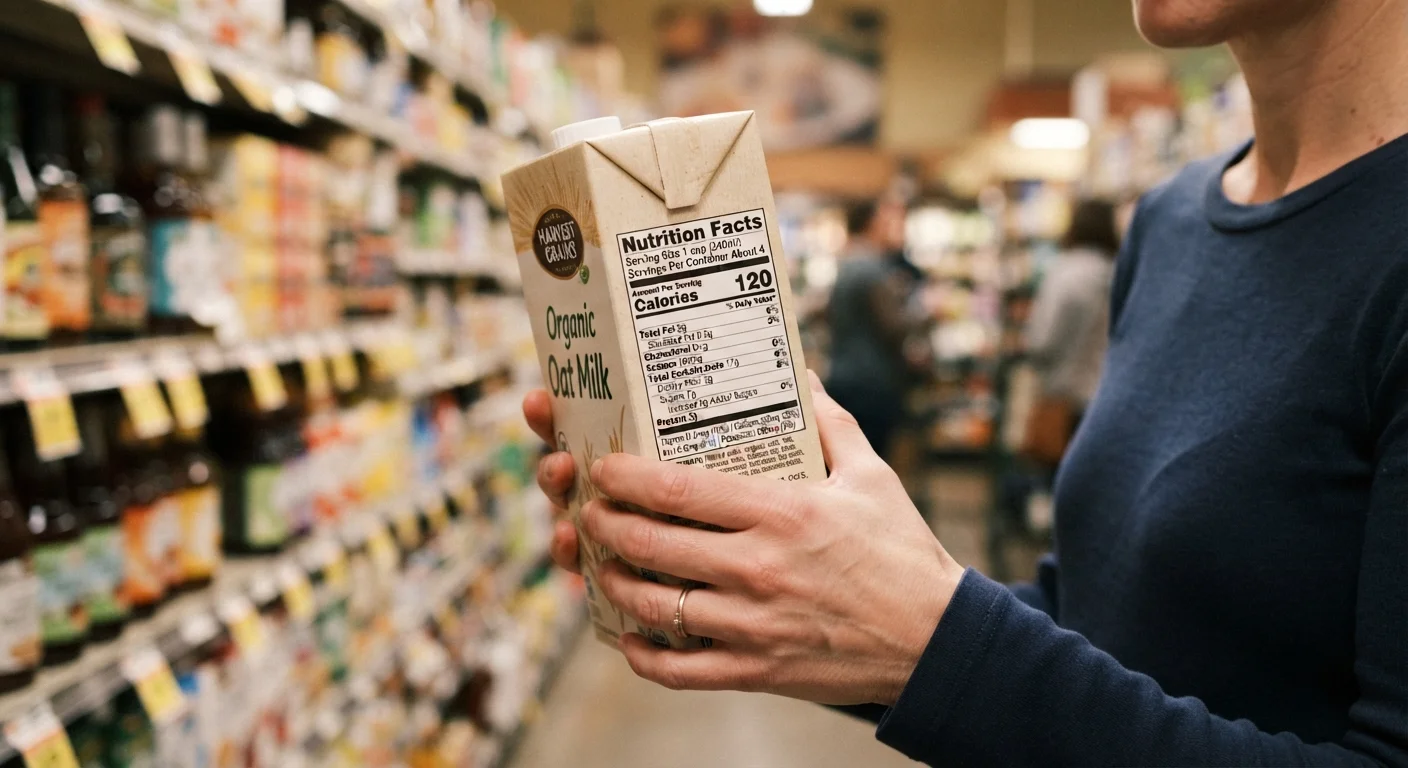
Every number on the label is calculated per serving, not per package. The serving size is listed in a recognizable household measure (e.g., 2/3 cup) plus grams. If you eat twice the serving size, you double every number - calories, sodium, sugar, everything.
The updated label prints the serving size in larger, bolder type specifically because this step is so frequently skipped. Check it before reading anything else.
Note the calories per serving
Calories measure total energy. The label now displays this number in a larger font. Keep in mind that calories alone don't tell you whether a food is nutritious or filling. A calorie count has real limits as a measure of food quality - use it as one signal, not a verdict.
Use % Daily Value to orient each nutrient
The % Daily Value (%DV) column is based on a 2,000-calorie daily diet. A general rule from the FDA: 5% DV or less is considered low for a nutrient; 20% DV or more is considered high. Use this scale to quickly assess whether a food is a meaningful source of something - or an outsized contributor to something you'd rather limit.
Scan the 'limit these' nutrients
Four nutrients appear near the top of the label because most Americans benefit from consuming less of them: saturated fat, trans fat, sodium, and added sugars. Trans fat has been largely removed from the food supply, but it still appears in some products. Added sugars - a distinct line below total sugars - are worth watching because they deliver energy without accompanying nutrients.
Identify nutrients to seek out
The lower section of the label highlights nutrients that many people under-consume: dietary fiber, vitamin D, calcium, iron, and potassium. Higher %DV values here are generally favorable. For a deeper reference on why these matter, see vitamins and minerals every adult should know.
Once you've internalized these steps, comparing two similar products takes under a minute. That speed comes from knowing which rows anchor the rest of the data.
Common Misreads and How to Avoid Them
Most label confusion comes down to a few recurring mistakes.
- Treating the whole package as one serving. Many single-serve-looking packages contain two or three servings. Always multiply the per-serving numbers by servings consumed.
- Confusing total sugars with added sugars. Total sugars include naturally occurring sugars (as in fruit or dairy). The added sugars line - indented below - reflects only sugars introduced during manufacturing. These two numbers tell very different stories.
- Ignoring the % Daily Value column. The grams and milligrams on the left are hard to interpret without context. The %DV column on the right does that work for you, pegged to a 2,000-calorie daily reference diet.
- Overlooking sodium in unexpected places. Bread, condiments, and canned goods can carry substantial sodium without tasting salty.
Use Labels to Compare, Not Just Evaluate
The label becomes most powerful when you use it side by side. Hold two similar products - say, two yogurts or two cereals - and compare their added sugars, fiber, and sodium per serving. Patterns across categories reveal far more than any single number. Even beverages carry nutritional data worth checking; how hydration fits into your diet is an often-overlooked dimension of label literacy.
Label reading becomes more useful when combined with understanding where a food sits on the processing spectrum. A minimally processed food with a short label is often easier to evaluate than a complex engineered product.
If you're newer to thinking about nutrition holistically, the building blocks of a balanced plate offers a practical foundation that complements label-reading skills.
This article is for general informational and educational purposes only and does not constitute medical or dietary advice. Consult a registered dietitian or qualified healthcare professional for guidance tailored to your individual health needs.