

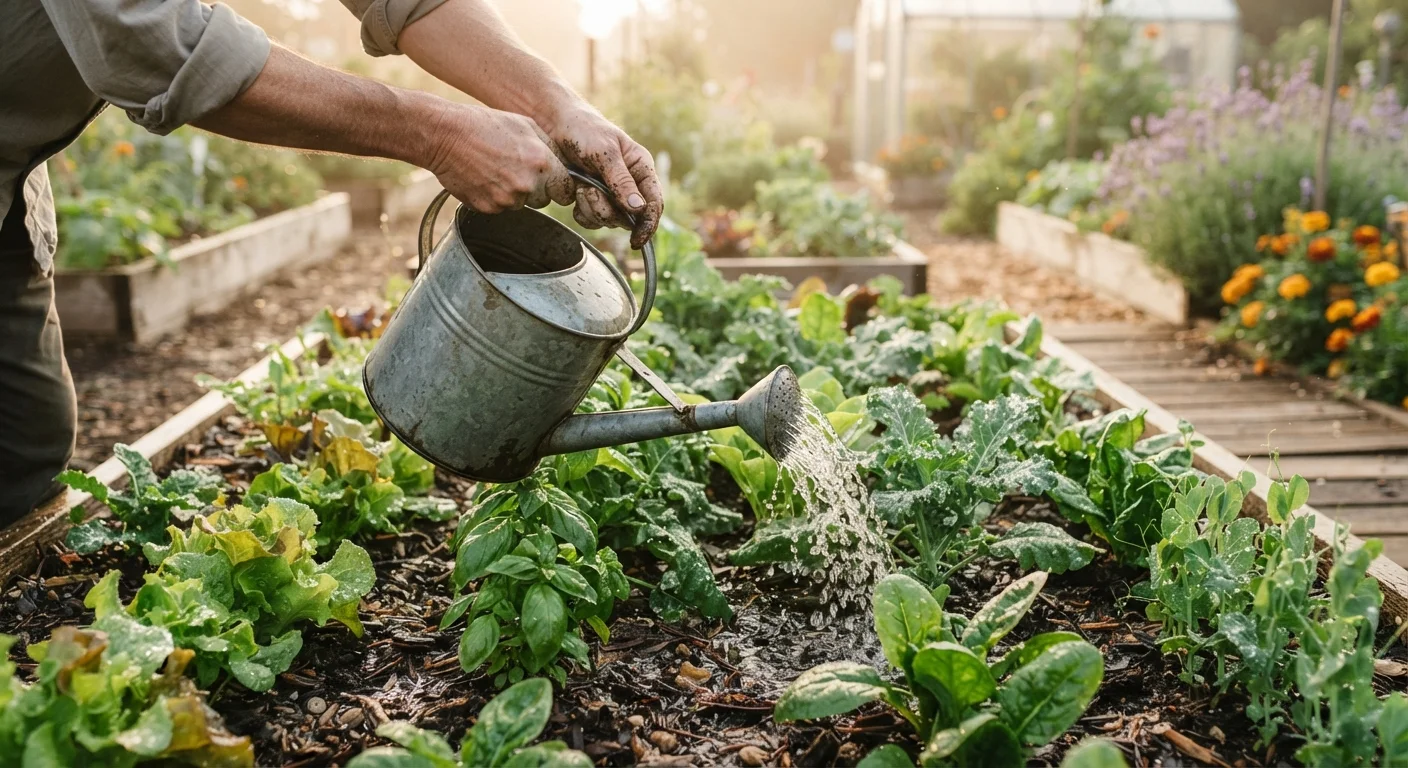
Key Takeaways
- Morning is the best time to water - it reduces evaporation and helps prevent fungal disease.
- Most garden plants benefit from deep, infrequent watering rather than shallow daily doses.
- Soil type determines how quickly water drains or is retained, affecting how often you should water.
- Overwatering is one of the most common causes of plant failure in home gardens.
- Checking soil moisture before watering prevents both under- and over-watering.
Why Watering Strategy Matters More Than Volume
Many new gardeners assume more water equals healthier plants. In practice, the timing, depth, and frequency of watering matter just as much as how much you apply. Water applied incorrectly can leach nutrients below the root zone, encourage shallow roots, or create the soggy conditions that fuel root rot.
Understanding a few simple principles lets you work with your plants rather than against them. Your garden setup plays a role too - raised beds, in-ground plots, and containers each drain differently, which affects how you approach watering. See our side-by-side comparison of garden setups to understand what applies to your situation.
Water in the early morning, before 10 a.m.
Morning watering lets foliage dry as temperatures rise, reducing the moisture that fuels fungal diseases like powdery mildew. It also means less water is lost to evaporation compared to midday watering.
Water deeply and less frequently rather than a little every day.
Deep watering encourages roots to grow downward toward consistent moisture reserves, making plants more drought-tolerant. Shallow daily watering keeps moisture near the surface, training roots upward where they are vulnerable to heat and dry spells.
Direct water at the base of plants, not the foliage.
Wet leaves - particularly when moisture lingers - create ideal conditions for fungal disease. Targeting the root zone also uses water more efficiently, delivering it where it's needed rather than wetting mulch and surrounding soil unnecessarily.
Mulch around plants to slow soil moisture loss.
A two- to three-inch layer of organic mulch (such as wood chips or straw) significantly reduces evaporation from the soil surface, meaning you can water less often while maintaining consistent moisture levels.
Adjust your watering schedule as seasons and weather change.
A schedule that works in mild spring conditions will be insufficient during a summer heat wave and excessive during a rainy stretch. Treating your calendar as fixed leads to either drought stress or overwatering depending on conditions.
Reading Soil and Plants Before You Reach for the Hose
The single most useful habit you can build is checking soil moisture before watering. Push your finger about two inches into the soil near a plant's base. If it feels moist at that depth, hold off. If it's dry and crumbly, it's time to water. This takes seconds and prevents guesswork.
Plants also communicate stress visibly - wilting in the morning or evening (not just the midday heat) often signals underwatering, while yellowing lower leaves and soft, mushy stems can point to overwatering. These signs overlap with other problems, so soil texture is a more reliable first check. Our article on why plants fail even with good care covers these overlapping symptoms in more detail.
Soil composition also shapes how often you need to water. Sandy soils drain fast and need more frequent attention; clay holds moisture longer but can become waterlogged. Loam sits in the middle and is generally forgiving. For a deeper look at what's underfoot, our guide to soil types is a helpful starting point.
Container Plants Have Different Rules
Potted plants dry out significantly faster than in-ground beds because their soil volume is limited and containers - especially terra cotta - lose moisture through their walls. Containers may need daily watering in hot weather. Always check the soil, not the calendar, before watering a container plant. Drainage holes are essential; water sitting at the bottom of a pot is a reliable path to root rot.
Quick Actions You Can Take Today
Good watering habits don't require special equipment or a complete overhaul of your routine. A few targeted changes can immediately improve how your garden responds.
For gardeners growing flowering plants, watering consistency matters for bloom health too. Consistent soil moisture during bud formation is especially important for annuals and perennials alike - see our guide to planning a flower garden for planting considerations that pair with good watering habits.