

Key Takeaways
- Annuals complete their entire life cycle in one season, then must be replanted.
- Perennials die back in winter but regrow from their roots each spring.
- Annuals generally offer longer bloom periods; perennials offer longevity and lower annual cost.
- Combining both types gives you reliable structure plus seasonal flexibility.
- Your climate and USDA hardiness zone affect which perennials will reliably return.
Option A
Annuals
The season-long showstoppers that bloom hard and fast.
Best for: Gardeners who want continuous, bold color throughout a single growing season with flexibility to change the design each year.
Option B
Perennials
The reliable returners that build a garden's backbone over time.
Best for: Gardeners who want a lower-maintenance, evolving garden that grows stronger and more established with each passing year.
If you want maximum color with minimum year-to-year commitment
Annuals
Annuals bloom from planting through frost, letting you refresh your garden's look every season without worrying about overwintering plants.
If you want to invest once and reduce replanting labor over time
Perennials
Perennials return each year from established root systems, meaning less purchasing and planting effort as your garden matures.
If you're a beginner building your first garden bed
Annuals
Annuals are forgiving of beginner mistakes - if something doesn't work, you simply start fresh next season with a new plan.
If you want a garden that fills in and self-sustains over several years
Perennials
Many perennials spread or self-seed over time, gradually filling gaps and reducing the need for new plants each spring.
If you want the best of both reliability and seasonal color
Annuals
Use perennials as your garden's structural foundation, then tuck annuals into gaps to maintain color during perennial off-bloom periods.
What Makes a Plant Annual or Perennial?
The distinction comes down to life cycle. An annual germinates, grows, flowers, sets seed, and dies - all within a single growing season. It doesn't survive winter. Every spring, you start from scratch, either replanting seeds or setting out new transplants. See our guide to seeds vs. transplants to weigh your starting options.
A perennial, on the other hand, lives for more than two years. Most herbaceous perennials (the non-woody kind common in flower beds) die back to the ground each fall, then regenerate from their root system come spring. The plant you see above ground is new each year; the plant below ground is the same organism, growing stronger over time.
There's also a middle category worth knowing: biennials complete their life cycle over two years, typically leafing out the first year and blooming the second. Foxglove and hollyhock are common examples. They're less common in garden planning conversations but useful to recognize when you encounter them on plant tags.
What About 'Tender Perennials'?
Some plants are technically perennial in warm climates but can't survive freezing winters - these are often called tender perennials. Impatiens and begonias are common examples. In most of the US, they're grown as annuals. Plant tags and nursery staff can clarify a plant's behavior in your specific region.
How They Compare: Bloom, Cost, and Effort
The trade-offs between annuals and perennials aren't one-sided - each type genuinely excels in different situations. Understanding those differences makes planning far easier.
| Criterion | Annuals | Perennials |
|---|---|---|
| Life span | One growing season | Three or more years |
| Bloom period | Often all season long | Typically a few weeks per year |
| Upfront cost | Lower per plant | Higher per plant |
| Long-term cost | Replant every year | Divide and multiply over time |
| Labor over time | Consistent each season | Decreases as plants establish |
| Design flexibility | Change colors/layouts yearly | More fixed once established |
| Winter hardiness concern | None - dies at season end | Must match your hardiness zone |
One practical note on cost: perennials carry a higher upfront price per plant but can be divided every few years, meaning one plant eventually becomes several. Annuals require fresh purchasing each season, which adds up over time. That said, growing annuals from seed (rather than buying transplants) significantly lowers per-season costs. Check out a full seasonal garden guide for help timing your planting decisions month by month.
Designing a Garden That Uses Both
Experienced gardeners rarely choose one over the other - they layer both intentionally. A practical approach:
- Use perennials as the structure. Plant them in drifts or clusters where you want reliable mass and texture each year. Coneflowers, black-eyed Susans, daylilies, and ornamental grasses are dependable choices in many US climates.
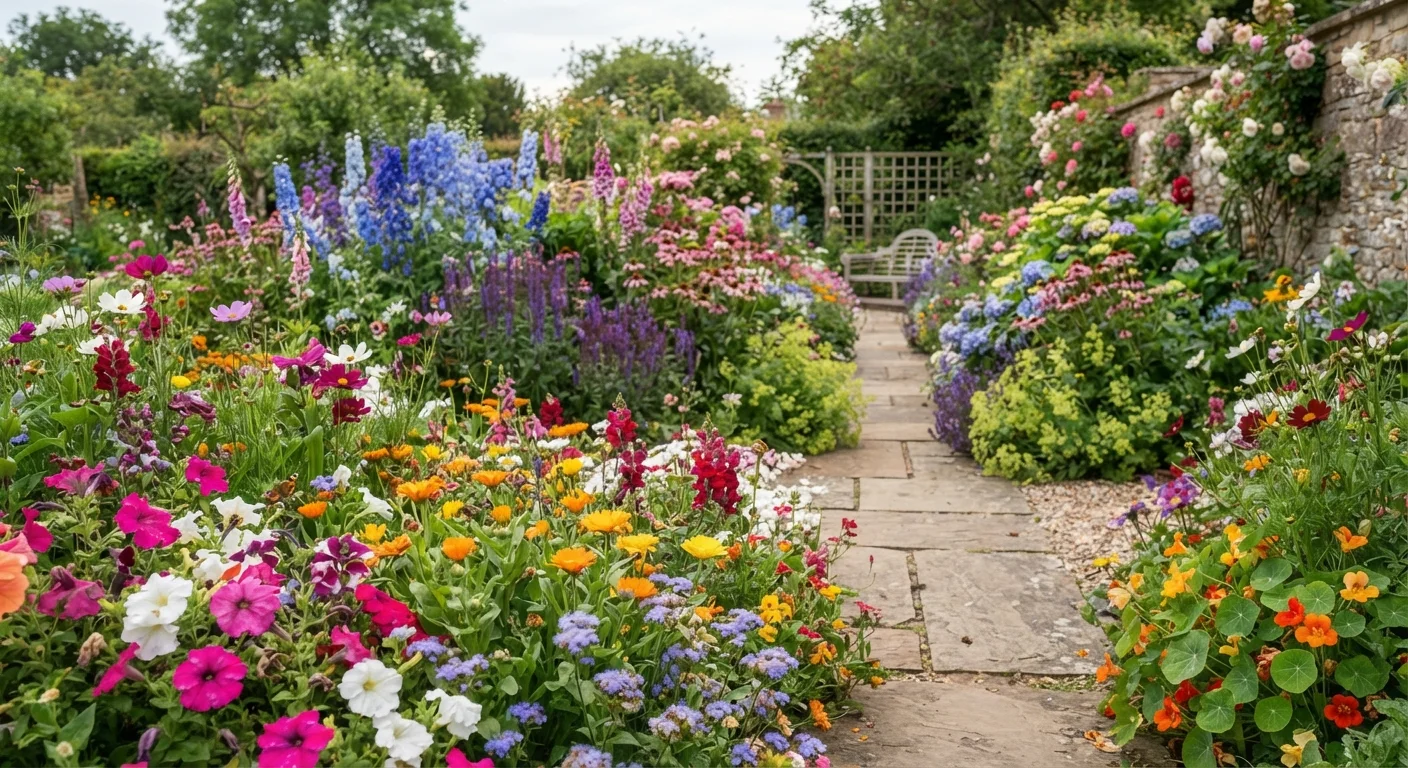
- Use annuals to fill gaps. Perennials don't always bloom simultaneously, and some have short bloom windows. Annuals tucked between them maintain color and visual interest throughout the season.
- Plan for succession. Choose perennials that bloom at different times - spring, summer, and fall - so there's always something active. Layer annuals around them to bridge transitions.
Your choice of growing method also shapes how you mix these plant types. Container gardens, for example, lend themselves well to annuals because pots can be replanted seasonally with little disruption. For container-specific planning ideas, see container gardening on a balcony or patio.
3-5 yrs
Typical time before perennials need dividing
Most herbaceous perennials benefit from division every three to five years to maintain vigor and prevent overcrowding at the root zone.
13 zones
USDA Plant Hardiness Zone map divisions
The USDA Plant Hardiness Zone Map divides the US into 13 zones based on average annual minimum winter temperatures, guiding perennial plant selection.
Matching Plants to Your Climate and Goals
Not all perennials survive all winters. Your USDA Plant Hardiness Zone determines which perennials will reliably return in your area. A plant labeled "perennial" in Georgia may behave as an annual in Minnesota. Always check a plant's hardiness zone range before assuming it will overwinter in your garden.
Annuals sidestep this issue entirely - because they complete their cycle in one season, zone hardiness is far less relevant. What matters more for annuals is your frost dates: the last frost in spring (when it's safe to plant) and the first frost in fall (when most annuals will die back).
Consider also how much effort you're willing to invest in ongoing care. Perennials often need dividing every three to five years to stay vigorous, and some need deadheading (removing spent blooms) to extend flowering. Annuals need consistent watering and deadheading to keep blooming strong, but they don't require long-term management. Pairing your flower choices with good watering practices makes a real difference - our guide to watering your garden well covers the fundamentals. You might also explore companion planting basics to learn how certain plant combinations can support each other's health and vigor.