

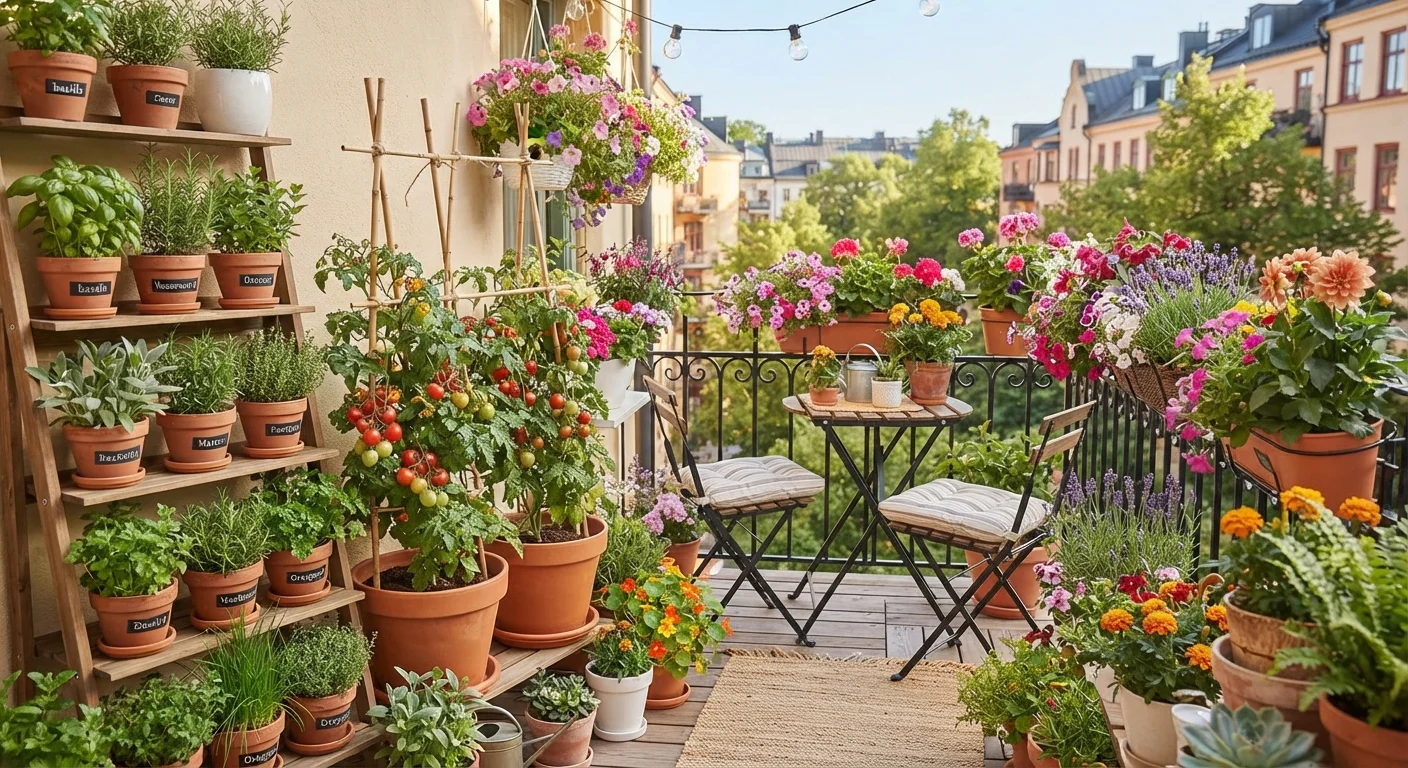
Key Takeaways
- Container size, drainage, and potting mix are the three factors most beginners overlook.
- Many vegetables and herbs thrive in pots - radishes, lettuce, basil, and cherry tomatoes are reliable starters.
- Containers dry out faster than ground soil, so consistent watering is the most important daily habit.
- Weight limits on balconies are real - check your building's specifications before loading up on large planters.
- Grouping plants with similar light and water needs simplifies care significantly.
What you will need
Why Containers Work Well for Small Spaces
Container gardening removes many of the barriers that keep people from growing plants at home. You don't need a yard, in-ground soil, or a large budget to get started. A few well-chosen pots and the right potting mix can support herbs for cooking, flowers for color, or even a modest harvest of vegetables - all from a balcony or patio that's just a few square feet.
The flexibility is a genuine advantage. Containers can be repositioned to follow the sun, moved indoors if frost threatens, and scaled up gradually as your confidence grows. For a broader comparison of how containers stack up against other gardening methods, see our side-by-side look at raised beds, in-ground plots, and containers.
The tradeoffs are real too: containers require more frequent watering, nutrients deplete faster, and roots are more exposed to temperature swings. Understanding those differences upfront means fewer surprises later.
Check Your Balcony Weight Capacity First
Soil, water, and planters are surprisingly heavy - a single large pot filled with wet mix can weigh 50 pounds or more. Before adding multiple containers, check your lease agreement or consult your building manager about load limits. Distributing weight along structural load-bearing edges rather than the center of the balcony is a general safety practice.
What You'll Need Before You Start
Getting the setup right from the beginning saves a lot of corrective effort later. Review the prerequisites for this project, then gather your tools and materials before planting day.
What you will need
Containers with drainage holes
Prevents waterlogging at the root zone - critical for nearly all container plants.
Quality potting mix
Provides the aeration, drainage, and nutrient base that container plants need.
Watering can or hose with a gentle nozzle
Allows controlled, even watering without disturbing soil or damaging seedlings.
Slow-release granular fertilizer
Supplements nutrients that regular watering depletes from potting mix over time.
Saucers or drip trays
Catches drainage water to protect your floor and avoid staining or damage.
Moisture meter
Takes the guesswork out of watering by showing actual soil moisture levels.
Avoid Regular Garden Soil in Containers
Garden soil compacts in pots, restricts root growth, and drains poorly - often leading to root rot. Always use a quality potting mix specifically formulated for containers. Some mixes include moisture-retaining additives that can help reduce how frequently you need to water.
One common misconception worth addressing: adding a layer of gravel to the bottom of a pot does not improve drainage - it actually raises the water table inside the container. If you've heard otherwise, our garden myths guide covers this and several other widely repeated but unsupported tips.
Step-by-Step: Setting Up Your Container Garden
Follow these steps in order for the best results, especially if this is your first time growing in containers. Each step builds on the last, and skipping ahead - particularly on soil choice or drainage - tends to cause problems that are hard to fix once plants are established.
Assess your light conditions
Stand on your balcony or patio at different times of day and note how many hours of direct sun the space receives. Most edible plants - tomatoes, peppers, herbs - need at least 6 hours of direct sun. Lettuce, spinach, and mint tolerate partial shade. Matching your plant choices to your actual light is the single most important setup decision you'll make.
Choose the right containers
Pick containers that are appropriately sized for what you're growing. Herbs do well in 6-8 inch pots; tomatoes and peppers need at least 12-14 inch diameter containers with depth. Every pot must have drainage holes - this is non-negotiable. Lightweight materials like plastic and fiberglass are practical for balconies; terracotta looks great but adds significant weight and dries out faster.
Fill containers with potting mix
Fill each container to about an inch below the rim using a potting mix suited to your plant type (standard mix for most vegetables and flowers; a cactus or succulent mix for drought-tolerant plants). Gently firm the mix without compacting it. If your mix doesn't include slow-release fertilizer, blend in a measured amount according to the product's label guidance.
Plant seeds or transplants
For transplants, dig a hole sized to the root ball, set the plant at the same depth it was growing in its nursery pot, and firm soil gently around the roots. For seeds, follow the packet's depth and spacing guidance. Water gently immediately after planting. Don't overcrowd containers - plants competing for space and nutrients rarely perform well.
Establish a watering routine
Container plants lose moisture much faster than in-ground plants, especially on windy or sunny balconies. Check soil moisture daily by pressing a finger an inch into the mix - if it feels dry, water thoroughly until it drains from the bottom. In hot summer weather, some containers may need watering twice a day. Inconsistent watering is one of the most common causes of poor container harvests.
Fertilize regularly through the season
Potting mix nutrients deplete with every watering. If you used a slow-release fertilizer at planting, supplement with a diluted liquid fertilizer every two to three weeks during active growth. Flowering and fruiting plants - tomatoes, peppers - are heavier feeders than leafy herbs. Follow label rates; over-fertilizing can burn roots or produce lush foliage at the expense of fruit.
Group Pots to Reduce Moisture Loss
Clustering containers together creates a slightly more humid microclimate around the plants, slowing moisture evaporation from individual pots. It also makes watering rounds more efficient. Just be sure each pot still receives adequate airflow to discourage fungal issues.
If you're also interested in growing vegetables from the ground up, starting a vegetable garden from scratch covers the broader foundations that apply across all growing formats.
Choosing What to Grow
Not all plants adapt equally well to container life. The most reliable performers tend to have compact root systems, tolerate occasional moisture fluctuations, and produce results relatively quickly - which helps beginners stay motivated.
- Herbs: Basil, parsley, chives, and mint are easy starters. Keep mint in its own container - it spreads aggressively.
- Vegetables: Cherry tomatoes, lettuce, radishes, and bush beans are well-suited to containers. Avoid sprawling vines unless you have vertical support structures.
- Flowers: Marigolds, petunias, and nasturtiums provide color and are straightforward to maintain. For ideas on combining annuals and returning plants, see our guide to annuals vs. perennials.
Planting compatible species together can also work well in larger containers. The basics of companion planting offers guidance on combinations that are well-supported by evidence.