

Key Takeaways
- Companion planting pairs plants to provide mutual benefits like pest control and space efficiency.
- The classic 'Three Sisters' combination of corn, beans, and squash is one of the best-supported examples.
- Some pairings are rooted in tradition rather than science - healthy skepticism helps.
- Flowers like marigolds and nasturtiums play a genuine supporting role in vegetable gardens.
- Avoiding bad pairings matters as much as choosing good ones.
Companion Planting
Companion planting is the practice of growing two or more plant species close together because they benefit one another in some way. These benefits can include pest deterrence, improved pollination, better use of space, or even enhanced flavor. It's a low-cost, low-effort strategy that gardeners at every level can experiment with.
Some companion planting effects - such as nitrogen fixation by legumes - are well-documented by agricultural science. Others, like alleged flavor enhancement, are based more on gardening tradition than controlled research.
Why Plant Placement Matters
Most beginner gardeners focus on what to grow before thinking about what grows next to what. But plant placement can quietly influence how well your garden performs. Certain plants compete aggressively for nutrients, while others create conditions that help their neighbors thrive.
Companion planting takes advantage of these natural relationships. It's not a complicated system - at its core, it's about being thoughtful when you decide what goes where. If you're just getting your vegetable garden started, layering in some companion planting basics from the beginning is much easier than rearranging things later.
Start With One or Two Pairs
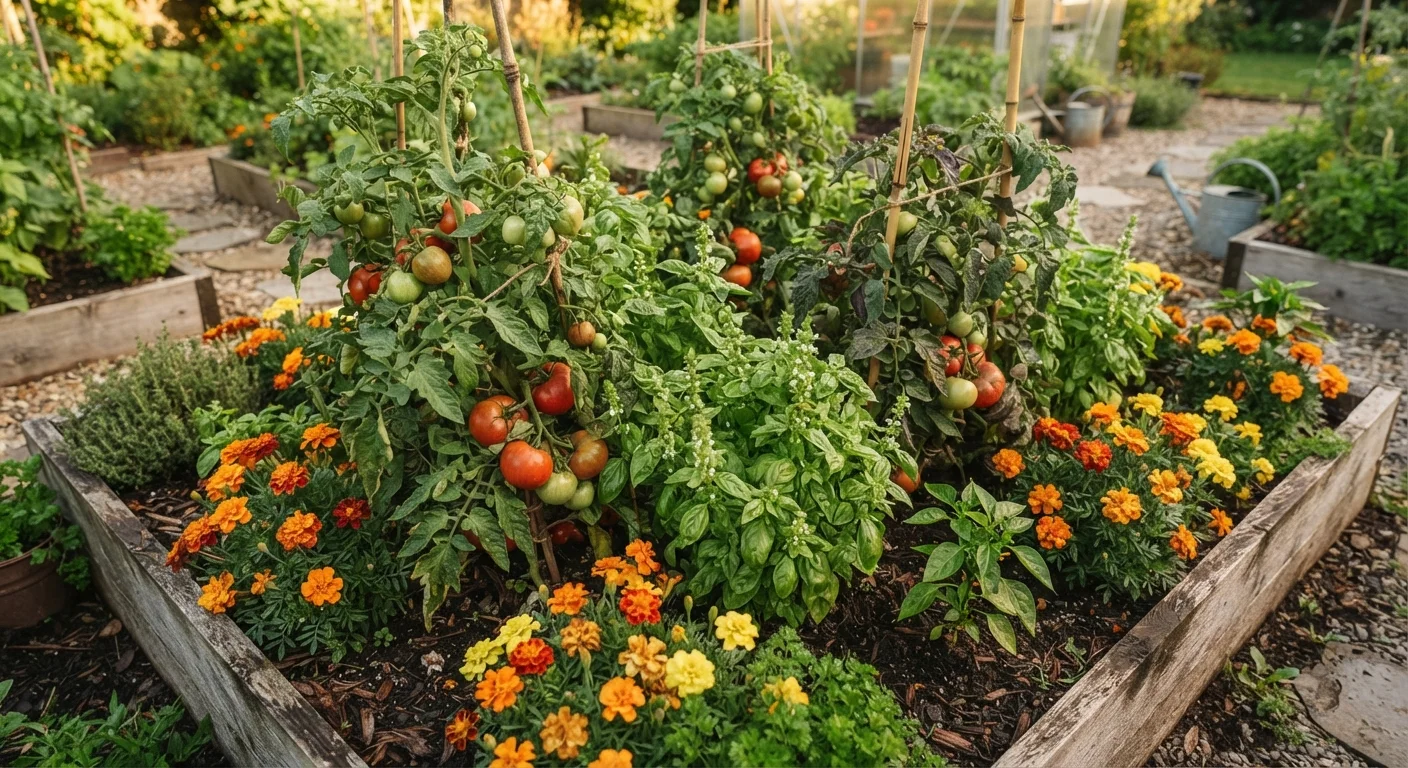
You don't need to redesign your entire garden around companion planting. Pick one or two well-supported combinations - like marigolds with tomatoes or beans with corn - and observe the results over a full season. Small experiments build real knowledge faster than wholesale changes.
How Plants Help Each Other
There are several mechanisms through which companion planting delivers real benefits:
- Nitrogen fixation: Legumes like beans and peas host soil bacteria that pull nitrogen from the air and deposit it in the soil - a natural fertilizer for nearby heavy feeders like corn or leafy greens.
- Pest disruption: Strong-scented plants like marigolds, basil, and garlic can confuse or repel insects looking for a host plant. Dense ground-cover plants like squash leaves can block access to the soil, disrupting pests that live in it.
- Physical support: Tall plants can act as a trellis. Corn, for example, provides climbing structure for bean vines - no hardware required.
- Attracting beneficials: Flowering herbs and certain annuals draw pollinators and predatory insects that feed on common garden pests.
These aren't theories in isolation - the Three Sisters planting method (corn, beans, and squash grown together) combines all three of the first mechanisms and has been used by Indigenous peoples in North America for centuries, with the nutrient-cycling benefits now confirmed through agricultural research.
Tradition vs. Evidence in Companion Planting
Many companion planting suggestions circulating online are rooted in gardening folklore passed down through generations. Some are genuinely useful; others haven't held up under controlled testing. When you read a claim that seems too specific - like a particular plant 'improves the flavor' of its neighbor - it's worth treating that as traditional wisdom rather than confirmed science.
Pairings Worth Trying
Here are some combinations that gardeners have used reliably, with at least reasonable evidence behind them:
| Plant | Good Companions | Reason |
|---|---|---|
| Tomatoes | Basil, marigolds, carrots | Marigolds deter nematodes; basil may repel aphids |
| Beans | Corn, squash, carrots | Fix nitrogen; climb corn stalks naturally |
| Squash | Corn, beans, nasturtiums | Ground cover suppresses weeds; nasturtiums trap aphids |
| Lettuce | Tall tomatoes or corn | Benefits from shade in hot weather |
| Carrots | Onions, leeks, rosemary | Strong scents may deter carrot fly |
If you're growing in a limited space, these combinations also help you make the most of every square foot. See our guide on choosing between raised beds, in-ground plots, and containers for tips on planning layouts that support dense planting.
Pairings to Avoid
Just as some plants are helpful neighbors, others are genuinely problematic:
- Fennel is notoriously difficult - it releases compounds that inhibit many vegetables and herbs. Grow it in its own spot, away from the main garden.
- Onions and garlic can stunt beans and peas. Keep alliums on the opposite side of your legume section.
- Brassicas (cabbage, broccoli, kale) and tomatoes tend to compete and can share diseases. Keep them separated.
- Heavy feeders together - planting corn next to pumpkins without a nitrogen-fixer like beans in between can deplete soil quickly.
Good soil health underpins everything. If your soil is already nutrient-poor, even compatible companions won't perform well. Our explainer on what compost is and how it works is a useful starting point for improving your foundation.
Setting Realistic Expectations
Companion planting is a useful tool, not a magic formula. Some combinations in popular gardening lore haven't been validated in controlled settings - and results can vary based on your climate, soil, and local pest populations. The honest approach is to treat it like an ongoing experiment: try a pairing, observe what happens over a season, and adjust.
It also works best alongside other good gardening habits. Proper watering, adequate sunlight, and appropriate spacing still matter more than any plant pairing. If you notice a plant struggling despite good companions, check the basics first - common plant failure causes are often simpler than they seem.
For gardeners with limited outdoor space, companion planting translates well to pots and planters too. Our guide to container gardening on a balcony or patio covers how to adapt these principles to a smaller footprint.
3
Crops in the classic Three Sisters combination
Corn, beans, and squash have been intercropped together for centuries, with nitrogen-cycling benefits documented by modern agricultural researchers.
~30%
Potential reduction in pest damage with intercropping
Research published in agricultural journals suggests intercropping can meaningfully reduce pest damage compared to monoculture, though results vary by crop and pest type.