

Key Takeaways
- Start with a small plot - even a 4×4-foot bed can produce a satisfying harvest.
- Most vegetables need at least six hours of direct sunlight per day to thrive.
- Soil quality matters more than almost any other factor; amend before you plant.
- Beginners do best with forgiving crops like lettuce, beans, and zucchini.
- Consistent watering and early pest checks prevent most common problems.
- Reading a seed packet gives you all the timing and spacing info you need.
Start here
Choosing Your Garden Spot
Next
Deciding on a Garden Setup
Then
Understanding Your Soil
When you're ready
Picking What to Grow First
Getting hands-on
Planting, Watering, and Basic Care
Final step
Knowing When to Harvest
Choosing Your Garden Spot
Before you buy a single seed, find the right location. Sunlight is the single most important factor - most vegetables need a minimum of six hours of direct sun daily, and eight or more is better for fruiting crops like tomatoes and peppers. Walk your yard at different times of day to observe where shadows fall from fences, trees, and structures.
Access to water matters too. Choose a spot within reach of a garden hose so watering doesn't become a chore you dread. Flat or gently sloping ground is ideal; low-lying areas that collect water can lead to root rot and disease. If your yard has limited sun, focus on leafy greens and herbs, which are more tolerant of partial shade.
Track Sun Before You Dig
Spend a full day observing your yard before committing to a garden location. Note which areas receive sun in the morning, midday, and late afternoon. A quick sketch with times noted can reveal the best spot that a quick glance might miss.
Deciding on a Garden Setup
Once you've chosen a location, decide how you'll contain and organize your growing space. Three main approaches are in-ground plots, raised beds, and containers - each with real trade-offs depending on your soil, budget, and available space. Our side-by-side comparison of garden setups covers the practical pros and cons in detail.
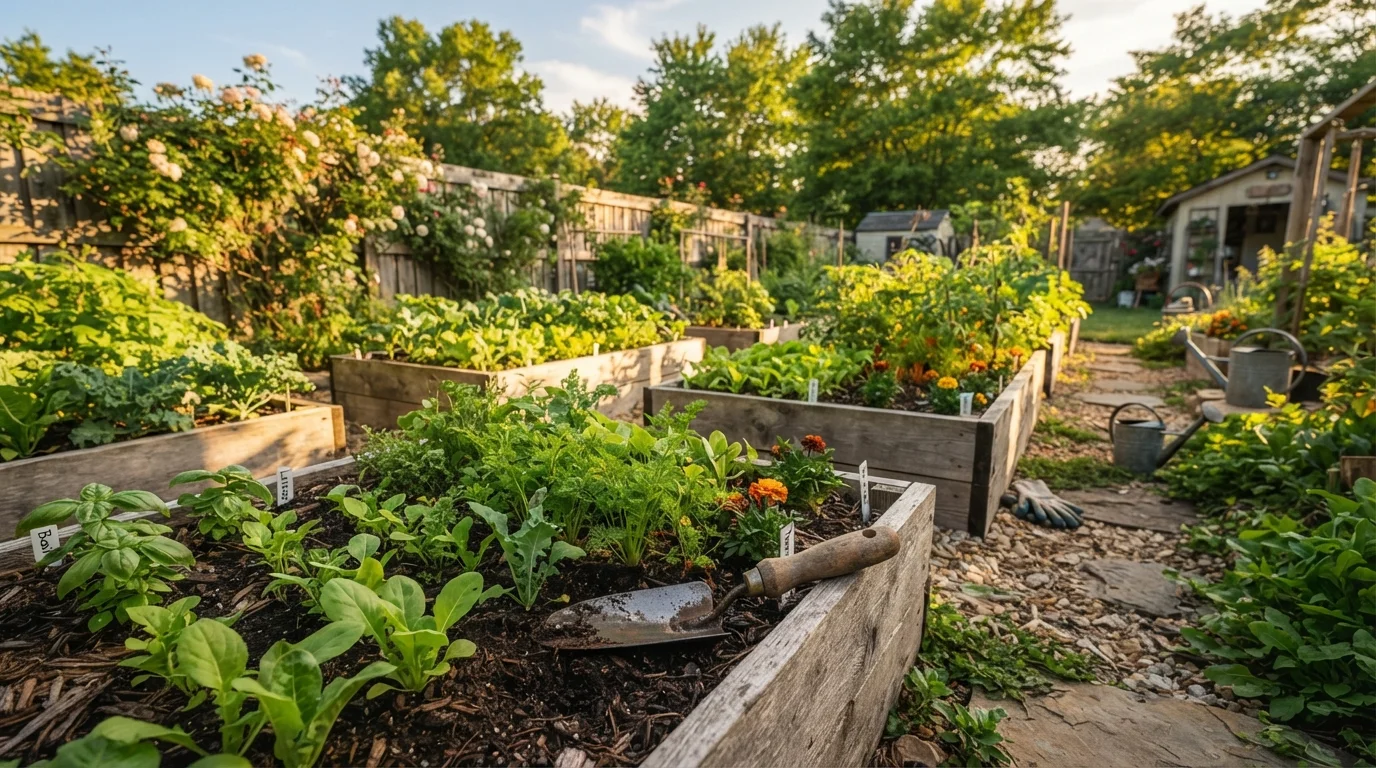
For most beginners, a single 4×4 or 4×8-foot raised bed offers the best balance of control and simplicity. You fill it with good soil, it warms up quickly in spring, and it's easy to reach from all sides without stepping on your plants. If you have no yard at all, container gardening on a balcony or patio is a genuinely productive alternative.
Understanding Your Soil
Soil is the foundation of everything. Poor soil is the most common reason beginner gardens underperform - and it's also one of the easiest problems to fix. Before planting, dig down six inches and examine the texture. Sandy soil drains quickly but doesn't hold nutrients well. Clay soil holds moisture but can compact and suffocate roots. Loamy soil - a mix of sand, silt, and clay - is the gardener's ideal.
Regardless of your starting point, adding compost improves almost any soil. Work two to three inches of finished compost into the top six to eight inches before planting. If you want to go deeper on what's underfoot and how to improve it, our Soil 101 guide explains soil types and amendments in plain language.
Hardiness Zone
A geographic area defined by its average minimum winter temperature, used to determine which plants can survive there year-round. The USDA publishes a Plant Hardiness Zone Map for the US.
Last Frost Date
The approximate date in spring after which freezing temperatures are unlikely in your area. It's the baseline for timing when to plant warm-season vegetables outdoors.
Compost
Decomposed organic matter - like food scraps and yard waste - that improves soil structure, adds nutrients, and supports beneficial soil life when mixed into garden beds.
Direct Sow
Planting seeds directly into the garden soil where the plant will grow, rather than starting them indoors and transplanting later.
Loam
A well-balanced soil type containing a mixture of sand, silt, and clay that drains well while retaining enough moisture and nutrients for most vegetables to thrive.
Days to Maturity
The number of days from planting (or transplanting) until a crop is ready to harvest, as printed on a seed packet. Useful for planning what you can fit into your growing season.
Picking What to Grow First
Resist the urge to plant everything that looks good at the nursery. A focused first garden teaches you far more than an ambitious one. Start with two to five crops that you actually eat and that are well-suited to beginners.
- Lettuce and salad greens: Fast-growing, forgiving, and productive even in small spaces.
- Green beans: Direct-sow into warm soil, minimal care needed.
- Zucchini: Prolific producer; one or two plants are usually enough.
- Cherry tomatoes: More reliable than large varieties for beginners.
- Radishes: Ready in three to four weeks - great for building early confidence.
When you're ready to start from seed, learning to read a seed packet will tell you everything you need about spacing, depth, and timing. You can also weigh seeds versus transplants based on your timeline and budget.
Planting, Watering, and Basic Care
Plant at the right time for your region - most spring vegetables go in after your area's last frost date. Your local cooperative extension service publishes frost dates by zip code and is a reliable, free resource. Follow spacing guidelines on the seed packet; crowded plants compete for light and airflow, inviting disease.
Water deeply and consistently rather than shallowly and often. Most gardens need about one inch of water per week. Stick your finger two inches into the soil - if it's dry, water. Morning watering is preferable because foliage dries before evening, reducing the risk of fungal problems.
Check plants every few days for signs of pests or disease. Catching problems early - a few aphids, the start of powdery mildew - is far easier than managing a full infestation. Remove affected leaves promptly and observe whether the issue spreads.
Don't Over-Water - It's a Common Mistake
More vegetable seedlings are lost to overwatering than to drought. Soggy soil drives out oxygen and promotes root rot. Always check soil moisture before watering rather than watering on a fixed schedule, especially during cooler or cloudy stretches.
Knowing When to Harvest
One of the most common beginner mistakes is waiting too long to harvest. Vegetables left on the plant past their peak can turn bitter, woody, or signal the plant to stop producing. Harvest regularly to keep plants productive.
Lettuce is ready when leaves are large enough to eat - you can harvest outer leaves while the plant keeps growing. Beans should be picked when pods are firm and before seeds bulge visibly inside. Zucchini is best at six to eight inches; giant zucchinis taste bland and exhaust the plant. Cherry tomatoes are ready when they pull off the vine with almost no resistance.
Keeping a simple garden journal - dates planted, what worked, what didn't - makes your next season significantly easier. When you're ready to plan a full year ahead, our first growing season guide walks through the entire calendar from late winter to fall harvest.