

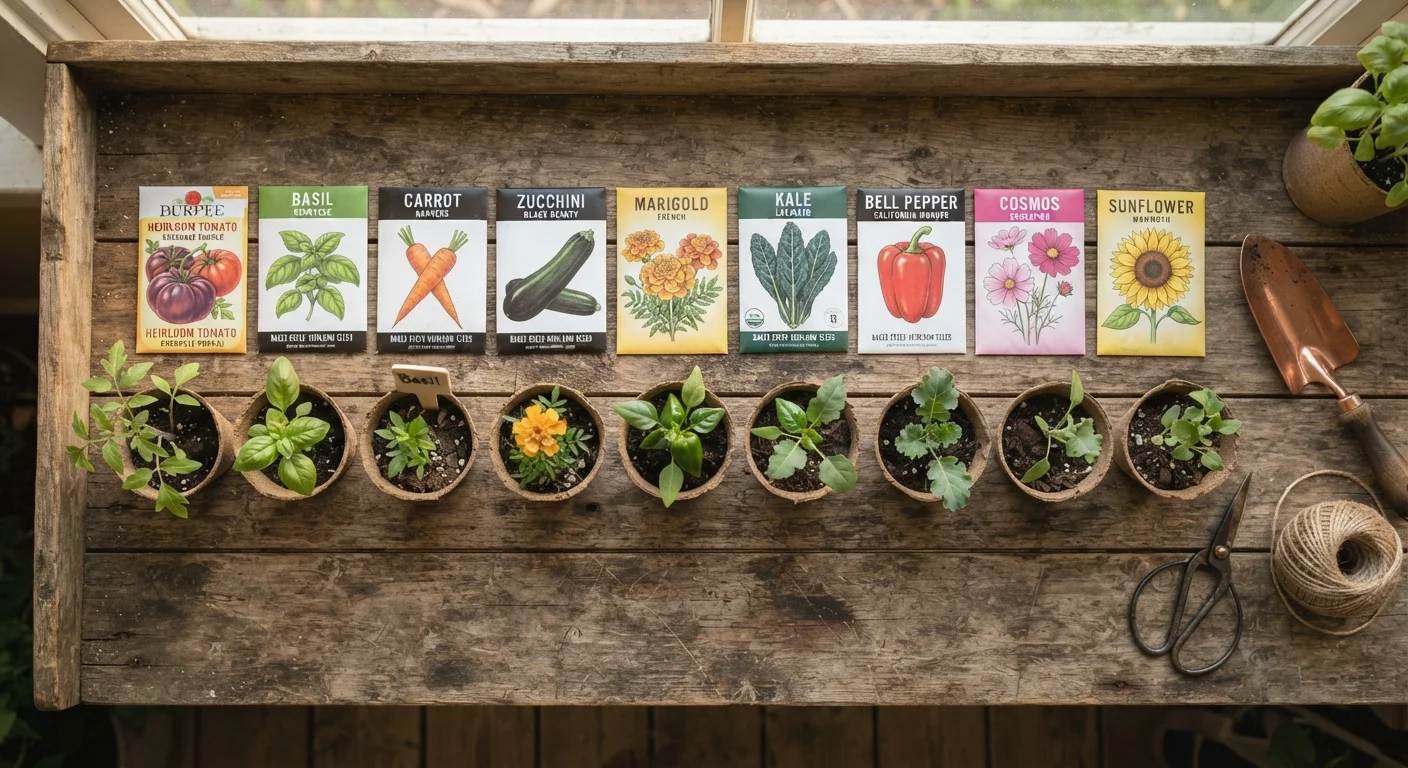
Key Takeaways
- Seeds cost less per plant and offer far more variety choices than transplants typically do.
- Transplants save weeks of indoor growing time and are more forgiving for first-time gardeners.
- Some crops - like carrots and beans - strongly prefer direct seeding and don't transplant well.
- Your local climate and frost dates should guide when and how you start plants.
- A mixed approach - seeds for some crops, transplants for others - often works best in practice.
Option A
Starting from Seed
The patient, variety-rich approach for hands-on gardeners.
Best for: Gardeners who want maximum variety selection, lower per-plant cost, and the satisfaction of growing from the very beginning.
Option B
Buying Transplants
The convenient, time-saving option for faster results.
Best for: Beginners or busy gardeners who want to skip the most fragile stage of plant growth and get crops in the ground quickly.
If you're a first-time gardener who wants quick, visible results
Buying Transplants
Transplants skip the most failure-prone stage of growing, letting beginners focus on soil, watering, and garden management rather than seed germination.
If you want to grow uncommon or heirloom vegetable varieties
Starting from Seed
Seed catalogs offer hundreds of varieties rarely found as transplants at garden centers, giving you far greater control over what ends up on your plate.
If you have a short growing season with late spring frosts
Buying Transplants
Transplants give warm-season crops like tomatoes and peppers a head start, making them practical where indoor seed-starting space or timing is limited.
If you're growing root vegetables or fast-maturing crops like beans or lettuce
Starting from Seed
These crops grow best when sown directly in the ground and often struggle when their roots are disturbed during transplanting.
If you're gardening on a tight budget across a larger plot
Starting from Seed
A single seed packet can produce dozens of plants at a fraction of the cost of buying the equivalent number of individual transplants.
Why the Choice Matters More Than You Might Think
Whether you start from seed or pick up transplants from a local garden center is one of the first real decisions a new gardener faces - and it shapes everything from your timeline to your plant selection. Neither approach is universally better. What matters is matching your method to what you're growing, when you're growing it, and how much time and space you're working with.
If you're just getting started, our guide to starting a vegetable garden from scratch walks through the broader planning process that this decision fits into.
| Criterion | Starting from Seed | Buying Transplants |
|---|---|---|
| Cost per plant | Lower - pennies per seed | Higher - dollars per plant |
| Variety selection | Extensive - hundreds of options | Limited to local stock |
| Time to garden | Longer - weeks of indoor care | Immediate - plant on purchase |
| Skill required | Moderate - timing and light critical | Low - hardening off needed |
| Equipment needed | Lights, trays, seed-starting mix | Minimal beyond garden basics |
| Best for root crops | Yes - direct sow preferred | No - roots dislike disturbance |
| Risk of failure | Higher at germination stage | Lower - most fragile stage done |
The Case for Starting from Seed
Seeds offer something transplants simply can't: variety. A single seed catalog can list dozens of tomato types, unusual greens, or rare herbs you'll never find at a big-box garden center. For gardeners who care about what they're growing - not just that something is growing - this matters a great deal.
Cost is another real advantage. A packet of 50 seeds typically costs less than two or three transplants. Across a full garden, that difference adds up. Seeds also let you start at exactly the right time for your local conditions rather than working around what's available in stores.
That said, seed starting requires some infrastructure: a warm, well-lit space, seed-starting mix, containers, and consistent attention during the germination period. The biggest hurdle for beginners is usually timing - starting too early leads to leggy, overgrown seedlings before the last frost; starting too late defeats the purpose.
Before you start, it pays to understand what's printed on the packet itself. Reading a seed packet can tell you days to maturity, spacing requirements, and whether a crop is suited to direct sowing or indoor starting.
6-10 weeks
Typical indoor lead time for warm-season crops
Tomatoes and peppers generally need 6-10 weeks of indoor growth before they're ready to transplant outdoors after the last frost date.
~$0.10
Average cost per seed in a standard packet
Many vegetable seed packets contain 25-100 seeds at a total cost of $2-$5, making per-plant cost a fraction of what transplants typically run.
The Case for Buying Transplants
Transplants meet you halfway. The germination stage - where most beginner failures happen - is already done. You get a visible, living plant you can put in the ground as soon as conditions are right. For warm-season crops like tomatoes, peppers, and eggplant, buying starts also means not needing to maintain a heated indoor growing space for 6-10 weeks.
Transplants also reduce risk. If a seedling fails, you're out a small purchase rather than weeks of effort. For a gardener testing the waters or working with limited time, that's a meaningful trade-off.
The downsides are real, though. You'll pay more per plant, have fewer variety options, and be working around what your local suppliers happen to stock. Transplants also need a period of adjustment called hardening off - gradually exposing them to outdoor conditions over several days - before they're planted permanently. Skip this step and even healthy-looking transplants can struggle.
What 'Hardening Off' Actually Means
Hardening off is the process of gradually introducing indoor-grown seedlings - whether you started them or bought them - to outdoor conditions. Start by placing plants outside in a sheltered spot for a few hours each day, increasing exposure over 7-10 days. This allows them to adjust to wind, direct sun, and temperature swings without going into shock. Skipping this step is one of the most common reasons healthy-looking transplants fail shortly after planting.
Crops That Prefer One Method Over the Other
Some plants have strong preferences, and respecting those preferences saves a lot of frustration.
- Direct seed only: Carrots, beets, radishes, parsnips, beans, peas, corn, and most root vegetables dislike having their roots disturbed. Sow these directly in the garden.
- Transplants recommended: Tomatoes, peppers, eggplant, broccoli, cauliflower, and celery have long growing seasons and benefit from the head start transplants provide.
- Either works well: Lettuce, kale, chard, cucumbers, squash, and herbs are flexible - direct seed in warm climates or use transplants to extend the season in cooler ones.
Your local frost dates should anchor all of this planning. The USDA Plant Hardiness Zone Map and resources from your local cooperative extension service are reliable starting points for figuring out timing in your specific area.
Once you know what you're growing and how, you might also explore companion planting basics to make the most of your garden layout.
A Mixed Approach Often Wins
Most experienced home gardeners don't choose one method exclusively - they use both. Transplants handle the long-season crops that would otherwise require weeks of indoor care. Seeds go directly in the ground for everything that germinates easily and grows fast.
This hybrid approach lets you tailor the effort level to each crop rather than committing to a single system that may not suit everything you want to grow. As you gain experience, you'll develop a feel for which crops reward the extra effort of seed starting and which ones are simply easier to buy as starts.
However you set up your garden, matching your method to your space, time, and goals is what makes the difference between a productive season and a frustrating one. For more on how growing method interacts with garden setup, see our comparison of raised beds, in-ground plots, and containers.