

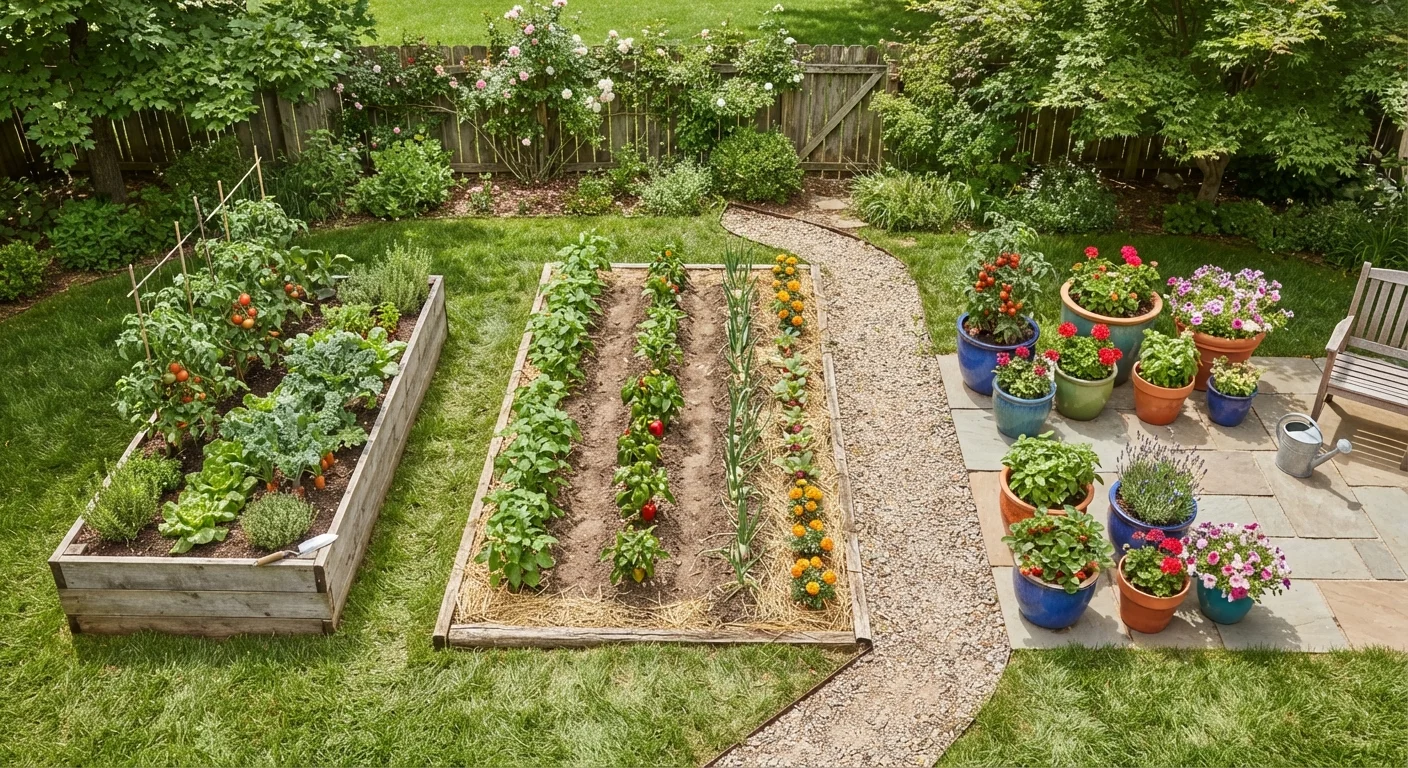
Key Takeaways
- Raised beds warm faster in spring and give you full control over soil quality.
- In-ground plots cost the least to set up and scale well for larger harvests.
- Containers are the most flexible option but require the most frequent watering.
- Your space, budget, and physical comfort should drive the choice - not trends.
- Most gardeners mix methods over time rather than committing to just one.
Our Verdict
No single growing method beats the others across every situation. Raised beds suit gardeners dealing with poor native soil or limited mobility. In-ground plots reward those with space and patience. Containers open gardening to anyone with a balcony or patio. Matching the method to your actual conditions - not an idealized plan - leads to better results with less frustration.
| Best for | Recommended |
|---|---|
| Gardeners with poor, compacted, or contaminated native soil | Raised Beds |
| Those wanting the lowest startup cost and maximum growing area | In-Ground Plots |
| Renters, apartment dwellers, or anyone with only paved outdoor space | Containers |
| Gardeners with physical limitations who need to minimize bending | Raised Beds |
Why the Setup You Choose Matters More Than You Think
The first decision most new gardeners face isn't what to grow - it's where and how to grow it. That structural choice shapes almost everything that follows: how much you water, how often you weed, how much you spend, and how hard your back works by the end of the season. If you're starting a vegetable garden from scratch, understanding the trade-offs between raised beds, in-ground plots, and containers gives you a far clearer starting point than simply copying what a neighbor does.
Each method is legitimate. Each has a real audience. The key is matching the approach to your actual yard, budget, and lifestyle - not just what looks appealing in a garden magazine.
| Raised Beds | In-Ground Plots | Containers | |
|---|---|---|---|
| Startup cost | Moderate to high | Low | Low to moderate |
| Soil control | Full control | Dependent on native soil | Full control |
| Watering frequency | Moderate | Lower - retains moisture longer | High - dries quickly |
| Weed pressure | Low | Moderate to high | Very low |
| Physical effort | Low (minimal bending) | High (digging, kneeling) | Low to moderate |
| Scalability | Moderate | High | Limited by pot count |
| Best for renters | Sometimes (portable frames) | No | Yes |
| Lifespan of setup | 5-15 years (wood beds) | Indefinite | Varies by pot material |
Raised Beds: Control at a Cost
Raised beds - framed structures filled with imported growing mix - let you sidestep whatever soil you've been dealt. If your yard has clay-heavy, rocky, or nutrient-poor ground, a raised bed starts you with a clean slate. Soil in a raised bed also warms faster in spring, which can extend your growing season by a few weeks in cooler climates.
The physical ergonomics are a genuine advantage. A bed built to 12-18 inches high significantly reduces the bending and kneeling that makes in-ground gardening painful for some people. Drainage tends to be better, and the defined borders make it easier to exclude weeds from the surrounding lawn.
The honest trade-off is upfront cost. Lumber, hardware cloth (often used as a bottom liner to deter burrowing pests), and quality fill mix all add up. A well-built 4×8-foot bed can cost anywhere from $50 to over $200 depending on material choices - before you've bought a single seed. Wood beds also degrade over time, and some materials require eventual replacement.
Size Your Raised Bed for Easy Reach
Keep raised beds no wider than 4 feet so you can comfortably reach the center from either side without stepping in. Stepping into the bed compacts the soil and undermines one of its main advantages. A length of 6-8 feet is manageable for most backyard setups and easy to cover with row fabric if needed.
In-Ground Plots: Low Cost, High Commitment
Breaking ground directly in your yard is the oldest and most economical way to garden. There's no frame to build, no fill mix to haul, and the native soil - once amended and cultivated - can sustain plants indefinitely. For larger growing areas, in-ground plots are almost always the most cost-efficient path.
The challenges are real, though. Native soil quality varies enormously. Clay soils drain poorly; sandy soils dry out fast; both may lack organic matter. Improving in-ground soil takes time and repeated additions of compost. Weeds are typically more persistent when there's no physical border separating the bed from surrounding ground. And in areas with contaminated soil - near older painted structures or former industrial land - growing edibles directly in the ground may not be appropriate without testing.
In-ground gardening also demands more physical effort during soil preparation, especially in the first year. For gardeners who want a large kitchen garden or are comfortable doing some seasonal maintenance, it remains the most scalable option. Pair it with solid foundational knowledge - like learning to read a seed packet - and you can stretch a modest budget quite far.
Containers: Flexibility With a Few Strings Attached
Containers - pots, planters, grow bags, window boxes - make gardening possible when ground space simply doesn't exist. A sunny balcony or patio can support a surprisingly productive herb garden, salad greens, cherry tomatoes, and even dwarf pepper plants. There's almost no barrier to entry: a few pots, quality potting mix, and adequate sun are all you need to start.
Portability is a real advantage. You can move plants to follow the sun, bring them indoors before a frost, or rearrange the layout entirely on a whim. For renters or anyone who can't permanently alter outdoor space, containers are often the only viable path. See our in-depth look at container gardening on a balcony or patio for a detailed breakdown of what grows well in limited spaces.
The main constraint is water. Containers dry out much faster than ground soil - sometimes requiring daily watering in hot weather. Root space is limited, which restricts what you can grow and how large it gets. Nutrients deplete quickly from potting mix, so regular feeding becomes more important than with ground-based methods. Over several seasons, potting mix also needs to be refreshed or replaced.
Don't Reuse Potting Mix Season After Season
Potting mix breaks down over time, losing its structure and nutrient content. Reusing the same mix for multiple seasons - especially for the same plant family - can also harbor disease pathogens and pests. Refresh or replace potting mix every one to two seasons, or blend old mix into an in-ground bed where it can still benefit soil structure.
Mixing Methods: How Most Gardeners Actually Garden
In practice, experienced gardeners rarely pick one method and stick to it exclusively. A common setup might include a single raised bed for vegetables that need excellent drainage, a patch of in-ground soil amended with compost for sprawling crops like squash or melons, and a few containers near the back door for fresh herbs and lettuces that get grabbed daily.
If you're weighing which plants suit which method, it also helps to think about plant relationships - our guide on companion planting basics is useful for planning what grows near what, regardless of the structure you choose. Similarly, if you're considering organic methods at home, understanding how each setup handles pest pressure and soil fertility will inform those decisions too.
Start with the constraints you actually have - space, budget, physical ability, time available - and let the method follow. A small, well-tended raised bed or a half-dozen productive containers will consistently outperform an ambitious in-ground plot that gets neglected by midsummer.
~35%
US households that grow food at home
National Gardening Association surveys consistently find roughly one-third of American households participate in food gardening.
6-8 hrs
Minimum daily sun most vegetables need
Most fruiting vegetables require at least 6 hours of direct sun regardless of the growing method used.