

Key Takeaways
- Compost is decomposed organic matter that improves soil structure, drainage, and fertility.
- Successful composting requires a balance of carbon-rich "browns" and nitrogen-rich "greens."
- Most household and yard waste can be composted; meat and dairy are best avoided in home bins.
- Finished compost feeds soil microbes and plants without the need for synthetic fertilizers.
- You don't need special equipment - a simple pile or basic bin is enough to get started.
Compost
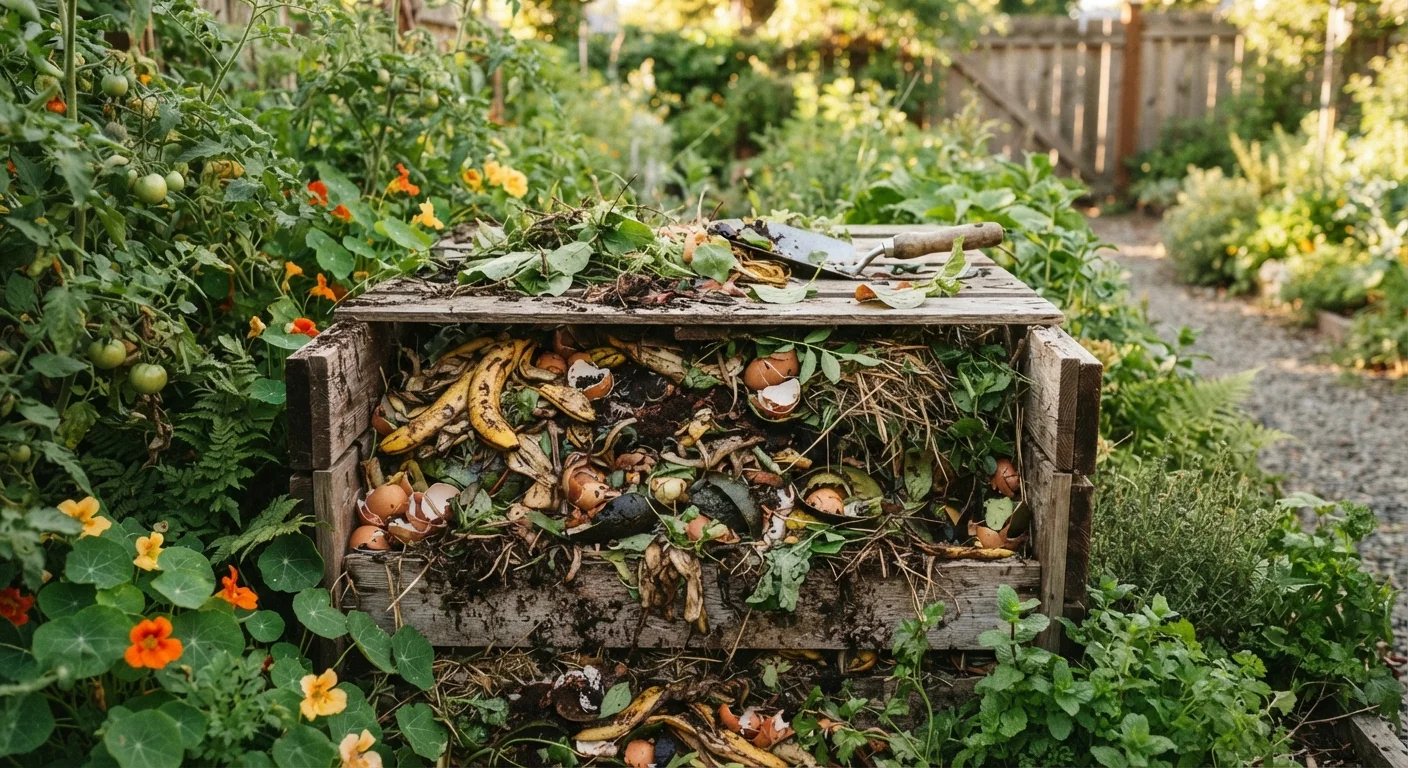
Compost is decomposed organic matter - things like vegetable scraps, dry leaves, and grass clippings - that has been broken down by microorganisms into a dark, crumbly, soil-like material. Gardeners mix it into garden beds or use it as a top dressing to improve soil health and feed plants naturally. It's one of the most effective and low-cost tools available to home gardeners.
The decomposition process is driven primarily by bacteria and fungi, which require a balance of carbon-rich ("brown") and nitrogen-rich ("green") materials, adequate moisture, and oxygen to work efficiently.
What Compost Actually Is
At its core, compost is nature's recycling system. Organic materials - fruit peels, coffee grounds, fallen leaves, lawn clippings - are broken down by bacteria, fungi, and small organisms like worms and beetles into a stable, nutrient-rich material that looks and smells like dark, crumbly earth.
That finished product is sometimes called "black gold" by gardeners, and for good reason. Mixed into garden beds, it improves nearly every measurable property of soil: structure, drainage, water retention, and biological activity. If you want to understand what's already underfoot in your garden, our Soil 101 guide explains how compost fits into the bigger picture of soil health.
Compost vs. Mulch: Not the Same Thing
Compost and mulch are often confused, but they serve different roles. Compost is incorporated into soil to improve its structure and feed microorganisms. Mulch - which includes wood chips, straw, or bark - is spread on top of soil mainly to retain moisture and suppress weeds. Some materials can function as both over time, but the two terms aren't interchangeable.
The Science Behind Decomposition
Composting works because of microbial activity. Billions of bacteria and fungi colonize your pile and consume organic material. As they digest it, they generate heat - a well-built compost pile can reach 130-160°F at its core, which also kills most weed seeds and pathogens.
For this process to work efficiently, microbes need four things: carbon, nitrogen, moisture, and oxygen. The classic rule of thumb is to combine roughly three parts "browns" (carbon-rich materials like dry leaves, cardboard, and straw) with one part "greens" (nitrogen-rich materials like vegetable scraps, grass clippings, or coffee grounds). Too many greens and the pile goes slimy and smells. Too many browns and decomposition stalls.
~30%
Household waste that could be composted
The U.S. EPA estimates that food and yard trimmings make up about 30% of what Americans throw away - all of which could be composted instead.
130-160°F
Temperature inside an active compost pile
A well-managed hot compost pile can reach these internal temperatures, which are high enough to kill most weed seeds and common pathogens.
Turning the pile every week or two introduces fresh oxygen, which accelerates breakdown. If you'd rather be hands-off, a passive pile still works - it just takes longer.
What to Add (and What to Skip)
Most kitchen and yard waste can go into a compost pile. Good candidates include vegetable and fruit scraps, eggshells, paper towels, dry leaves, grass clippings, tea bags, and plain cardboard torn into pieces.
A few materials are best kept out of home bins: meat, fish, dairy, oily foods, and pet waste can attract pests and introduce pathogens. Diseased plant material or weeds that have gone to seed may survive if your pile doesn't get hot enough and could cause problems later. These aren't hard-and-fast rules for every composting system, but they're reliable guidelines for backyard beginners.
Start Small and Build the Habit
You don't need a large setup to begin composting. A small countertop container for collecting kitchen scraps makes it easy to gather material throughout the week before adding it to an outdoor pile or bin. Starting with just vegetable peels and coffee grounds is enough to get a pile going and develop the habit gradually.
If you're curious how composting plays into a broader organic gardening approach, our look at the trade-offs of organic gardening offers a balanced perspective on what to expect.
How to Use Finished Compost
Finished compost is dark, crumbly, and smells like fresh earth - not like rotting food. Once it reaches that stage, you have several options for using it.
- Mix into garden beds: Work 2-4 inches of compost into the top 6-8 inches of soil before planting.
- Use as a top dressing: Spread a thin layer around existing plants to slowly improve the soil beneath.
- Add to containers or raised beds: Compost helps prevent the dense, compacted soil that can develop in confined growing spaces - a common concern covered in our comparison of raised beds, in-ground plots, and containers.
- Brew compost tea: Some gardeners steep finished compost in water to make a liquid amendment, though evidence for this method is mixed.
Compost won't transform overnight results, but used consistently, it builds the kind of biologically active, well-structured soil that supports healthy plants season after season. It also pairs naturally with practices like companion planting, where healthy soil gives every plant the foundation to perform its role.
“Healthy soil is the foundation of productive gardening, and compost is one of the most reliable ways to build it. No manufactured product fully replicates what a well-made compost does for soil biology.”
— Jeff Lowenfels, Garden author and co-author of 'Teaming with Microbes'