

Key Takeaways
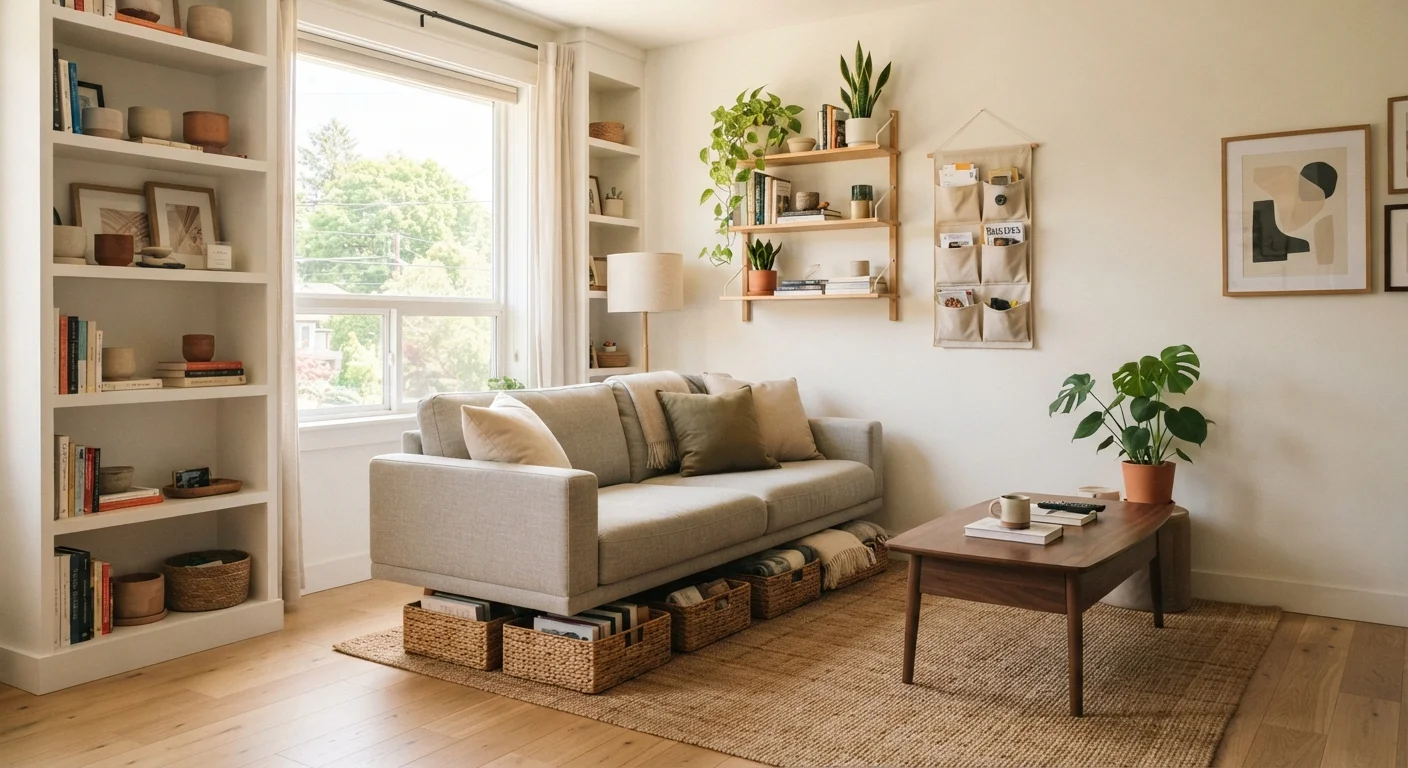
- Vertical space is consistently underused - shelving and wall hooks dramatically increase storage capacity.
- Furniture that doubles as storage (ottomans, bed frames, benches) is especially valuable in small apartments.
- Decluttering before organizing prevents you from simply relocating clutter to new containers.
- Consistent zones for categories like mail, shoes, and keys reduce daily disorder without complex systems.
- Small tweaks done room by room are more sustainable than a single overwhelming overhaul.
What you will need
Why Small-Space Storage Requires a Different Mindset
Standard storage advice - buy more bins, add a shelf - often falls flat in apartments where every square foot is spoken for. The real shift is thinking in three dimensions: floor area is just one layer of usable space. Walls, door backs, and the vertical height above furniture are all fair game.
It also helps to separate two tasks that often get conflated: decluttering and organizing. If you skip the first step, you end up creating elaborate systems for things you don't actually need. Before buying a single storage product, do a honest pass through each room. Our room-by-room decluttering walkthrough offers a structured way to work through each space without getting overwhelmed.
Once you're working only with the things you intend to keep, the storage puzzle becomes much more manageable - and far less expensive to solve.
Start Small, Stay Consistent
Tackling one drawer or one closet at a time is more effective than attempting a full apartment overhaul in a single day. Small wins build momentum and make it easier to maintain new habits. If you're new to intentional organizing, starting with the area that bothers you most each day yields the fastest sense of progress.
Step-by-Step: Building a Storage System That Sticks
The steps below are designed to be tackled one at a time - even across multiple weekends. You don't need to overhaul your entire apartment at once. Small, committed changes compound quickly.
What you will need
Audit What You Own Before You Organize
Walk through your apartment with a critical eye and sort items into three groups: keep, donate/discard, and relocate. Be honest about frequency of use. If something hasn't been touched in a year and doesn't hold genuine sentimental value, it's consuming space that could serve you better.
Map Your Vertical Space
Stand in each room and look up. Most apartments have 8-9 feet of ceiling height but storage that stops at 5 feet. Identify wall sections where floating shelves could hold books, folded linens, or decorative storage boxes. Note door backs - over-the-door organizers require no tools and add significant storage in kitchens, bathrooms, and closets.
Choose Furniture That Earns Double Duty
In a small apartment, every large piece of furniture should justify its footprint by offering storage. Ottomans with interior compartments, bed frames with built-in drawers, and dining benches with lift-up seats are practical choices. When replacing or adding furniture, evaluate storage capacity alongside aesthetics and size.
Create Dedicated Zones for High-Traffic Categories
Identify the categories that cause the most daily clutter: shoes, bags, charging cables, mail, cleaning supplies. Assign each a fixed home - a specific drawer, basket, or hook. The zone doesn't need to be large; it just needs to be consistent. When everything has a defined spot, putting things away becomes automatic rather than a decision.
Maintain the System with a Weekly Reset
Organizational systems drift over time without a maintenance habit. Set aside 10-15 minutes once a week to return displaced items to their zones, clear any surfaces that have accumulated clutter, and assess whether your storage is still working for how you actually live. Adjust zones as your needs change - a good system evolves rather than breaking down.
Troubleshooting Common Small-Space Challenges
Even after setting up intentional storage zones, a few recurring problems tend to trip people up in compact living spaces.
The Entryway Bottleneck
In apartments without a proper foyer, the front door area becomes a dumping ground. A narrow wall-mounted shelf with hooks beneath it - installed at eye level - handles mail, keys, and bags without consuming floor space. A small shoe rack or a storage bench keeps footwear from spreading. Consistency matters more than the specific solution: every item needs a designated landing spot.
Kitchen Counter Creep
Counter space is precious, yet appliances and miscellaneous items slowly colonize it. Keep only what you use multiple times a week on the counter. Everything else earns a cabinet spot or gets donated. Magnetic knife strips and wall-mounted spice racks reclaim drawer and counter space instantly.
Closets That Can't Keep Up
Most apartment closets are designed with a single rod and one shelf - an arrangement that wastes the majority of the vertical space inside. Adding a second hanging rod below the first doubles hanging capacity for shirts and folded pants. Shelf risers, hanging organizers, and over-the-door pockets can multiply what a small closet holds without any permanent modification.
If your living situation feels constrained in every direction, it's worth considering whether some items belong in dedicated utility storage. Our guide to organizing garages, attics, and basements addresses how to handle overflow that doesn't need to live in your main living area.
Check Your Lease Before Drilling
Many rental agreements restrict or prohibit wall holes, anchors, or modifications that require patching on move-out. Before installing shelves or hooks, review your lease and consider renter-friendly alternatives like adhesive strips, tension rods, or freestanding shelving units. Unauthorized modifications can result in deductions from your security deposit.