

Key Takeaways
- Smart home ecosystems are built around specific platforms like Alexa, Google Home, or Apple HomeKit.
- Devices from different ecosystems often can't communicate without a compatible hub or bridge.
- Checking ecosystem compatibility before purchasing a device can prevent frustrating setup problems.
- The Matter standard is a newer cross-platform effort, but not all devices support it yet.
- Sticking to one primary ecosystem is often the simplest strategy for most households.
Smart Home Ecosystem
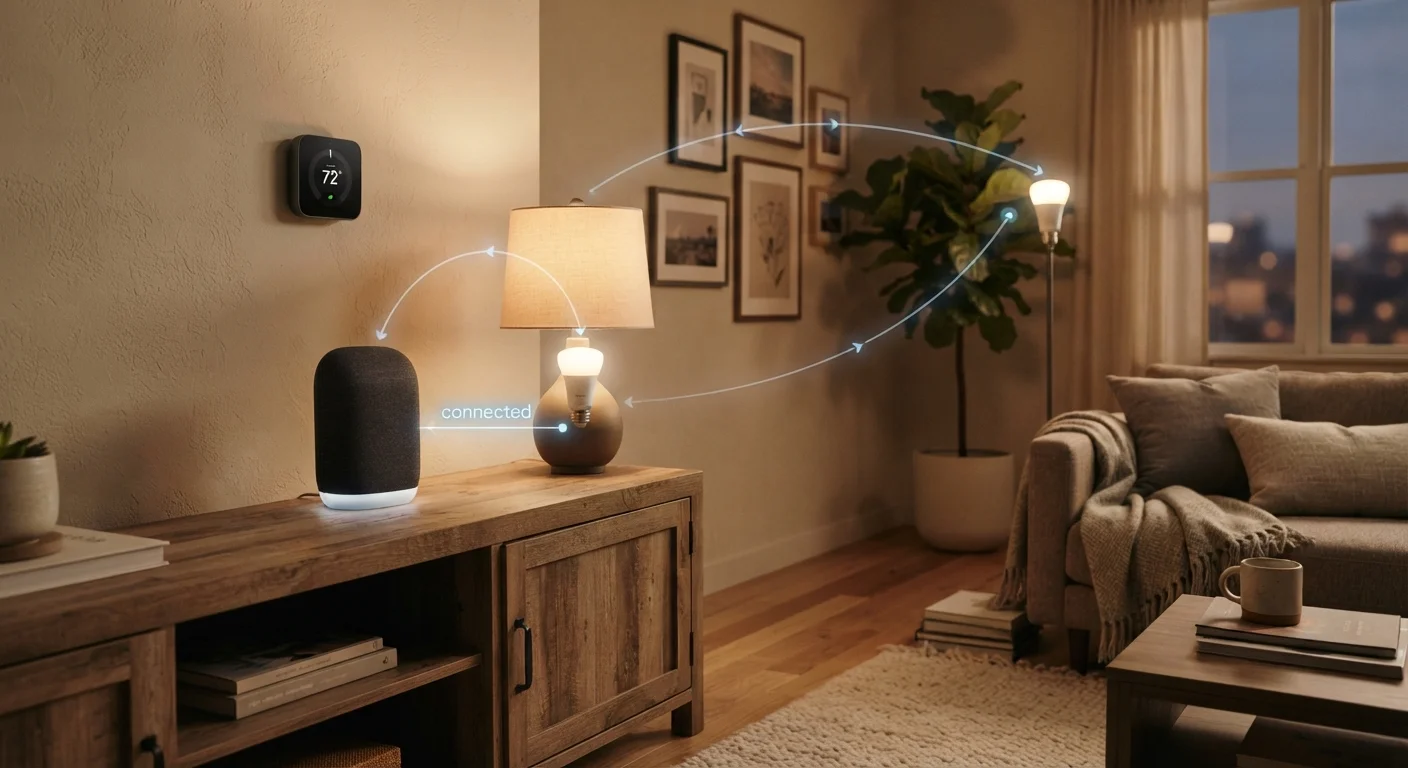
A smart home ecosystem is a family of connected devices that are designed to communicate with each other through a shared platform or app - such as Amazon Alexa, Google Home, or Apple HomeKit. Devices within the same ecosystem work together smoothly, while devices from different ecosystems may not connect at all without extra setup. Think of it like a language: devices in the same ecosystem speak the same language, while devices from different ones often don't.
Ecosystems typically use proprietary communication protocols or cloud services to manage device interactions. The Matter standard, introduced in recent years, aims to create cross-ecosystem compatibility, though adoption across manufacturers remains uneven.
What Makes Devices 'Smart' - and Why It Gets Complicated
Smart home devices - from thermostats to light bulbs to door locks - earn the "smart" label by connecting to the internet and responding to remote commands. But connectivity alone isn't enough to make devices work together. Each device also needs to share a common platform, protocol, or app with the others in your home.
This is where ecosystems come in. When a company like Amazon, Google, or Apple builds a smart home platform, they create a set of rules that defines how devices communicate, respond to voice commands, and show up in an app. Manufacturers who want their products to work within that platform have to build their devices accordingly.
If you're newer to connected devices, the foundational guide to modern gadgets is a helpful place to start before diving deeper into smart home setups.
Ecosystem vs. Protocol: Two Different Things
Ecosystems (like Alexa or Google Home) are the platforms and apps that manage your devices. Protocols (like Zigbee or Wi-Fi) are the wireless technologies those devices use to communicate. A device can be compatible with an ecosystem but still require a hub if it uses a protocol your router doesn't support directly. Both factors matter when assessing compatibility.
The Big Three Ecosystems Explained
Most smart home devices in the US market are built to work with one or more of three major platforms:
- Amazon Alexa: Voice-first and broadly compatible with third-party devices. Managed through the Alexa app, with Amazon Echo speakers as the typical hub.
- Google Home: Tightly integrated with Android devices and Google services. Works through the Google Home app and Google Nest speakers.
- Apple HomeKit: Designed for Apple device users, with strong privacy controls. Managed through the Home app on iPhone, iPad, or Mac.
Each platform uses its own communication framework, which is why a device certified for one platform won't automatically work with another - even if both devices sit on the same Wi-Fi network.
3+
Major competing smart home platforms in the US
Amazon Alexa, Google Home, and Apple HomeKit each maintain separate device certification programs and app ecosystems.
200+
Companies participating in Matter standard development
The Connectivity Standards Alliance, which oversees Matter, lists over 200 member companies involved in developing the cross-platform standard.
Protocols: The Language Devices Speak
Beyond platforms, smart home devices also use different wireless communication protocols - the underlying technology that carries signals between devices. The most common ones are:
- Wi-Fi: Direct internet connection; easy to set up but can strain a crowded network.
- Zigbee and Z-Wave: Low-power mesh networks common in lighting and sensors; typically require a hub.
- Bluetooth: Short-range, often used for initial setup or device control without internet.
- Thread: A newer mesh protocol designed for reliability at low power; often paired with the Matter standard.
If two devices use incompatible protocols, they simply can't talk to each other - regardless of what ecosystem they belong to. This is one reason why researching a device's specs before buying matters.
Check the Box Before You Buy
Device packaging typically lists compatible ecosystems using official badges - look for phrases like "Works with Google Home" or "Works with Alexa." If you can't find compatibility information on the box or in the product listing, it's worth checking the manufacturer's website before purchasing. A few minutes of research upfront can prevent a frustrating return later. See how to set up a new device without the headaches for more setup guidance.
Planning a Cohesive Smart Home Setup
The most practical approach for most households is to pick one primary ecosystem and buy devices certified for it. Before adding a new device, check its packaging or product listing for ecosystem compatibility - phrases like "Works with Alexa" or "HomeKit-enabled" indicate certification.
For those who already own devices across multiple platforms, a few options exist: some smart hubs act as bridges, translating signals between ecosystems. The Matter standard, backed by major tech companies, is another route - devices that support Matter can work across Alexa, Google Home, and HomeKit without additional hardware. Adoption is growing, but it's worth verifying that a specific device lists Matter support before assuming compatibility.
If you're just getting started with smart devices, the beginner's guide to smart home devices walks through which devices to set up first and common early pitfalls to avoid. And when you're ready to configure a specific device, the guide to setting up a smart speaker offers a straightforward walkthrough.