

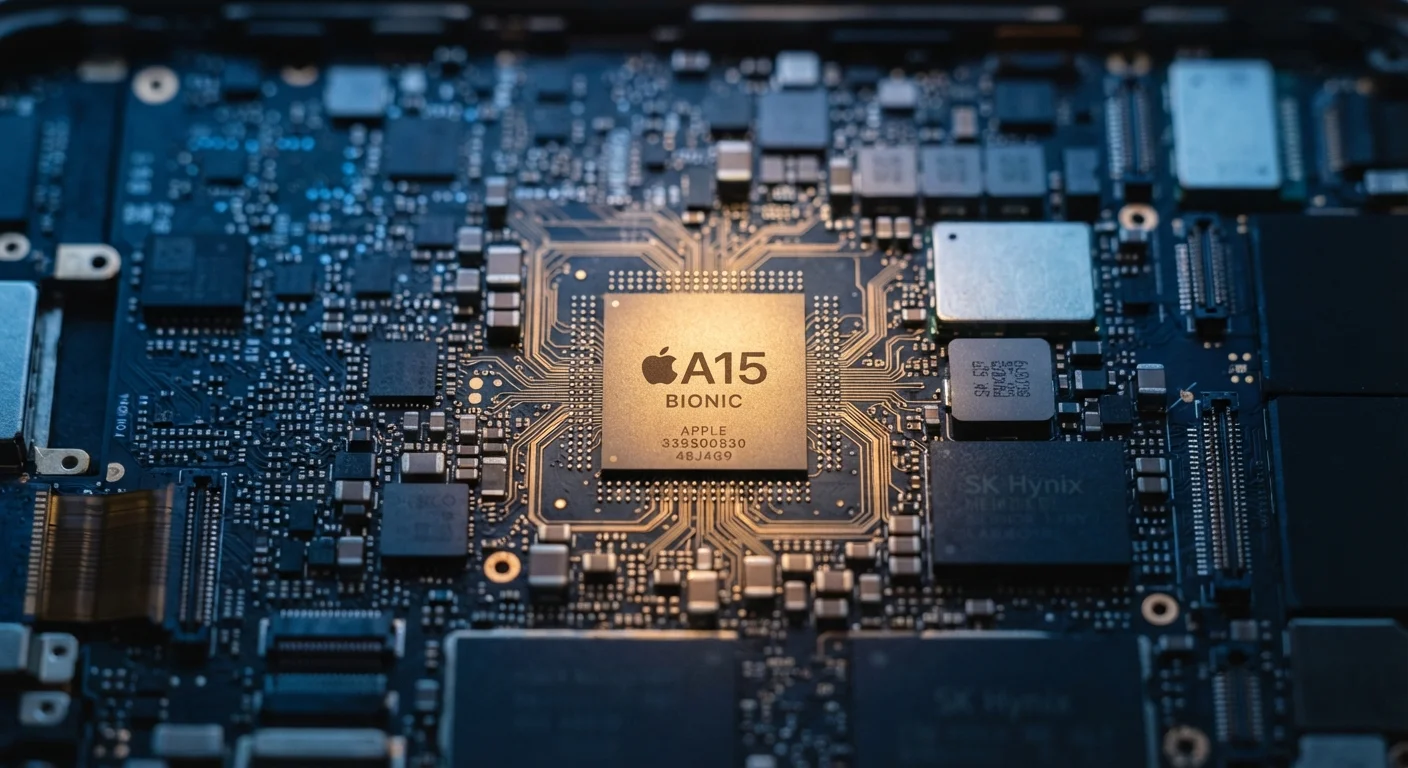
Key Takeaways
- Your phone's processor controls far more than just running apps - it manages graphics, connectivity, security, and camera processing.
- A mobile SoC combines multiple specialized engines on one chip, which is why it affects battery life as well as speed.
- Processor generation matters more than raw clock speed when evaluating real-world phone performance.
- Software updates interact directly with the processor, affecting how efficiently it handles tasks over time.
- Understanding your processor helps you make smarter decisions when choosing or upgrading a phone.
Mobile Processor (SoC)
A mobile processor - formally called a System on a Chip, or SoC - is the central computing component inside your smartphone. It handles everything from running apps and processing photos to managing wireless connections and security. Think of it as the brain and nervous system of your device, coordinating dozens of functions simultaneously.
Unlike a desktop CPU, a mobile SoC integrates the main processor cores, graphics unit, modem, and other specialized engines onto a single piece of silicon to maximize efficiency and minimize physical space.
More Than Speed: What the Processor Actually Manages
When people talk about a phone's processor, the conversation usually stalls at "faster" or "more powerful." But processor speed is really the least interesting part of what an SoC does. The chip is responsible for an enormous range of simultaneous tasks that most users never think about.
At any given moment, your processor is:
- Running the operating system - every tap, swipe, and notification goes through processor logic.
- Rendering graphics - the integrated GPU (graphics processing unit) inside the SoC draws every pixel on your screen.
- Managing wireless radios - the integrated modem controls your cellular, Wi-Fi, and Bluetooth connections. What your 5G connection actually delivers depends partly on which modem generation is built into your chip.
- Powering the camera - a dedicated image signal processor (ISP) handles noise reduction, HDR merging, and computational photography in real time.
- Securing the device - a secure enclave manages biometric data, encryption keys, and payment authentication.
All of these functions run on specialized sub-units within the same chip, which is why chip design matters so much beyond the headline clock speed.
8-12
Processor cores in a typical flagship SoC
Most modern high-end mobile chips contain between 8 and 12 cores split between performance and efficiency clusters, according to chipmaker technical documentation.
3-5 yrs
Typical useful lifespan of a mobile processor
Most mobile SoCs comfortably handle mainstream apps and OS updates for three to five years before hardware limitations become a practical constraint for everyday users.
~30%
Power efficiency gain per chip generation (approximate)
Chip manufacturers have historically reported efficiency improvements of roughly 20-35% per generation through advances in manufacturing process nodes.
How Processor Cores and Efficiency Work Together
Modern mobile SoCs use a multi-core design, meaning the chip contains several processor cores that can divide work among themselves. Most chips organize these into performance cores and efficiency cores - a concept sometimes marketed under terms like "big.LITTLE" architecture.
Performance cores handle demanding tasks: loading a complex webpage, processing a burst of photos, or running a graphics-heavy game. They work fast but consume more power. Efficiency cores handle lighter tasks in the background - checking email, syncing calendars, playing a podcast - while using far less battery.
The operating system decides in real time which cores handle each task. This is why a phone can simultaneously stream music, receive notifications, and maintain a secure Wi-Fi connection without draining the battery as fast as you might expect.
Check Core Architecture, Not Just Core Count
When comparing processors, look for whether the chip uses a heterogeneous (mixed) core design rather than simply counting cores. A chip with eight efficiency-focused cores may drain battery faster under demanding tasks than a chip with four performance cores and four efficiency cores designed to share the load appropriately.
This architecture also explains why phones sometimes feel slower over time - as apps grow more demanding, efficiency cores that once handled them easily get pushed toward the performance cores, increasing power draw and heat.
The Processor's Role in Camera Quality and Security
Two areas where the SoC's influence is most underappreciated are photography and device security.
The image signal processor inside your SoC does the computational heavy lifting behind every photo. When you take a portrait shot with a blurred background, or a night photo with reduced grain, that result comes from algorithms running on the ISP - not just the camera lens or sensor. Camera specs like megapixels tell only part of the story; the ISP is often what separates a good photo from a great one.
On the security side, the SoC contains an isolated secure enclave - a protected zone the main processor cannot directly access. Your fingerprint templates, Face ID data, and mobile payment credentials live here, encrypted and separated from the rest of the system. Even if malware compromised your phone's software, this hardware-level isolation is designed to keep your biometric and payment data out of reach.
Why Processor Generation Matters When Upgrading
When you're weighing a new phone, processor generation is worth paying attention to - arguably more than the number of cores or raw clock speed. Each new chip generation typically brings:
- Better power efficiency, translating to longer battery life at the same workload
- Improved ISP capabilities, meaning better photos and video
- Support for newer wireless standards and security features
- Longer software support windows, since older chips eventually stop receiving OS updates
Before upgrading your phone, checking the processor generation - not just the model year - gives you a clearer picture of how long the device will remain capable. It's also worth remembering that software updates interact directly with the processor, sometimes improving efficiency or patching chip-level security vulnerabilities.
For a deeper look at how the processor works alongside storage and memory, see our explanation of RAM vs. internal storage - understanding both helps you evaluate a phone's full performance picture.
Processor Names Can Be Confusing
Mobile chip naming conventions vary by manufacturer and don't always follow a simple numerical hierarchy. A higher model number doesn't always mean a newer generation. When researching a phone's processor, it helps to look up the chip's release year and manufacturing process node rather than relying on the product name alone.