

Key Takeaways
- At 60 mph, a car travels 88 feet per second - leaving almost no margin when following too closely.
- The average driver takes 1.5 seconds to perceive a hazard and begin braking, before the vehicle even slows.
- Rear-end crashes are among the most frequently occurring collision types on U.S. roads.
- The two-second rule is the minimum; poor weather, fatigue, or heavy loads demand more space.
- Tailgating is a contributing factor in a large share of crashes caused by distracted or aggressive driving.
Tailgating
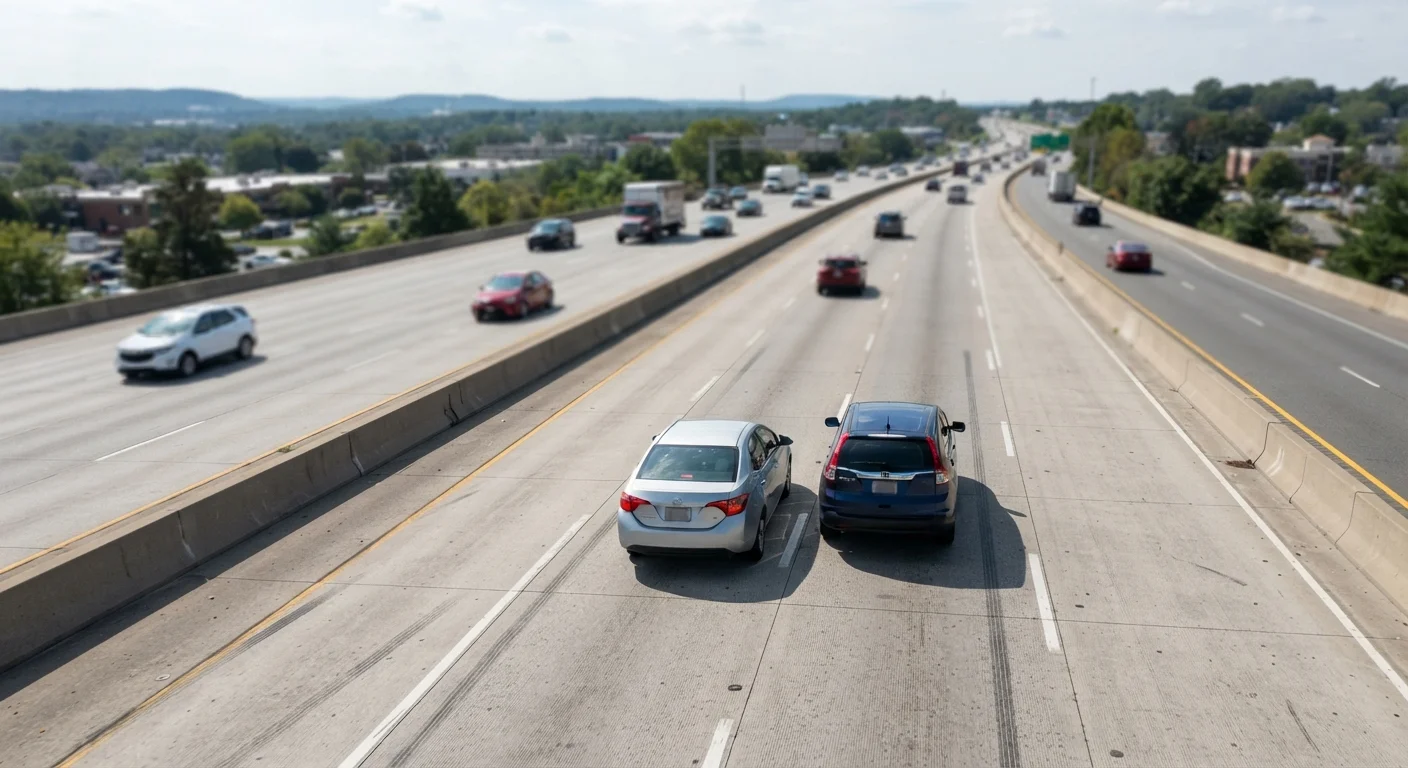
Tailgating - also called following too closely - means driving behind another vehicle without leaving enough space to stop safely if that vehicle brakes suddenly. It is one of the most common contributing factors to rear-end collisions. The problem isn't just the distance itself; it's the near-zero reaction window that short gap creates.
Traffic engineers define adequate following distance using the 'two-second rule' under ideal conditions, extending to four or more seconds in wet, icy, or reduced-visibility conditions - accounting for perception time, reaction time, and mechanical braking distance.
The Physics Most Drivers Underestimate
At 60 mph, your vehicle covers 88 feet every single second. That number alone reframes what 'following distance' means in practice. If the driver ahead brakes hard without warning, here's what has to happen before your car slows at all: you must see the brake lights, register them as a threat, move your foot to the pedal, and apply pressure - a sequence that averages about 1.5 seconds for an alert driver under normal conditions. That's 132 feet traveled before deceleration even begins.
Add the actual braking distance - another 100 to 200 feet depending on speed, tire condition, and road surface - and you need well over 200 feet of clear space at highway speeds to avoid a collision after a sudden stop. Most tailgating drivers have nowhere near that buffer.
88 ft/sec
Distance covered per second at 60 mph
Basic physics calculation illustrating why small gaps disappear almost instantly at highway speeds.
~1.5 sec
Average driver perception-reaction time
Widely cited in traffic engineering and driver education literature as the baseline for alert, undistracted drivers.
200+ ft
Typical total stopping distance at 60 mph
Combines average perception-reaction distance and mechanical braking distance on dry pavement for a passenger vehicle.
Wet roads, worn tires, or a load in the trunk extend stopping distance further. This is why road and weather conditions should always inform your actual following distance, not just the posted speed limit.
What the Crash Data Shows
Rear-end collisions consistently rank among the most common crash types reported by the National Highway Traffic Safety Administration (NHTSA). A substantial proportion involve following too closely as a contributing factor - often combined with distraction or inattention. The driver behind is almost always found at fault, because maintaining a safe gap is a legal responsibility in every U.S. state.
Injuries in rear-end crashes range from whiplash and soft-tissue damage to traumatic brain injury, depending on impact speed. Even crashes at relatively low urban speeds can result in costly vehicle damage and injury claims. The human and financial toll makes tailgating far more consequential than most drivers assume in the moment.
“The single most important thing a driver can do to reduce rear-end crash risk is to manage space - space ahead, space to the sides, and space behind. Distance buys time, and time is everything when something goes wrong.”
— NHTSA Driver Safety Guidance, National Highway Traffic Safety Administration, general public driver education resources
For context on how risk differs by road type, see how accident risks compare between highway and city street driving.
How to Use the Two-Second Rule (and When to Extend It)
The two-second rule is the standard minimum taught in driver education: choose a fixed marker ahead, and when the car in front passes it, count 'one-thousand-one, one-thousand-two.' Your front bumper should not reach that marker before you finish counting. If it does, ease off the accelerator and increase your gap.
Practice the Two-Second Count Every Drive
Make the two-second check a habit on every trip, not just on highways. Pick a signpost, shadow, or lane marking each time traffic flows freely and count after the car ahead passes it. This repeated practice recalibrates your instinctive sense of safe distance across different speed ranges.
Two seconds is explicitly a minimum for dry roads, good visibility, and alert drivers. Here's when to extend it significantly:
- Rain or wet roads: Double your gap to at least four seconds. Stopping distances increase sharply on slick surfaces.
- Fog or night driving: Increase your following distance and reduce speed. Night conditions reduce reaction time and depth perception in ways that compound tailgating risk.
- Towing or carrying heavy loads: A loaded vehicle takes considerably longer to stop. Add extra buffer accordingly.
- Following large trucks or motorcycles: Trucks block your sightlines; motorcycles can stop faster than cars. Both situations call for more space.
Maintaining a consistent following gap also benefits the drivers around you - it reduces abrupt braking and helps prevent the chain-reaction slowdowns that cause highway congestion.
Addressing Aggressive and Habitual Tailgating
Not all tailgating is aggressive - much of it is unconscious habit. Drivers often drift closer without realizing it, especially in stop-and-go traffic or when trying to keep up with the flow. But some tailgating is intentional: a form of pressure applied to a slower vehicle ahead. Both types carry the same physical risk.
If you're being tailgated, avoid sudden braking. Maintain a steady speed and, when safe, move to a different lane to let the following driver pass. Escalating the situation rarely ends well and can introduce additional hazards for everyone nearby.
For drivers working to build better habits, the key is building a mental model of stopping distance at speed. Once you internalize what 200-plus feet looks like at 60 mph - roughly 13 car lengths - the instinct to close that gap feels far less appealing.
This article is for general informational purposes. Always follow the traffic laws applicable in your state and consult official driving resources for guidance specific to your licensing jurisdiction.