

Key Takeaways
- Zoning divides your kitchen into functional areas so everything has a logical home.
- Store items based on how often you use them, not just what seems tidy.
- Pantry organization works best when it follows consistent categories and visibility rules.
- Maintenance habits matter more than the initial setup for lasting kitchen order.
- You don't need to buy new containers or do a full renovation to get organized.
Start here
Why Kitchen Organization Feels Overwhelming (And How to Start)
Core concept
Zoning: Dividing Your Kitchen by Function
Apply it
Frequency-Based Storage: What Goes Where
Go deeper
Pantry Logic: Organizing Food Storage That Actually Holds
Long term
Making It Stick: Simple Habits to Maintain Order
Why Kitchen Organization Feels Overwhelming (And How to Start)
The kitchen accumulates more categories of stuff than almost any other room in the house - food, tools, appliances, cleaning supplies, linens, and the odds and ends that seem to migrate in from everywhere else. That variety is what makes kitchen organization feel daunting when you're starting from zero.
The good news: you don't need a renovation, a label maker, or matching containers to build a functional kitchen. You need a framework. The three core principles covered in this guide - zoning, frequency-based storage, and pantry logic - give you a reliable structure that works in any kitchen, large or small.
If you're new to organizational terminology, it helps to get familiar with the vocabulary first. Our home organization glossary explains common concepts like zoning, decanting, and category grouping in plain language.
Zoning
Dividing a space into areas based on the activities that happen there, so related items are stored close to where they're used.
Frequency-based storage
Placing items in storage spots based on how often you use them - daily-use items in easy reach, occasional-use items further away.
Decanting
Transferring food or other items from their original packaging into clear, uniform containers to improve visibility and consistency.
Category grouping
Storing items together because they belong to the same type or purpose, such as keeping all baking supplies in one cabinet.
Pantry audit
A periodic review of pantry contents to check expiration dates, remove unused items, and adjust the organizational system as needed.
Zoning: Dividing Your Kitchen by Function
Zoning means assigning areas of your kitchen to specific tasks and storing only what supports that task nearby. Most kitchens naturally support four zones:
- Prep zone: The counter space where you chop, mix, and measure. Keep cutting boards, knives, measuring cups, and mixing bowls here.
- Cooking zone: Around the stove and oven. This is where pots, pans, spatulas, and cooking oils belong.
- Cleaning zone: Near the sink. Dish soap, sponges, drying racks, and cleaning sprays stay here.
- Storage zone: Pantry, cabinets, and the refrigerator. Food and infrequently used items live here.
You may not be able to place zones exactly where you'd like - kitchens don't always cooperate. The goal is to get as close as possible so that each task has a logical home nearby.
Map Your Kitchen Before Moving Anything
Before rearranging a single drawer, walk through a full meal prep mentally and note where you naturally reach. That instinct often reveals your kitchen's most logical zone layout. Working with your natural movement patterns rather than against them makes any system far easier to maintain.
Frequency-Based Storage: What Goes Where
Once your zones are defined, frequency of use determines exactly where within each zone an item goes. The principle is simple: the more often you use something, the easier it should be to reach.
- Daily use: Store at eye level or on the counter. Coffee mugs, a frequently used skillet, the cutting board you reach for every morning.
- Weekly use: Store at waist or shoulder height inside cabinets. Baking sheets, a pasta pot, serving spoons.
- Occasional use: High shelves, back of cabinets, or a dedicated storage area. Specialty appliances, holiday dishes, seldom-used gadgets.
A common mistake is organizing by appearance - grouping items because they look good together - rather than by use. That approach creates a tidy kitchen that's frustrating to cook in. Frequency-based storage creates a kitchen that functions well every day, even if it's not perfectly Instagram-ready.
Avoid Organizing for Aesthetics Alone
It's tempting to arrange things so the kitchen looks pulled-together, but a visually tidy space that doesn't match how you cook will fall apart quickly. Prioritize function first - if the system fits your real habits, the tidiness tends to follow naturally.
Pantry Logic: Organizing Food Storage That Actually Holds
The pantry - whether it's a dedicated closet, a set of cabinets, or a few shelves - follows its own organizational logic. Three rules tend to make pantry systems last:
- Group by category, not by size. Canned goods together, grains together, snacks together. Sorting by container size wastes mental energy every time you cook.
- Keep visibility high. Items pushed to the back get forgotten and eventually expire. Use shelf risers to stagger canned goods, or place newer stock behind older stock so you use what you have in order.
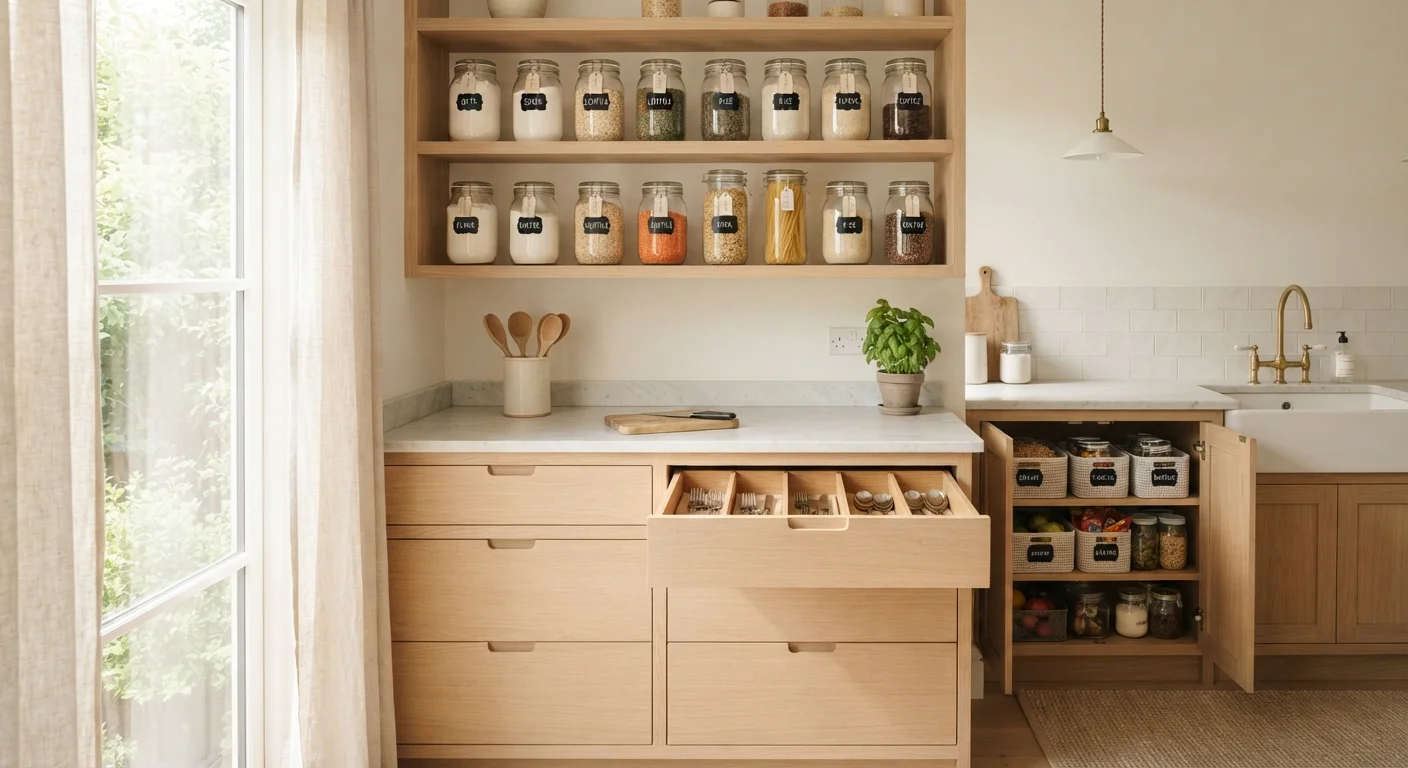
- Decant selectively. Transferring dry goods like pasta, rice, or oats into clear containers improves visibility and keeps things fresh - but only do it for items you buy and use regularly. Decanting everything is time-consuming and not always worth it.
For those who also grow their own produce, pantry logic extends naturally to how you store fresh harvests. Our guide on starting a vegetable garden from scratch covers what to expect when you have seasonal produce to store and use.
Making It Stick: Simple Habits to Maintain Order
The setup is only half the work. A kitchen organization system lasts only if the habits around it are sustainable. A few low-effort routines make a real difference:
- One-in, one-out: When a new tool or appliance comes in, something that's rarely used goes out. This keeps cabinets from silently filling up over time.
- Reset at the end of the day: A five-minute tidy - returning stray items to their zones - prevents small disorder from compounding into a bigger problem.
- Pantry audit every season: Check expiration dates, remove items that no longer fit your household's habits, and adjust categories as needed.
Organization is not a one-time event. Kitchens evolve as household needs change, and your system should evolve with them. If a drawer keeps getting messy, that's feedback - not failure. It usually means the system doesn't match how you actually cook, and a small adjustment will fix it.
For those ready to take on other areas of the home, the same zoning and frequency principles apply in challenging spaces. Our guide on organizing garages, attics, and basements shows how these ideas scale to larger, less structured areas.