

Key Takeaways
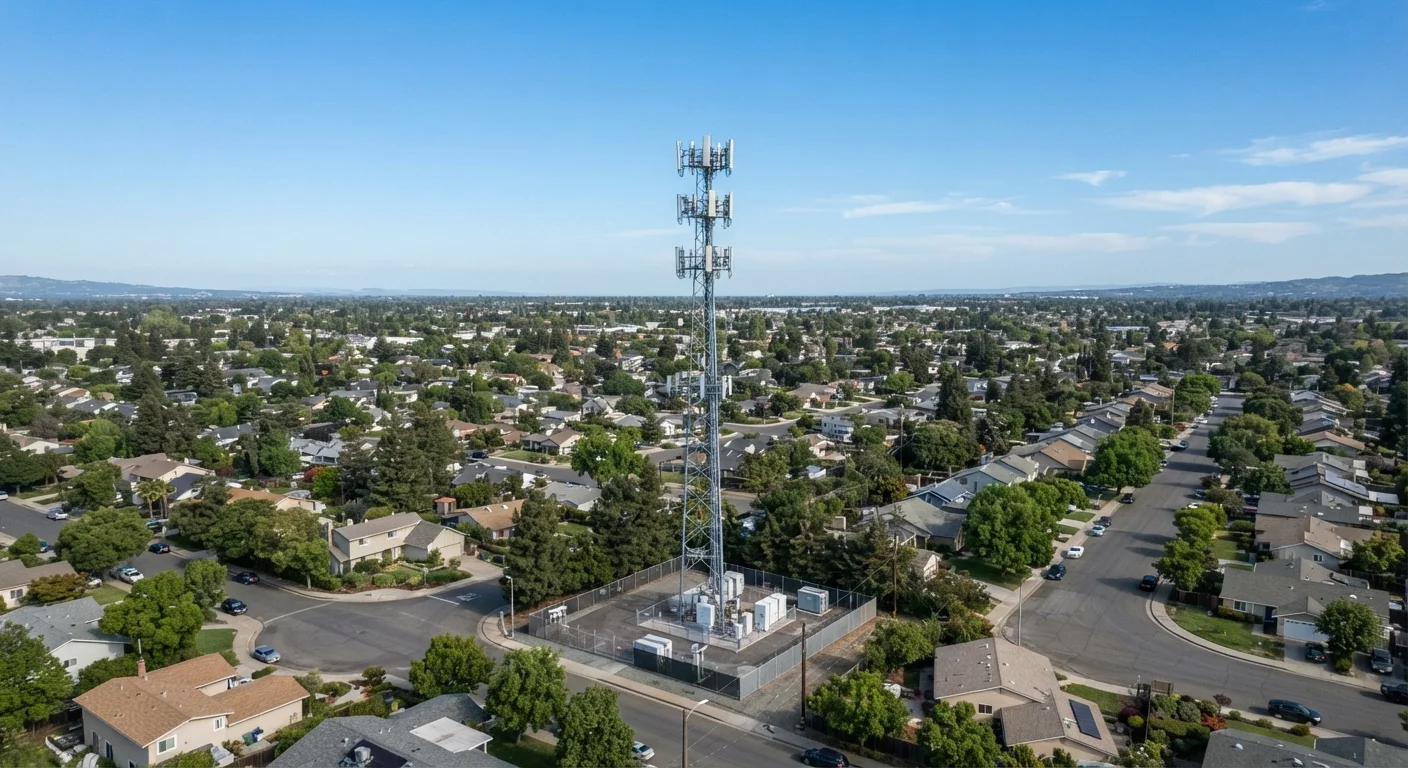
- MVNOs use the same physical towers as major carriers but sell service under their own brand at lower prices.
- Lower cost is possible because MVNOs buy wholesale network access and have minimal infrastructure overhead.
- During network congestion, MVNO customers may experience slower speeds than the host carrier's own subscribers.
- Most MVNOs offer prepaid, no-contract plans, giving users more flexibility than traditional postpaid options.
- An unlocked phone is generally required to switch to an MVNO freely.
- MVNOs suit light-to-moderate users who prioritize price over premium perks like priority data or premium customer support.
MVNO (Mobile Virtual Network Operator)
An MVNO is a wireless carrier that sells phone service under its own brand but doesn't own any cell towers or radio spectrum. Instead, it pays one of the major network operators - such as a national carrier - to use their existing infrastructure. From a technical standpoint, your calls and data travel over the same towers as customers on the host network.
MVNOs purchase wholesale network access and are subject to the host carrier's terms, which can include data deprioritization thresholds and feature restrictions negotiated at the contract level.
What Makes an MVNO Different from a Regular Carrier
When most people think of phone carriers, they picture the handful of large national operators that built and maintain the physical networks - cell towers, fiber connections, radio spectrum licenses. These are called MNOs, or Mobile Network Operators.
An MVNO sits one layer above that infrastructure. It negotiates a wholesale agreement with an MNO to buy blocks of network capacity, then resells that capacity to consumers under its own name, branding, and pricing structure. The MVNO handles billing, customer service, and plan design; the MNO supplies the actual signal.
Think of it like a store-brand product at a grocery chain. The manufacturing plant (the MNO) produces the goods; the store (the MVNO) packages and sells them at its own price point. The underlying product travels through the same pipeline.
Deprioritization Is Not the Same as Throttling
Deprioritization only affects your speeds when a tower is actively congested - during normal conditions, MVNO customers experience speeds comparable to the host carrier. Throttling, by contrast, is a hard speed cap applied regardless of network load. Some MVNO plans do include a throttle after a data cap is reached, so it's worth reading the plan terms carefully to understand which applies.
Because MVNOs don't build towers, their coverage maps mirror whichever host network they've contracted with. Before signing up, it's worth identifying which major carrier powers your MVNO of interest and comparing that carrier's coverage in the areas where you use your phone most.
Why the Price Is Lower - and What That Costs You
The economics are straightforward: MVNOs carry none of the capital expense of building a nationwide network. No tower construction, no spectrum auction bids, no maintenance crews. That dramatically lowers their operating costs, and they can price plans below what the host carrier charges its own retail customers.
But the savings come with trade-offs worth understanding:
- Data deprioritization: When a cell tower is congested, host carrier subscribers typically get priority. MVNO customers may notice slower speeds during peak hours in busy areas. For casual browsing and streaming, this is often imperceptible - but heavy data users in dense cities may feel it.
- Fewer premium perks: Many MVNOs don't include features like international roaming, hotspot tethering, or streaming service bundles that postpaid plans from major carriers bundle in.
- Leaner support: Most MVNOs operate online-first models with limited physical retail presence, which can make in-person troubleshooting harder.
60+
Active MVNOs operating in the US
The US MVNO market includes dozens of providers, each running on one or more of the major national carrier networks.
~40%
Potential monthly savings vs. postpaid plans
Industry analysts note that MVNO plans frequently cost significantly less than equivalent postpaid options from host carriers, though actual savings vary by plan and usage.
For many users - especially those with moderate data needs and reliable Wi-Fi at home - these trade-offs are entirely acceptable given the monthly savings. Understanding your own usage patterns is the key to knowing whether a lower-tier plan will actually serve you.
Who MVNOs Are Best Suited For
MVNOs aren't ideal for everyone, but they're a strong fit for a wide range of users. Consider whether you match any of these profiles:
- Budget-conscious users who want reliable coverage without paying for features they don't use.
- Light data users who rely primarily on Wi-Fi and only need cellular for calls, texts, and occasional browsing.
- Travelers who want a domestic SIM on a major network's coverage without a long-term contract obligation.
- People testing a new carrier before committing to a postpaid plan - most MVNOs are prepaid and month-to-month, so there's no long-term risk.
If you're considering an MVNO, pairing it with an unlocked phone gives you the most flexibility. Learn what unlocked and carrier-locked phones mean and why it matters when switching carriers.
It's also worth understanding the plan structure itself. Most MVNO plans are prepaid, which has distinct advantages and limitations compared to postpaid contracts. Compare prepaid and postpaid plan structures to see which model fits your life better.
Check Coverage Before You Commit
Since your MVNO will use a specific major carrier's network, look up that host carrier's official coverage map and test it against the areas where you spend the most time. Many MVNOs also offer short trial periods or low-cost starter SIMs - using one before fully porting your number is a low-risk way to verify real-world performance in your area.
Practical Considerations Before You Switch
Switching to an MVNO is generally straightforward, but a few checks before you move can prevent headaches:
- Confirm your phone is compatible. Your device needs to support the network bands used by the MVNO's host carrier. Most modern unlocked phones support all major US bands, but older or internationally purchased models may not.
- Identify the host network. MVNOs typically disclose which major carrier powers their service. Match that against coverage in your home area, workplace, and frequent travel routes.
- Check for VoLTE and Wi-Fi Calling support. Some MVNOs restrict advanced calling features. Understand what VoLTE and Wi-Fi Calling mean for your call quality before committing.
- Port your number correctly. Don't cancel your existing service before the transfer completes. Follow the right steps to port your number to avoid losing it during the switch.
MVNOs represent a genuine, practical option for millions of US wireless users - not a compromise, but a deliberate choice to pay for what you actually use.