

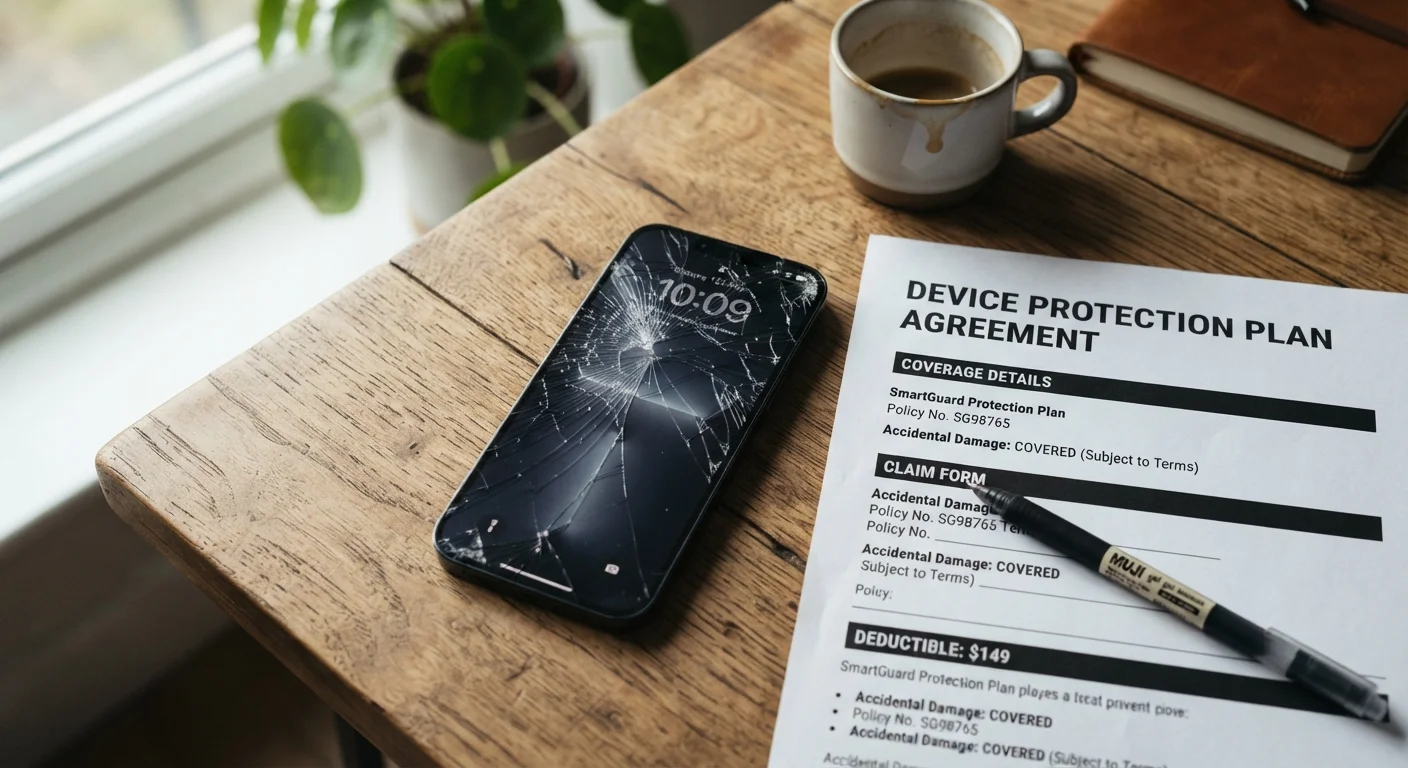
Key Takeaways
- Manufacturer warranties cover defects but not accidental damage or theft.
- Carrier protection plans and third-party insurance have different deductibles, claim limits, and exclusions.
- Whether coverage is worth it depends on your phone's value, your risk habits, and what you'd pay out of pocket for a repair.
- Always read the fine print before enrolling - coverage gaps are common and rarely advertised.
Covers costly accidental damage not included in warranties
Cracked screens and liquid damage are among the most common - and expensive - phone repairs. Protection plans typically cover these where manufacturer warranties do not.
Provides loss and theft protection for high-value devices
Carrier plans and some third-party insurers cover theft or loss, which can be critical for flagship phones worth $800 or more that standard warranties don't address.
Predictable monthly cost instead of a surprise expense
Paying a set monthly premium turns an unpredictable repair or replacement cost into a budgeted line item, which can make financial planning easier.
Same-day or next-day device replacement in some plans
Some carrier protection programs offer expedited replacement, reducing the time you spend without a working phone after damage or loss.
Deductibles can be nearly as high as repair costs
Claim deductibles on premium phone tiers often run $150-$300, meaning the total you pay (premiums plus deductible) may rival or exceed what an independent repair would cost.
Monthly fees accumulate even when unused
If you never file a claim over two years, you may have paid $240-$480 in premiums for coverage you didn't use - money that could have funded a repair directly.
Replacement units may be refurbished, not new
Many insurance programs replace damaged phones with certified refurbished units rather than brand-new devices, which some users find disappointing after paying monthly premiums.
Strict exclusions and claim limits apply
Most plans cap claims at two per year and exclude certain damage types. Reading the fine print before enrolling is essential to avoid discovering coverage gaps after an incident.
Our Verdict
Phone insurance and extended warranty plans provide real value for people carrying high-cost flagship devices who are prone to drops, water exposure, or theft. For those with older or mid-range phones - or who have a strong track record of careful use - the monthly fees and deductibles often outweigh the protection received. The right call depends on an honest look at your phone's replacement cost, your carrier or insurer's actual claim process, and whether the coverage matches the risks you actually face.
Best for owners of expensive flagship phones who lack an emergency fund to absorb a sudden repair or replacement cost.
The Three Types of Coverage - and How They Differ
Most phone owners have access to at least one form of protection, but the three main types work very differently from each other.
Manufacturer warranties come bundled with every new phone at no extra cost. They typically cover hardware defects - a speaker that stops working, a charging port that fails - for one year. They do not cover accidental damage, cracked screens, liquid exposure, or loss and theft. Think of a manufacturer warranty as a quality guarantee, not an insurance policy.
Carrier protection plans are add-ons sold by your wireless provider. These usually cover accidental damage, cracked screens, and sometimes theft or loss. They charge a monthly fee (commonly ranging from $10 to $20 or more depending on the device tier) plus a deductible when you file a claim. The deductible alone can run $100-$300 for a high-end phone, so a single claim may still represent a significant out-of-pocket cost.
Third-party insurance is offered by independent companies, sometimes at lower monthly rates. Coverage scope varies considerably - some match carrier plans closely, others exclude theft or cap replacement value. It's worth comparing these carefully alongside your carrier's offering. As explored in our look at the hidden costs of smartphone ownership, protection plans are one of several recurring expenses that quietly inflate what a phone actually costs you.
Check Your Existing Coverage First
Before enrolling in a carrier or third-party plan, check whether your credit card includes purchase protection or extended warranty benefits for electronics - many do. Homeowners and renters insurance policies sometimes cover personal electronics theft as well, though often with their own deductibles. Paying for overlapping coverage is a common and avoidable expense.
The Pros: When Coverage Genuinely Pays Off
There are clear scenarios where enrolling in a protection plan makes financial sense.
Covers costly accidental damage not included in warranties
Cracked screens and liquid damage are among the most common - and expensive - phone repairs. Protection plans typically cover these where manufacturer warranties do not.
Provides loss and theft protection for high-value devices
Carrier plans and some third-party insurers cover theft or loss, which can be critical for flagship phones worth $800 or more that standard warranties don't address.
Predictable monthly cost instead of a surprise expense
Paying a set monthly premium turns an unpredictable repair or replacement cost into a budgeted line item, which can make financial planning easier.
Same-day or next-day device replacement in some plans
Some carrier protection programs offer expedited replacement, reducing the time you spend without a working phone after damage or loss.
Flagship smartphones now regularly retail above $800 - and some above $1,200. Replacing one out of pocket without coverage is a significant financial blow for most households. If you can't easily absorb that cost, monthly premiums start to look more reasonable by comparison.
People who work in physically demanding environments, travel frequently, or have young children in the house also face higher-than-average risk of damage. For these users, the question isn't whether damage might occur - it's when.
$800+
Typical flagship smartphone retail price
Many current-generation flagship phones from major manufacturers retail above this threshold, making out-of-pocket replacement costly for most households.
$100-$300
Common deductible range per claim
Consumer reports and carrier plan disclosures indicate deductibles for high-tier devices frequently fall in this range, significantly affecting the net value of a claim.
The Cons: Where Coverage Falls Short
Protection plans have real limitations that aren't always easy to spot before you sign up.
Deductibles can be nearly as high as repair costs
Claim deductibles on premium phone tiers often run $150-$300, meaning the total you pay (premiums plus deductible) may rival or exceed what an independent repair would cost.
Monthly fees accumulate even when unused
If you never file a claim over two years, you may have paid $240-$480 in premiums for coverage you didn't use - money that could have funded a repair directly.
Replacement units may be refurbished, not new
Many insurance programs replace damaged phones with certified refurbished units rather than brand-new devices, which some users find disappointing after paying monthly premiums.
Strict exclusions and claim limits apply
Most plans cap claims at two per year and exclude certain damage types. Reading the fine print before enrolling is essential to avoid discovering coverage gaps after an incident.
Deductibles are the biggest hidden variable. A plan charging $15 per month still costs $180 per year - and if you file a claim, a $200 deductible means your actual cost could approach or exceed what a third-party repair shop would charge for the same fix. Screen replacements through authorized repair programs or independent technicians are often cheaper than going through insurance once the deductible is factored in.
Plans also cap the number of claims per year, which matters if you're accident-prone. And replacement devices under insurance programs are sometimes refurbished units, not new ones - a detail worth confirming before enrolling. For context on how different types of insurance weigh coverage limits against out-of-pocket costs, our overview of comprehensive vs. liability-only auto insurance illustrates how the same trade-off structure applies across different coverage categories.
How to Decide: Questions Worth Asking Before You Enroll
Rather than treating protection plans as a default yes or no, run through a few practical questions:
- What would it actually cost to repair or replace my phone without coverage? Get a specific number - check your carrier's device replacement price and local repair shop rates for a cracked screen.
- What does the plan actually cover? Read the coverage document, not the marketing summary. Confirm whether theft, loss, liquid damage, and cracked screens are all included, or just some.
- What is the deductible, and how many claims per year am I allowed? A plan with a $250 deductible for screen damage may be less useful than it appears.
- Does my credit card already provide protection? Some credit cards offer purchase protection or extended warranty coverage for electronics - check before paying for duplicate coverage.
- Am I financing this phone? If you're making monthly payments on a device, losing or breaking it while still owing money creates a specific financial gap, similar in structure to situations where gap insurance for vehicles becomes relevant.
Understanding how your phone plan is structured - whether prepaid or postpaid - also affects which protection options are available to you. Our guide to prepaid vs. postpaid phone plans covers how plan type can influence your add-on options.
This article provides general consumer information and is not financial or legal advice. Coverage terms, prices, and deductibles vary by provider and change over time - always review the current policy documents directly with your carrier or insurer before making a decision.